8 Crypto Trading Mistakes That Cost Solana Traders Most
Across the period studied by the Bank for International Settlements, an estimated 73%–81% of retail investors likely lost money on their initial Bitcoin investment. Meme coins move faster and can be harder to exit than Bitcoin, so a chart that looks strong is no substitute for checking who controls the supply, whether liquidity can absorb your order, and what a wallet signature would authorize. MemeAssist's own 24-hour tracking found that 1,320 tokens flagged as high rug risk had an average price change of −45.3%. A risk flag isn't a prediction, but it shows why checking a token before buying matters. Many avoidable losses start with familiar decisions: chasing a vertical pump, overlooking concentrated holders, or committing money without a clear exit condition. These eight crypto trading mistakes each have a check you can make before placing an order. None requires expensive tools. The difficult part is using the checks when a token is moving fast and you feel pressure to buy.
Table of Contents
- 1. Chasing Pumps and Buying From FOMO
- 2. Skipping Rug-Pull and Contract-Safety Checks
- 3. Overlooking Holder Concentration and Insider Activity
- 4. Treating Influencer Hype as Proof
- 5. Trading Without Position Size or an Exit Plan
- 6. Ignoring Pool Depth, Slippage, and Execution Costs
- 7. Connecting Your Wallet to Untrusted Sites
- 8. Trusting One Signal Instead of Cross-Checking Evidence
- The 8 Crypto Trading Mistakes at a Glance
- Turning Mistakes Into a Pre-Trade Routine
1. Chasing Pumps and Buying From FOMO
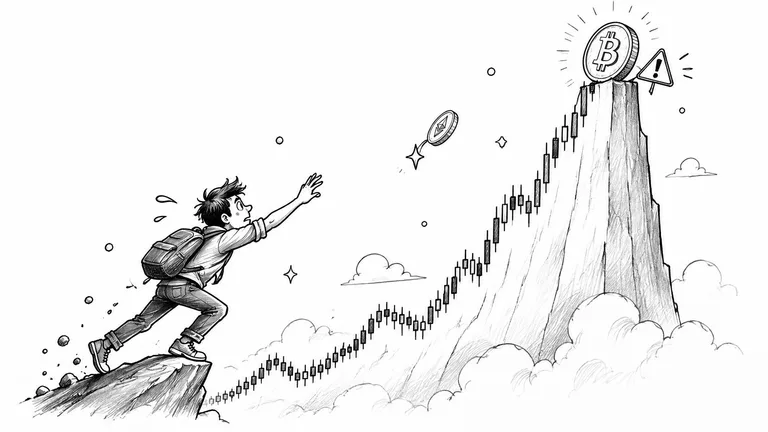
A rising chart can make a late entry feel urgent. On Solana, that's often the moment early holders, launch snipers, or bundled wallets have a buyer to sell into. A token can keep rising after you buy, but the fact that it has already pumped doesn't tell you whether there's enough real demand to support your entry.
Suppose a coin has climbed quickly and the pool's visible price is still moving up. Before buying, compare that price with recent holder growth, the largest wallets' positions, and pool depth. If a small group holds most of the tradable supply, fresh buyers may be providing the liquidity those holders need to exit. A high chart candle alone can't distinguish broad demand from concentrated selling pressure.
Use a written rule to slow down the decision. Set a maximum entry price, or pass when the move has become too extended for your plan. If you're considering a pullback entry, decide in advance what would count as confirmation and what would invalidate the idea. A pullback isn't automatically safer; it gives you a chance to compare price action with wallet and liquidity evidence before committing.
Practical rule: If you can't explain why the current price is a reasonable entry beyond “it's going up,” don't buy yet.
A useful workflow for launch-driven tokens is to check the market structure and risk signals before choosing an entry. This guide to timing Pump.fun coin purchases can help frame that decision. The trade-off is straightforward: waiting may mean missing some upside, but buying without checking can leave you holding a position that you can't exit at the price you expected.
2. Skipping Rug-Pull and Contract-Safety Checks
A token can look tradable while its creator still has control that matters. On Solana, check the mint authority and freeze authority. A retained mint authority may allow more tokens to be created; a freeze authority may be able to restrict accounts. These controls don't prove a rug is coming, but they change what the creator can do and what risks you're accepting.
Then inspect the liquidity pool. Find out whether liquidity is locked or burned, and check how much can be removed or traded against. A pool that appears funded isn't necessarily secure: the creator may still control a large token balance, and the pool may not support your intended exit. Check the token address itself rather than trusting a ticker, logo, or social post, since lookalike tokens can imitate a project's name.
Creator history adds another layer. Review the deployer's earlier launches and look for abandoned tokens, repeated wallet links, or patterns of supplying liquidity and then withdrawing it. One suspicious signal may have an innocent explanation, but several signals together deserve caution. For a worked example, imagine that a token's mint authority is revoked but its deployer controls a large balance and the pool is thin. The first check is reassuring, but the combined evidence still points to substantial exit risk.
Use an address-based screening workflow, then verify important findings in the underlying on-chain records. This Solana token-safety guide covers the checks worth making before you buy. A report can organize evidence, but it can't turn an unsafe token into a safe one.
Here's a video walkthrough to accompany those checks:
3. Overlooking Holder Concentration and Insider Activity
The holder count can look healthy while a handful of connected wallets control most of the supply. That matters because concentrated holders can sell into a shallow pool, putting pressure on the price and making it harder for other buyers to exit. Wallet labels and token counts alone won't tell you whether ownership is spread out.
Start with the largest holders, but interpret the list carefully. Exclude known liquidity pools and burn addresses before assessing concentration; otherwise, the numbers can mislead you. Then look for wallets funded from the same source, wallets that bought at nearly the same time, or wallets that repeatedly move tokens between one another. Those relationships can indicate linked activity, although a shared funding source by itself doesn't prove common ownership.
Research on high-risk memecoins found that 21.4% of transactions in its dataset were wash trades, and that high-risk tokens showed larger bundled-account holding concentrations (the study of high-risk memecoin activity). The practical lesson is that a busy transaction feed and many visible holders don't automatically mean independent demand. Look for activity that persists over time and comes from distinct wallets, then compare the largest holders' combined supply with realistic pool depth.
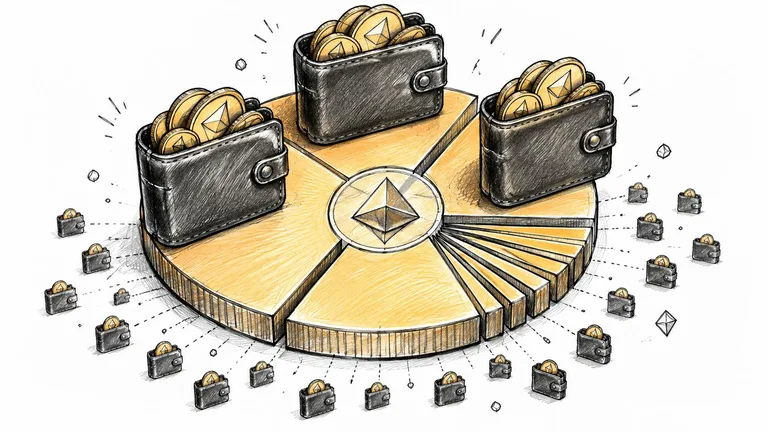
A holder list is a starting point, not proof of decentralization. Follow the wallet relationships and ask whether the pool could absorb a coordinated exit.
Recheck concentration shortly before entry. On a fast-moving launch, balances and wallet links can change quickly; a screen you reviewed earlier may no longer describe the market you're about to trade.
4. Treating Influencer Hype as Proof
A prominent post tells you that a token has attention. It doesn't establish that the promoter is independent, that the project is legitimate, or that demand will last after the post stops circulating. Treat an endorsement as a reason to investigate, not as a substitute for checking the token.
The Federal Trade Commission recorded nearly 7,000 reports of bogus cryptocurrency-investment scams and more than $80 million in reported losses from October 2020 onward. Those are reports of consumer fraud, not a measure of all crypto trading losses, but they show the risk of trusting promotions, impersonators, and guaranteed-return claims (the FTC's guidance on cryptocurrency investment scams). The FTC also reported a median loss of $1,900. Don't use those figures as a prediction of what a particular token will do; use them as a reminder to verify claims before sending funds.
For a token promoted by a celebrity or influencer, verify the post on the person's official account rather than relying on screenshots or reposts. Then inspect the creator and related wallets for token holdings or launch links. Compare the attention with on-chain evidence: are independent wallets buying, is pool depth holding up, and can a realistic order be sold without severe price impact? If a project depends on promotion but the chain shows concentrated ownership and thin liquidity, the promotion doesn't solve the underlying risk.
Social proof can help you discover a token. It can't tell you whether you're early, whether the promoter has an incentive to sell, or whether there's enough liquidity for your exit.
5. Trading Without Position Size or an Exit Plan
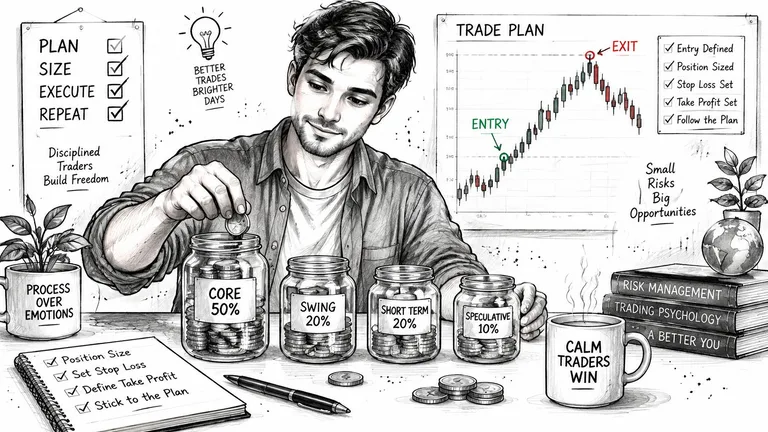
A good token check can't protect an account from a position that's too large. Before entering, decide how much you can lose if the trade fails, then size the position around that amount. For a high-risk meme coin, use only capital you can afford to lose; avoid borrowing or using borrowed funds to make a speculative position larger.
Write down the entry reason, the level or condition that would invalidate it, and the action you'll take if that happens. A stop on a chart isn't a guaranteed fill: a fast move or shallow pool can execute it at a worse price. Still, deciding your exit condition before you buy is better than improvising while the price is falling. Also track total exposure across open tokens. Several small positions can add up to one large bet if they depend on the same market mood or types of buyers.
Consider a simple scenario: you planned to buy because holder growth was broad and liquidity was stable. If the largest wallets start selling and the pool thins, the original reason for entering may no longer hold. Don't average down automatically just because the price is lower. Recheck the thesis and decide whether the evidence still supports staying in.
Scale out according to a plan if the price rises, rather than waiting for a perfect top. Partial exits can reduce exposure, while a trailing stop can keep some position open if momentum continues. Neither method guarantees a better result; choose based on the trade's liquidity and your willingness to give back unrealized gains. For a comparison of those choices, see the guide to memecoin take-profit and trailing-stop approaches.
6. Ignoring Pool Depth, Slippage, and Execution Costs
The price displayed on a token page is not necessarily the price you'll get. In a shallow pool, a market order can move the price against you on entry, and your exit may be worse still if buyers disappear. Compare your intended order size with available pool depth and estimate the price impact before you submit it.
A useful example is a token whose chart shows a rising price but whose pool can't absorb your planned sell without moving sharply. The quoted price may describe a small trade, not the price available for your full position. Try a conservative order-size estimate and inspect the expected output, not only the headline price. If the result changes dramatically as you adjust size, treat the token as difficult to trade rather than assuming you can exit cleanly.
Execution costs can erase a weak edge, too. Research using more than three million minute-level observations across six major cryptocurrencies found that no tested strategy survived realistic Binance fees and slippage; at a five-minute rebalancing horizon, daily two-way turnover reached 124–204 times notional (the study of crypto trading signals and execution costs). That finding is about the tested strategies, not every trader or every token. Its practical point is that frequent trading can turn a small apparent advantage into a loss once costs are included.
Before you trade: Estimate the all-in cost, including fees, price impact, slippage, and any priority fees. If the expected edge can't cover a poor fill, skip the setup.
Use the platform's slippage setting deliberately instead of accepting a permissive default. Splitting a large order may reduce immediate impact, but it can also leave you exposed while the price moves. Smaller trades are not automatically better; compare the expected fills and costs for the actual pool you're trading.
7. Connecting Your Wallet to Untrusted Sites
Research can become a security risk if the site you use asks for permissions or signatures it doesn't need. Reading a token report should not require sharing your seed phrase or private key. Never provide either, even to someone claiming to be support. Check the URL before connecting a wallet, and be wary of fake analysis pages, airdrop claims, or lookalike tools that ask you to sign a transaction to view information.
A signature isn't just a harmless click. Read the wallet prompt and confirm what the transaction will do, which account or token it affects, and whether it grants ongoing permission to move assets. If the purpose is unclear, reject it. Use a separate trading wallet with limited funds rather than keeping your longer-term holdings in the same wallet you connect to unfamiliar services.
The risk is larger than one kind of phishing page. CoinDesk reported that crypto theft exceeded $2.47 billion in the first half of 2025, including $1.7 billion from wallet compromises and $410 million from phishing attacks across 132 incidents (CoinDesk's coverage of first-half 2025 crypto theft). The article also reported that losses from wallet-drainer phishing fell year over year. That doesn't mean wallet security is no longer a concern: attacks and losses can shift between methods.
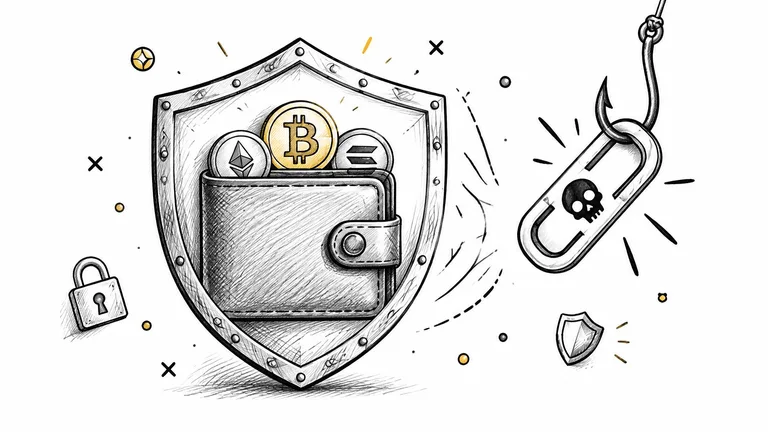
MemeAssist's analysis workflow doesn't require a wallet connection or signature request. That removes one common exposure during screening, but you still need to verify the destination and transaction details whenever you move funds.
8. Trusting One Signal Instead of Cross-Checking Evidence
A trending label, rising chart, high transaction count, or positive comment can be manufactured or misleading. No single signal tells you whether a token is safe to buy or easy to sell. Cross-check the token address, authorities, liquidity, holder concentration, creator history, and recent wallet activity before deciding.
For example, a token may show heavy volume, but the same small group of wallets could be trading repeatedly. Compare transaction activity with distinct buyers and sellers, examine whether volume continues over time, and check for connected wallets or synchronized transactions. A high transaction count may indicate interest; it may also indicate activity that doesn't represent independent demand. Neither possibility is enough on its own to justify a trade.
Use a consistent evidence order. First, confirm you're inspecting the correct token address. Next, check whether the creator retains authorities and whether liquidity is sufficient for your planned trade. Then review the largest holders and wallet links, and compare those findings with price action and trading patterns. If the evidence conflicts, reduce the position or pass instead of choosing the one signal you like best.
A practical scenario: the chart is rising, but top holders are concentrated and the pool is too shallow for your intended exit. The chart is telling you about recent price movement; the other checks are telling you about the risks of entering and getting out. Make the decision using both.
Track your own trade outcomes, too. Record which signals you checked, the reason you entered, and what happened after your exit. That helps you distinguish a repeatable process from a lucky trade, and it gives you a basis for changing the checklist when it repeatedly misses a risk.
The 8 Crypto Trading Mistakes at a Glance
| Item | Core Signal to Check | Main Risk | Prevention Tool |
|---|---|---|---|
| Chasing Pumps (FOMO Buying) | Price surge, entry timing, holder distribution, and liquidity | Buying near the peak and becoming exit liquidity | Entry limits, pullback confirmation, and a written checklist |
| Ignoring Rug Pull and Contract Safety Checks | Mint and freeze authorities, liquidity lock, and creator history | Creators can dilute supply, freeze accounts, or remove liquidity | Contract and liquidity screening checklist |
| Overlooking Holder Concentration and Insider Activity | Top-holder share, bundled wallets, and common funding sources | Coordinated insider selling can crash the price | Holder distribution and wallet-cluster analysis |
| Trusting Influencer Hype and Paid Promotion | Promotion disclosures, promoter holdings, and verified on-chain activity | Promoters may sell into hype or endorsements may be fake | Verify official accounts and cross-check promotion against on-chain data |
| Trading Without Position Sizing, Risk Limits, or an Exit Plan | Position size, maximum loss, and predefined exits | A single loss or steep decline can wipe out a large share of capital | Position limits, written stop-loss and profit targets, and exposure tracking |
| Ignoring Liquidity, Slippage, and Execution Costs | Pool depth, order size, price impact, and slippage settings | Poor fills, high costs, or inability to exit without major losses | Check price impact, adjust slippage, and split large orders |
| Falling for Wallet-Drain Scams and Poor Security Hygiene | Site authenticity and unexpected signature or approval requests | Malicious approvals can drain wallet funds | Verify URLs, review signatures, and use a separate low-balance trading wallet |
| Relying on a Single Signal Instead of Verified Evidence | Contract safety, liquidity, holder behavior, and creator history | Manipulated or misleading signals can prompt poor trades | Use a multi-factor checklist and compare volume with unique traders |
Turning Mistakes Into a Pre-Trade Routine
Each mistake maps to a check you can do before buying. A vertical pump calls for an entry rule and a pause to inspect who is buying. A possible rug calls for an address-level review of mint and freeze authority, liquidity, and creator history. Concentrated holders call for a wallet-distribution check, while influencer claims call for independent verification. An exit plan requires position sizing and a defined invalidation condition. Thin pools require an order-size and price-impact check. Wallet prompts require careful review of the signature, and a noisy signal requires confirmation from several kinds of evidence.
Keep the routine short enough to follow when the market is moving. Open the token's actual address, not just its ticker. Check authorities and pool depth, review top holders and connected-wallet activity, then decide whether the position size and exit plan fit the evidence. If a critical check is unclear, don't turn uncertainty into a reason to rush. Wait, find a way to verify it, or pass.
MemeAssist is one option for consolidating those checks in a report tied to a Solana token. A full analysis includes a health score, rug risk rating, AI verdict, detailed risk breakdown, and a conditional trade plan when the current price structure supports one. The report draws on liquidity, holder distribution, creator behaviour, wallet activity, trading patterns, and historical risk indicators. A conditional scenario is analysis, not a trading instruction, and it doesn't guarantee an outcome or an execution price. MemeAssist can be funded by sending USDT or SOL on Solana to a personal deposit address, with no wallet signature or permission request.
Treat any report as a starting point for verification, not a certificate of safety. Automated analysis can misinterpret information, and blockchain or market data can be incomplete, delayed, or unavailable. A token that passes screening can still collapse if demand disappears, large holders sell, liquidity changes, or new information emerges. Meme coins are extremely risky, and you can lose everything you invest; these analyses are informational, not financial advice.
Build the routine around what you can verify and control, not around a promise that a tool or signal will protect you from every loss. Write your checklist, size positions so no single trade can end your account, and run the checks before every buy, not after the price starts falling.
MemeAssist brings Solana token risk signals into one report, including liquidity, holder concentration, creator behaviour, and trading patterns. Use MemeAssist to review the evidence before your next meme-coin trade, and apply your checklist before connecting a wallet or placing an order.
Topics: crypto trading mistakes, Solana meme coins, rug pull prevention, crypto risk management, memecoin trading
Informational only, not financial advice. Meme coins are extremely high-risk.
All articles