Crypto Trading Tools for Solana Traders: 10 Picks for 2026
Compare 10 crypto trading tools for Solana: charting, order flow, and on-chain risk scanners like MemeAssist, with workflows for safer token research.
Published
Updated
It's 2 a.m. and a new Solana token is climbing your feed. The chart looks clean, volume is rising, and Telegram is already calling it the next runner. You've got minutes, not hours, to check holders, liquidity, the creator's history, and whether that volume is real buyers or the same wallets washing back and forth.
That gap between speed and evidence is where most memecoin losses happen. No single dashboard covers discovery, safety, execution, and position tracking well. A screener that finds pairs quickly won't explain creator behavior. A trading terminal that fills fast won't tell you if you should fill at all. A charting platform can't check mint authority.
The useful question isn't which tool is best. It's which crypto trading tools answer which question in your workflow, and where each one stops. This list follows the order of a real trade, from finding a token to checking its risk, placing an order, and monitoring what happens next.
Memecoins are extremely risky and you can lose everything you put in. None of these tools changes that. They help you ask better questions before you commit capital, spot weak evidence faster, and walk away from setups that don't hold up.
Table of Contents
- 1. MemeAssist
- 2. DEX Screener
- 3. Birdeye
- 4. RugCheck
- 5. Solscan
- 6. GMGN
- 7. Axiom
- 8. Jupiter
- 9. DEXTools
- 10. TradingView
- How the 10 Crypto Trading Tools Differ by Job, Chain Focus, and Cost
- Build a Lean Solana Stack Before Your Next Trade
1. MemeAssist
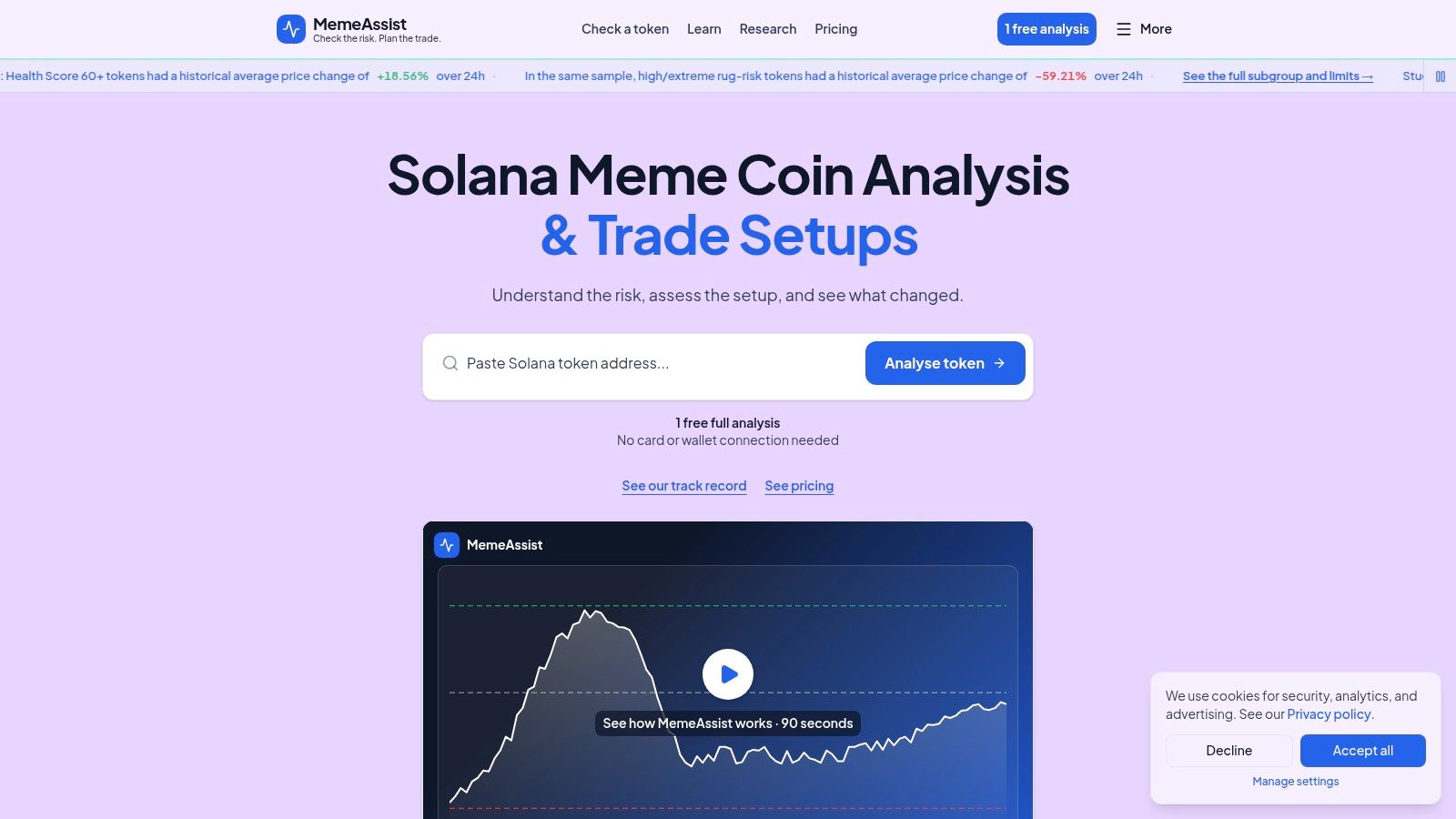
Paste a Solana token address into MemeAssist when discovery is done and you need a yes or no on risk. The report is built from live on-chain and market data at run time, not a cached label. That matters for safety decisions because Chainalysis estimated cryptocurrency scams received at least $9.9 billion on-chain during 2024.
Each full analysis returns an Overall Health Score, a Rug Risk Rating, a plain-English AI Verdict, and a Detailed Risk Breakdown. The breakdown covers six categories: liquidity, holder distribution, creator behaviour, wallet activity, trading patterns, and historical risk indicators. Checks include mint and freeze authority, holder concentration and possible wallet links, bundled buys, wash trading signals, and creator history where evidence exists.
I recommend it as the verification gate before you open any trading terminal. It explains Solana-specific evidence in one place, including available liquidity and how hard it may be to exit. It fails outside its scope. It does not support other chains, it cannot confirm intent behind suspicious flows, and memecoins remain extremely risky with total loss possible.
What a report does and doesn't do
Every full analysis checks whether current price structure supports a conditional Trade Setup. If the structure does not support it, the report shows no entry, stop, or target levels. When levels do appear, they are analysis scenarios based on observed signals, not trading instructions, and they do not predict an outcome or guarantee execution at the displayed price.
Evidence stays public and reviewable for later checks. Flagged tokens are tracked for 24 hours and those outcomes are used to calibrate the screening engine.
Eligible new accounts get one free full analysis, then pay as you go at $0.20 per full analysis with no subscription and no wallet connection required. Optional monitoring, alerts, exit-liquidity checks, and report-grounded analyst questions cost separately.
Practical rule: Read the evidence under the score. A clean number with thin liquidity or concentrated holders is not a green light.
2. DEX Screener
Start here when you need to know whether a pair exists and how it's trading right now. DEX Screener is a multichain screener for decentralized exchanges. Pair pages show price, liquidity, volume, and recent transactions, and you can compare venues to see where activity sits.
That speed earns it the discovery slot in a Solana workflow. It also fools traders, because rising volume doesn't prove organic demand. Freshness matters too, because thin pools can change materially between updates, so check the pair's timestamp before you act.
Where it fits in the workflow
- Discovery: Search tokens and pairs across supported DEXs from your browser.
- Monitoring: Watch liquidity and transaction flow shift after launch.
- Venue comparison: Check whether one pool holds the depth or activity is fragmented.
Where it stops is just as clear. DEX Screener shows you market activity, not who holds the token, what the creator has done before, or whether mint and freeze authorities are still open. New pairs also carry limited history, so a stable-looking first hour tells you little. Pair it with a dedicated risk report, and if you're setting up notifications, compare options in this guide to Solana token alert tools before you rely on any single feed.
3. Birdeye
Birdeye goes deeper than a basic pair page, especially on Solana. Token pages combine live market data with trading history, and you can move from a token into holder information or wallet activity without switching services. For traders who research before they size up, that continuity saves real time.
Trending token discovery helps surface what's active, but trending is a popularity signal, not a safety signal. Birdeye recommends searching by token address to avoid copycat tokens with the same name, and that habit alone prevents a common and expensive mistake. Always verify the mint before you read anything else on the page.
Research depth and its limits
Wallet and trader analytics, including profit-and-loss views in relevant products, can show who's been active and how they've performed historically. Past wallet performance doesn't predict the next trade, though. A wallet that caught three runners can still be early into a fourth that collapses.
The developer API covers market, liquidity, holder, and wallet data for automated workflows, but it's a separate product with usage limits and paid tiers. For manual traders, the main cost is interpretation. Birdeye gives you a lot of data, and new users can drown in it. I'd use it to investigate specific questions raised elsewhere, not as your first screen.
4. RugCheck
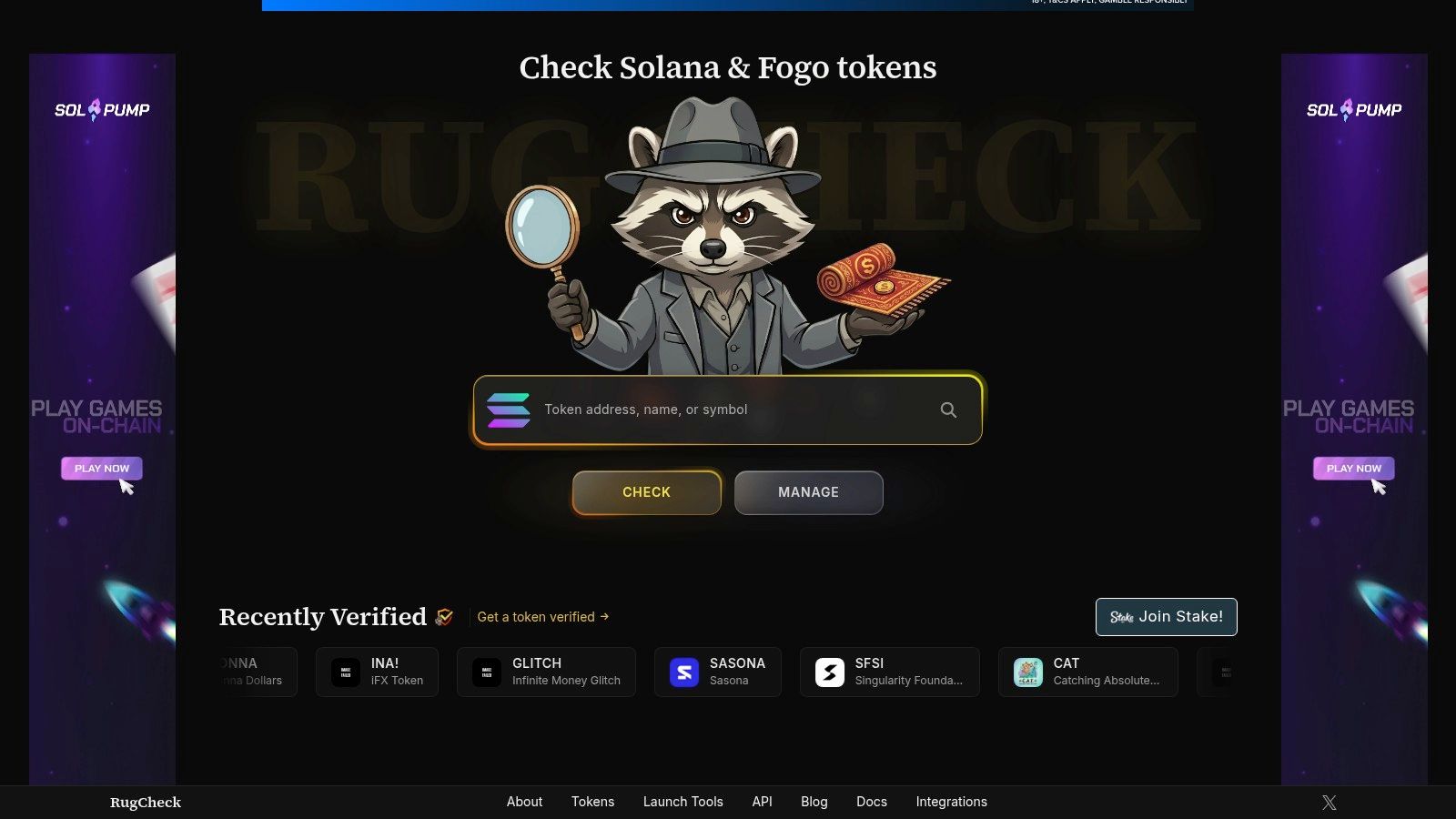
RugCheck does one job for Solana tokens. You look up a token mint and review on-chain warning signals in a structured format. It checks indicators such as mint and freeze authority and surfaces holder distribution and liquidity-related information.
That narrow focus is a strength. It makes manual review systematic instead of scattered, which matters in a market where Chainalysis reported funds stolen in cryptocurrency hacks reached $2.2 billion in 2024. Visible checks won't stop every loss, but skipping them leaves obvious risks unexamined.
A screening step, not a verdict on intent
- Authority checks: See whether mint or freeze powers remain active.
- Holder and liquidity signals: Spot concentration you should investigate further.
- Structured warnings: Work through flags in a consistent order every time.
A warning list can't establish what a creator intends to do next, and a clean scan doesn't remove market or operational risk. RugCheck also isn't a trading terminal or charting tool. Treat its output as the start of due diligence. If you want the underlying patterns explained step by step, read this breakdown of how to spot a Solana rug pull and apply it alongside the scan.
5. Solscan
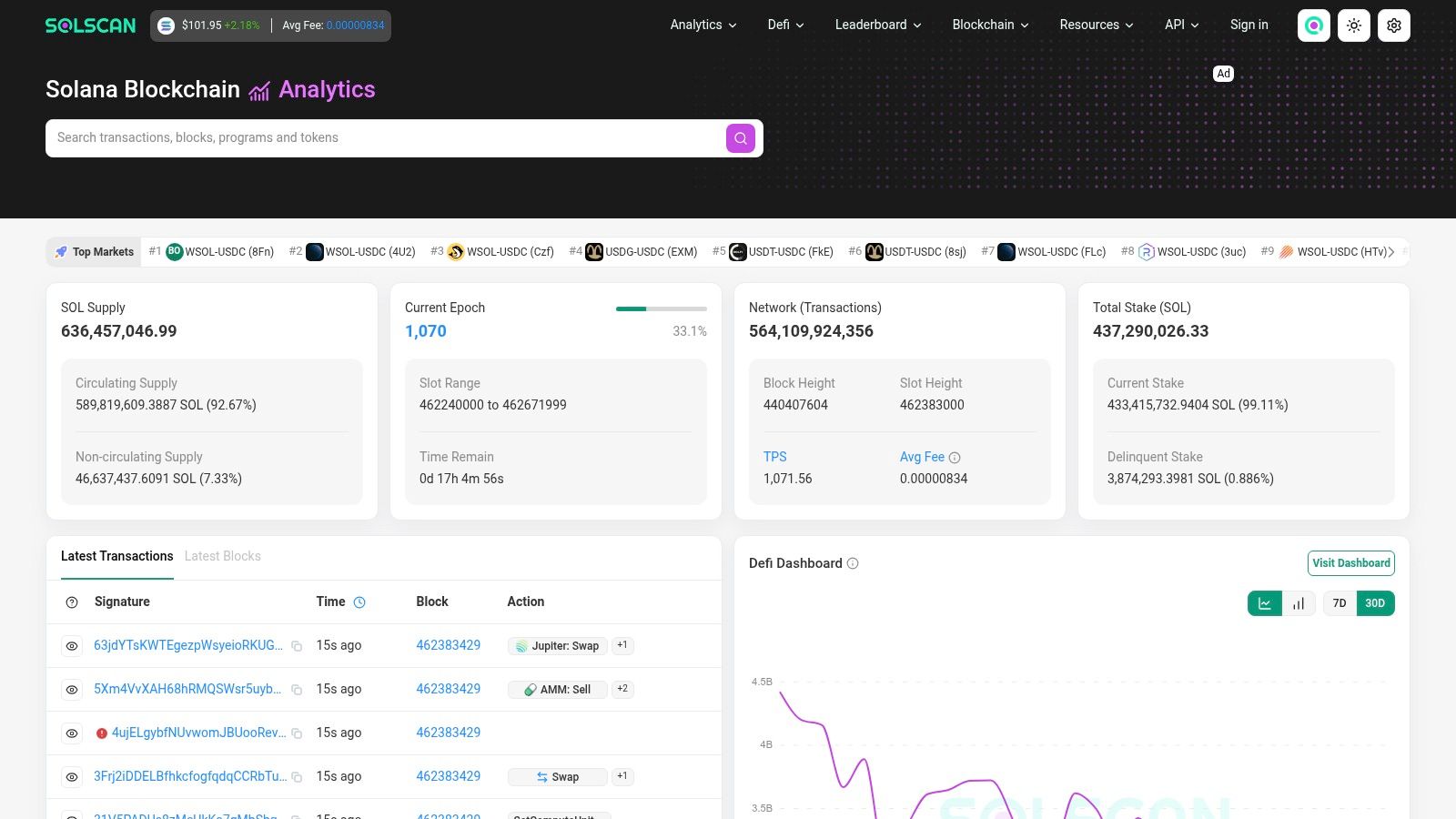
When a summary score raises a question, Solscan is where you check the underlying record. As a Solana block explorer, it lets you inspect transactions, token pages, holders, and wallet activity directly. You're reading the chain itself rather than someone else's interpretation of it.
Token pages include transaction, holder, market, and analytics information. Holder concentration and wallet-depth views show how supply is distributed, and token-flow visualization helps you trace movements among major holders. If five top wallets received tokens from the same source at launch, that's the kind of pattern an explorer helps you find.
The trade-off is effort. Raw explorer data is hard for beginners to read, and address labels aren't available for every account, so you'll often see an address without knowing who controls it. Solscan also offers API products for programmatic research, which suits quantitative traders building their own screens.
I wouldn't make Solscan your only safety step. It answers specific factual questions well, like when a wallet first transacted or where tokens moved. It doesn't weigh those facts into a risk conclusion for you. Use it to verify claims, then decide what the verified facts mean.
6. GMGN
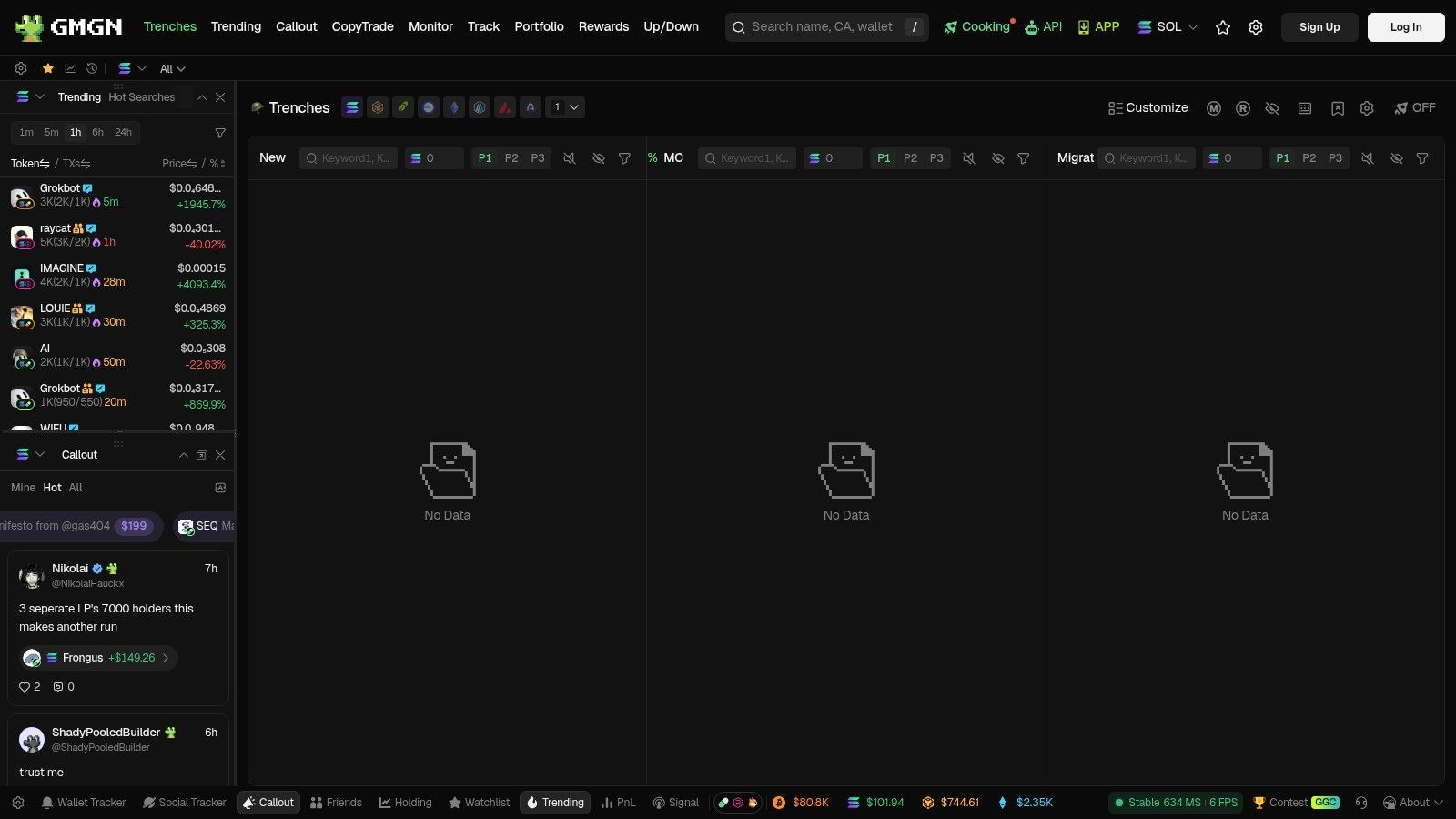
GMGN is built for traders who move fast in memecoin markets and want discovery, wallet tracking, and execution in one terminal. On Solana it combines token discovery with a trading interface, smart-money tracking, and data on insiders and snipers. Security-check features are built in, though they sit inside an execution product.
Auto-buy and auto-sell settings are documented, along with fee and settings workflows. That automation has a real downside. Preset orders encourage rapid decisions in markets that can reverse in seconds, and costs stack up across platform fees, network fees, and priority fees on every transaction.
Use the tracking, question the signal
Following active wallets can surface tokens early. Copying them blindly is different. You don't know a tracked wallet's full position, entry cost, or exit plan, and a profitable headline can hide modest real returns.
If you track wallets at all, learn the method first through this guide on how to track smart money wallets on Solana, then verify each token independently. GMGN's security indicators are a convenience layer. They don't replace a separate risk check before you commit size.
7. Axiom
Axiom targets active Solana traders who want discovery and order controls in a single interface. Its Pulse feed organizes new, near-migration, and migrated tokens, which maps well to how launchpad tokens progress. You can watch a token approach migration without refreshing multiple pages.
Execution controls include limit orders, migration-related trading actions, and settings for slippage, priority fees, and MEV-related options. Multi-wallet and portfolio views help if you split activity across wallets. Axiom's documentation publishes fee tiers and describes cashback tiers, so read those before you assume trading is cheap.
Fast execution doesn't reduce token risk. It only decides how quickly you take it on.
That's the core limitation. Axiom is a trading workflow product, not an independent safety service. A smooth buy into a manipulated, low-liquidity token is still a bad trade, filled efficiently. Platform, network, priority, and venue-related charges also compound if you trade frequently in small sizes.
I'd place Axiom after verification, not before it. Find candidates in Pulse if that suits your style, step out to check risk, then return only if the token survives your checks and the order settings match the pool's actual depth.
8. Jupiter
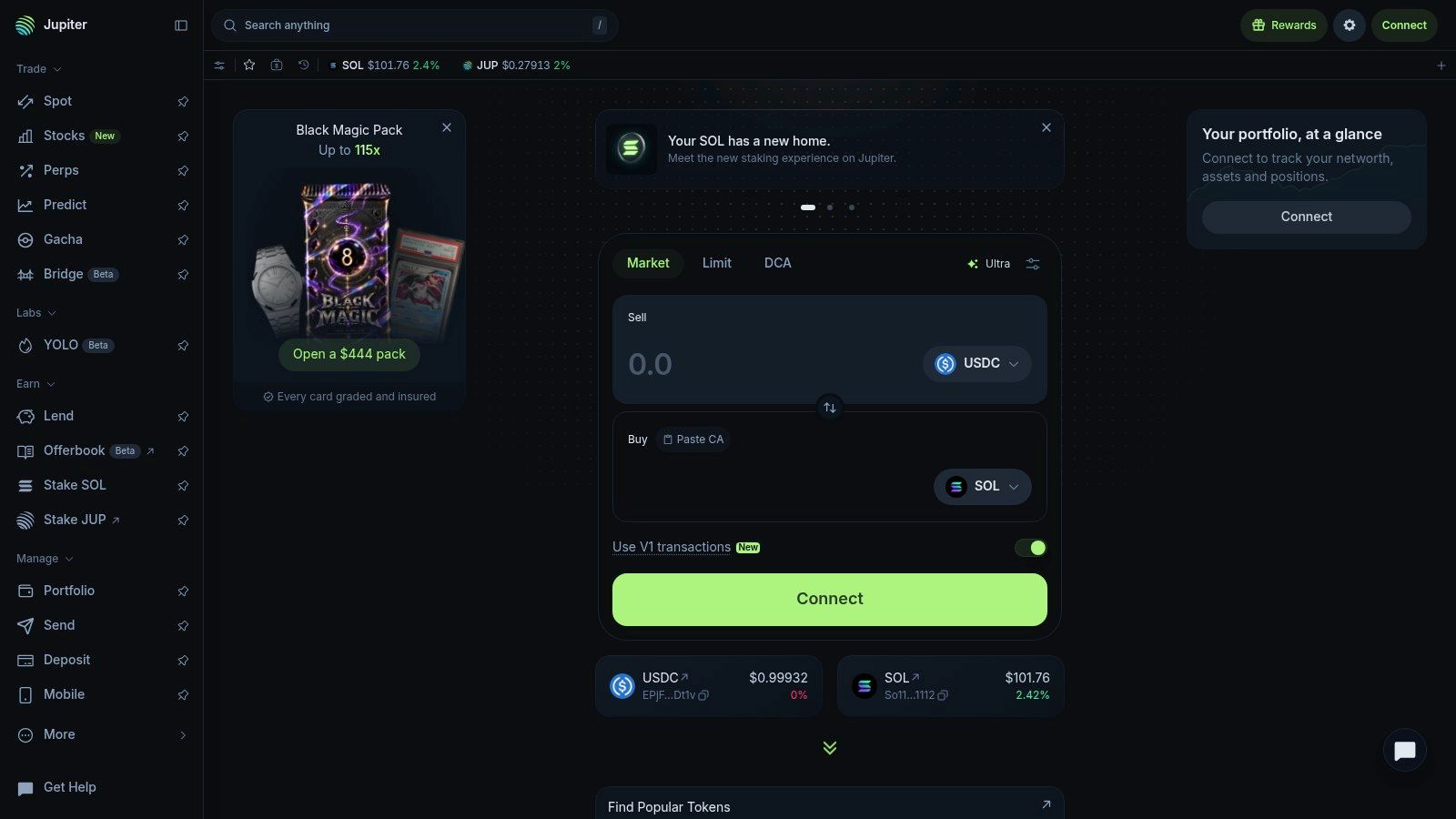
A token can clear your risk checks and still give you a poor fill. Jupiter helps handle that execution step on Solana by comparing available swap routes. It also offers limit orders and dollar-cost averaging tools where available, plus developer interfaces for swap and routing integrations.
Thin pools leave swaps vulnerable to hostile order flow. A large order can be easier to exploit and may receive a worse fill than expected. Check execution conditions before signing.
Before you sign anything
- Check price impact: Compare your order size with available pool depth, not headline liquidity.
- Review the route: Costs depend on the route, token, and order type. Review fee information in the swap execution data.
- Verify the mint: Confirm the token's identity before every swap.
Jupiter's documentation distinguishes platform fees from other possible swap costs. Routing can help you compare execution options, but it cannot tell you whether a token is safe. Use it to execute a decision you have already made, and choose an order type that fits how quickly you need the fill.
9. DEXTools
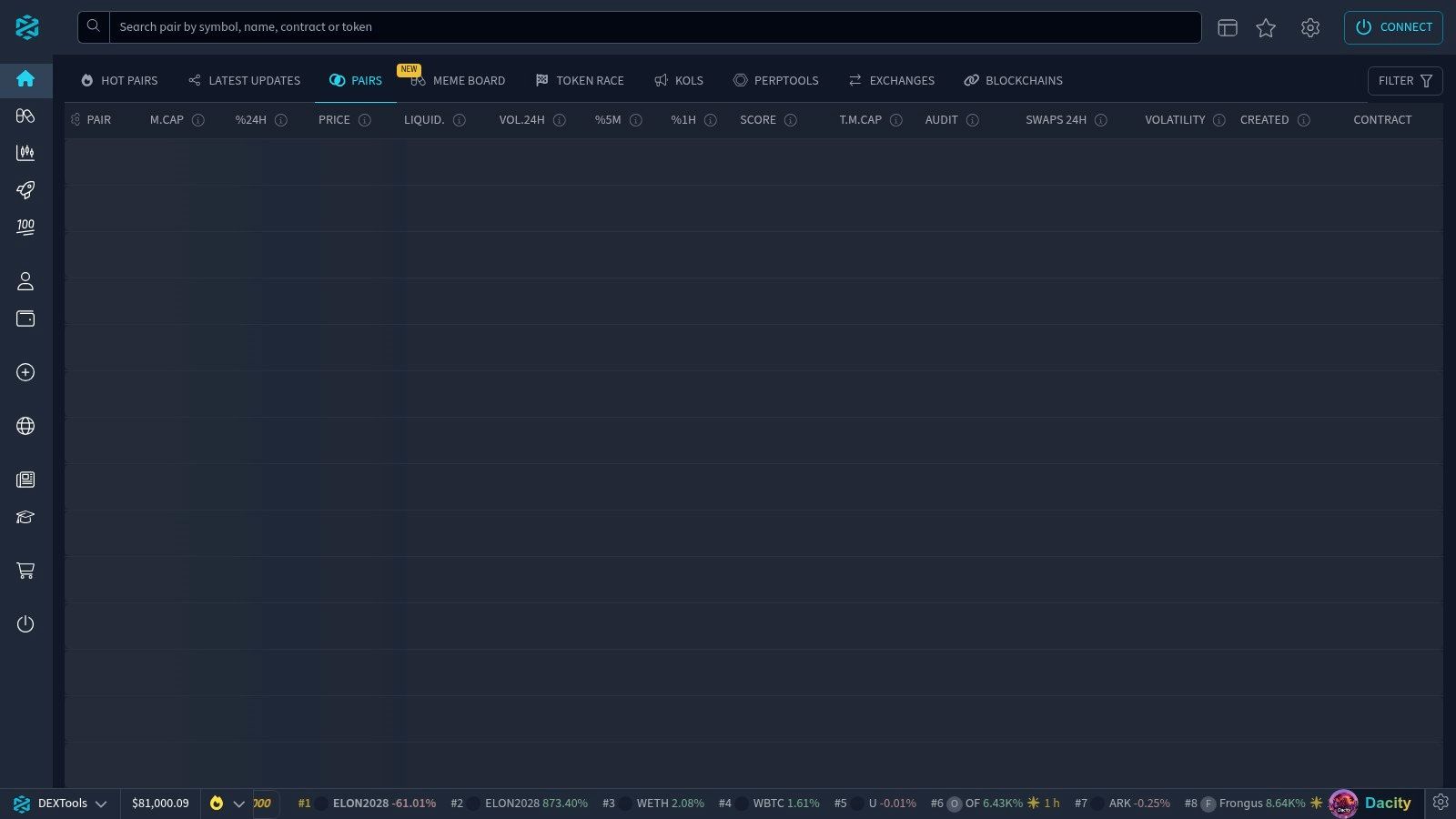
Traders who work across chains often land on DEXTools. Its Pair Explorer and live new-pair views support scanning pools and comparing tokens across decentralized markets. Charts, trading statistics, watchlists, and alerts round out the monitoring side.
The DEXTscore is the feature people quote most. It incorporates signals such as holder counts, liquidity, and token information into one reliability indicator. Treat it as an initial signal only. A composite score can hide a single severe problem inside an otherwise average result, so open the underlying details before you act.
Free access includes a useful set of pair and chart features. Some premium features require a subscription or holding DEXT, and API plans exist for developers and automated research workflows. Budget for that if you plan to build it into a system rather than browse manually.
For pure Solana memecoin work, multichain breadth is both the appeal and the compromise. You gain one interface for many markets. You lose the specialization of a Solana-first research tool that focuses only on this ecosystem's launch patterns and risk signals.
10. TradingView
TradingView is the charting standard most traders already know. Layouts, technical indicators, drawing tools, and Pine Script for custom indicators make it flexible for technical workflows. Crypto and DEX screeners plus price and technical alerts help you monitor watchlists across markets.
AI and tooling habits are already shifting how retail traders work, since a 2025 global survey found 36.6% of retail crypto participants already use AI tools to assist with trading. Charting sits alongside those tools rather than replacing them. An indicator can describe price structure. It can't audit a token.
Strong charts, blind spots on-chain
TradingView offers a free plan, with paid plans granting some features and higher limits. That's reasonable for serious chart work. The gaps for Solana memecoin traders are structural. Chart signals don't assess creator behavior, holder concentration, or token authorities, and ultra-new tokens may have limited chart history or coverage at all.
Use TradingView where technical analysis applies, such as established pairs with real price history and your broader portfolio watchlist. For a token launched twenty minutes ago, a moving average tells you almost nothing. On-chain evidence has to lead, and the chart follows later if the token survives.
How the 10 Crypto Trading Tools Differ by Job, Chain Focus, and Cost
Each tool covers a different part of a Solana trade. The table compares their main use, chain focus, and only the cost details stated for each tool.
| Item | Primary Job | Solana Focus | Cost Model |
|---|---|---|---|
| MemeAssist | On-demand token risk analysis with a health score, rug risk rating, AI verdict, detailed risk breakdown, and a conditional trade plan when data allows | Solana only | One free full analysis for eligible new users; additional analyses and tools use prepaid, pay-as-you-go credit |
| DEX Screener | DEX pair discovery and market monitoring | Multichain, including Solana | Free |
| Birdeye | Token discovery, market data, and wallet analytics | Strong Solana coverage | API has usage limits and paid tiers; other costs not specified |
| RugCheck | On-chain token risk screening | Solana-focused | Free scanners |
| Solscan | Block exploration and on-chain research | Solana only | Explorer and API products |
| GMGN | Memecoin discovery, wallet tracking, and trading | Includes Solana | Platform, network, and priority costs may apply |
| Axiom | Token discovery and trading execution | Solana-oriented | Platform, network, priority, and venue-related charges may apply |
| Jupiter | Swap routing and order management | Solana-focused | Costs vary by route, token, and order type |
| DEXTools | DEX analytics, pair discovery, and trading tools | Multichain | Free features; some premium features require a subscription or DEXT |
| TradingView | Charting, technical analysis, and alerts | Broad crypto coverage, not Solana-specific | Free and paid plans |
Discovery tools help find pairs; explorers and risk scanners help inspect them. Execution costs depend on the trading tool and order conditions, while charting tools serve a separate role. A risk score or chart setup cannot establish whether a trade will execute at a particular price.
Build a Lean Solana Stack Before Your Next Trade
You don't need ten subscriptions. You need each step of a trade covered once, by a tool that answers that step's question. Most traders I see over-invest in discovery feeds and under-invest in verification, which is exactly backwards for markets where new tokens appear faster than anyone can research them.
Start with discovery, but keep it light. Use one feed, whether that's DEX Screener for pair activity, Birdeye for Solana market depth, or a terminal feed like Axiom's Pulse, to build a short candidate list. Discovery output is a list of questions, not buy signals. If a token can't survive the next step, finding it early helped you lose money sooner.
Next, run verification before you look at entry prices. A risk report such as MemeAssist pulls liquidity, holder concentration, creator behavior, wallet activity, trading patterns, and historical signals into one review, and free scanners like RugCheck plus explorer checks on Solscan let you verify specific flags yourself. Read the evidence, note what's unknown, and decide which open questions are acceptable.
Then check execution as its own decision. Compare your intended order size with real pool depth, estimate price impact, and pick routing and order settings through a tool like Jupiter that match your urgency. That last check matters because win rates mislead, since Pump.fun data for April 2026 showed 73.28% of active wallets were profitable but about 65.14% earned only $1 to $500. After fees, slippage, and failed transactions, a nominal win can be economically meaningless.
Before any order: Ask whether the trade still makes sense at your size, after realistic execution costs, not at the price on the chart.
Finally, monitor what you hold. Liquidity can leave, top holders can start distributing, and a token that looked acceptable at entry can deteriorate within hours. Alerts and periodic re-checks of holders and liquidity beat a set-and-forget approach in markets this thin.
Tools inform decisions. They don't make them, and they don't absorb losses. Memecoins can go to zero and take everything you invested with them. Treat every score as dated evidence with limits, check the sources behind each report, and size positions assuming the worst case is possible. The stack works when it slows your worst impulses down, not when it speeds them up.
Paste your next Solana token address into MemeAssist and review the health score, rug risk rating, and underlying evidence before you trade. Your first full analysis is free as an eligible new user, with no wallet connection required.