10 Insider Threat Detection Tools and Solana Token Signals

Buying the platform with the most monitoring features isn't the best advice for detecting insider risk. Start with the evidence you can observe, then choose a tool that can connect it. A detailed employee timeline won't help a Solana trader establish who controls a wallet, just as a wallet-clustering signal won't tell a security team why an employee downloaded confidential files.
Insider threat detection tools were built to identify employees and other trusted users who misuse legitimate access. Similar pattern-matching logic applies to Solana, where token creators, early holders, and potentially linked wallets can occupy privileged positions. The useful connection is analytical, not legal: unusual behavior, concentrated control, and coordinated actions deserve investigation, but they don't establish intent.
The Carnegie Mellon Software Engineering Institute's CERT database overview describes insider cases spanning sabotage, fraud, intellectual-property theft, and espionage. That breadth explains why isolated anomaly scores aren't enough. Investigators need context, attribution, and corroborating evidence.
The transferable principle: Correlate actions before drawing conclusions. Don't confuse a suspicious pattern with a proven explanation.
The enterprise platforms below address different parts of that problem, from endpoint evidence to permissions and behavioral baselines. Their strengths offer useful lessons for token analysis, but none should be mistaken for a ready-made Solana insider detector.
Table of Contents
- 1. Proofpoint Insider Threat Management
- 2. Microsoft Purview Insider Risk Management
- 3. Exabeam Insider Threat Detection
- 4. DTEX Platform
- 5. Teramind
- 6. Varonis Data Security Platform
- 7. Securonix UEBA and AEBA
- 8. Forcepoint Risk-Adaptive Protection
- 9. Mimecast Incydr
- 10. Splunk Enterprise Security UEBA
- How the 10 insider threat detection tools differ by pricing signal, primary focus and best-fit buyer
- Choosing the Right Signals Before Choosing the Tool
1. Proofpoint Insider Threat Management
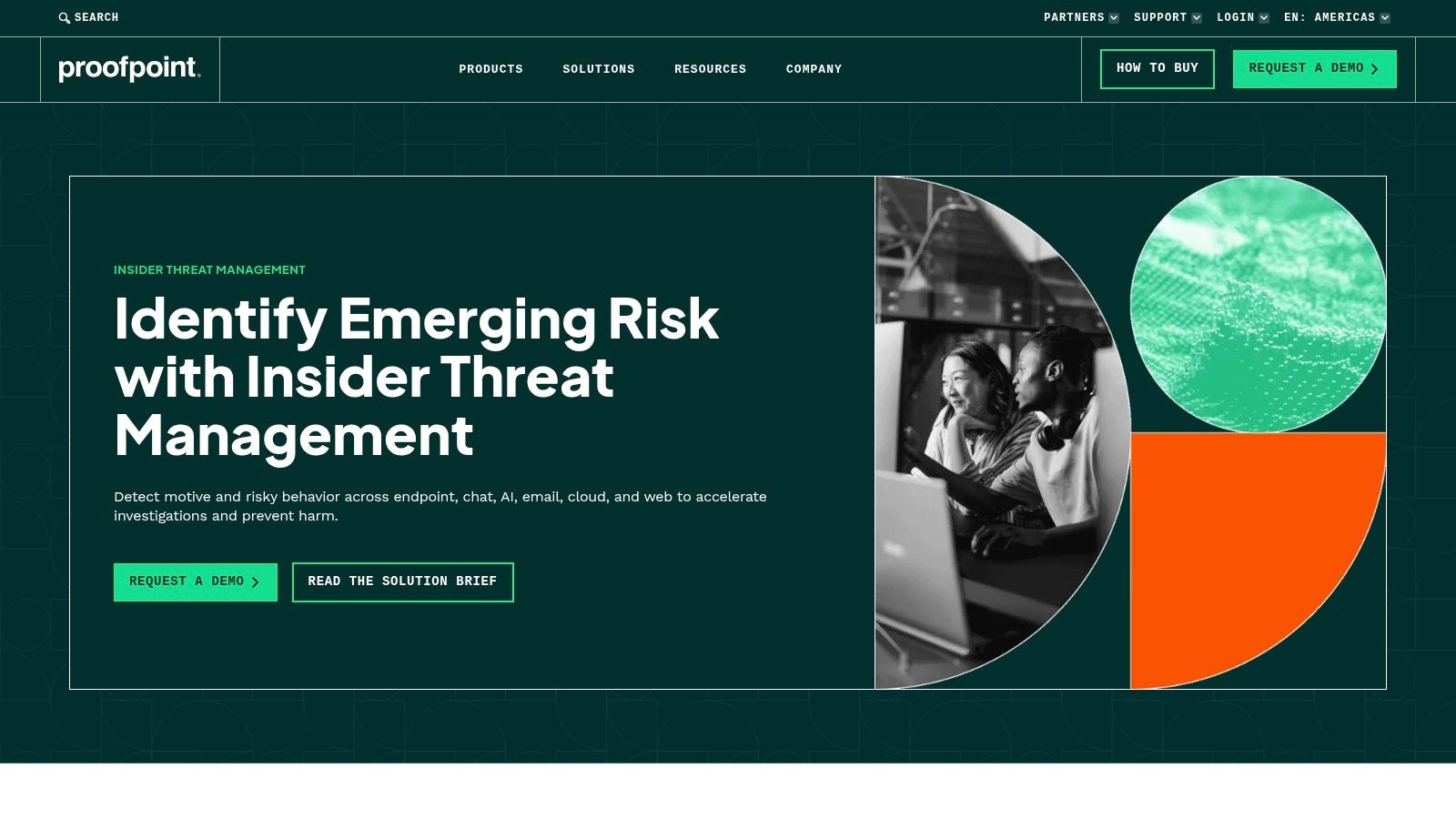
Best for reconstructing user activity across channels. Proofpoint Insider Threat Management combines endpoint, browser, cloud application, email, and web activity with investigation evidence and response controls. Its appeal is the ability to examine what happened around a risky action rather than treating the action as a self-contained incident.
Say an employee accesses a sensitive repository and then uploads files through a browser. An investigator needs the sequence, the account, the destination, and the surrounding activity. Proofpoint's timeline-oriented approach suits that question better than a disconnected collection of transfer alerts.
Where it works and where it doesn't
- Strength: Broad activity context supports incident reconstruction, while adaptive controls and coaching provide alternatives to opening another case.
- Trade-off: Deployment requires policy decisions, telemetry coverage, and coordination across security, legal, and HR.
- Privacy requirement: Anonymization, masking, and role-based access need deliberate configuration. Available controls aren't a substitute for governance.
For Solana analysis, the transferable concept is sequence reconstruction. Examine creator funding, token distribution, wallet purchases, transfers, and subsequent sales together. A sale becomes more informative when you understand the preceding transactions.
The boundary is identity. Corporate investigators may connect an account to an employee through managed identity records. Public transactions generally don't provide equivalent attribution. Similar timing or a shared funding source can justify further checks, but neither establishes that wallets share an owner. Proofpoint is appropriate for employee investigations, not for directly screening a token address.
2. Microsoft Purview Insider Risk Management
If your organization already works inside Microsoft's security and compliance ecosystem, Purview deserves an early evaluation. Microsoft Purview Insider Risk Management correlates configured activity signals to surface potential data leaks, intellectual-property theft, and security violations. Policy templates, alerts, and case workflows give analysts a structured route from detection to review.
Its practical advantage is ecosystem fit. Relevant Microsoft activity can sit alongside data-protection and compliance workflows, rather than requiring investigators to assemble every connection manually. Default user pseudonymization, role-based access, and audit logs also support controlled investigation.
Evaluate coverage before convenience
The limitation is the same dependency that makes Purview attractive: its value depends on the signals your environment supplies. A Microsoft-centric organization and a business whose sensitive work happens elsewhere shouldn't expect identical coverage. Licensing eligibility, audit configuration, and policy scope all belong in the evaluation.
Test a realistic scenario that crosses your actual applications. Require the evaluator to show the underlying events, not just a raised user score.
For token traders, the useful lesson is to define the risk scenario before interpreting the alert:
- Creator distribution: Did tokens move to wallets that subsequently traded in a related pattern?
- Concentration changes: Did apparent dispersion reduce concentrated exposure?
- Exit behavior: Did transfers precede sales into available liquidity?
Purview doesn't answer those on-chain questions. Its contribution is methodological: use explicit scenarios and inspect supporting evidence. A generic suspicious-activity label is less useful than a clearly defined condition with a reviewable transaction trail.
3. Exabeam Insider Threat Detection
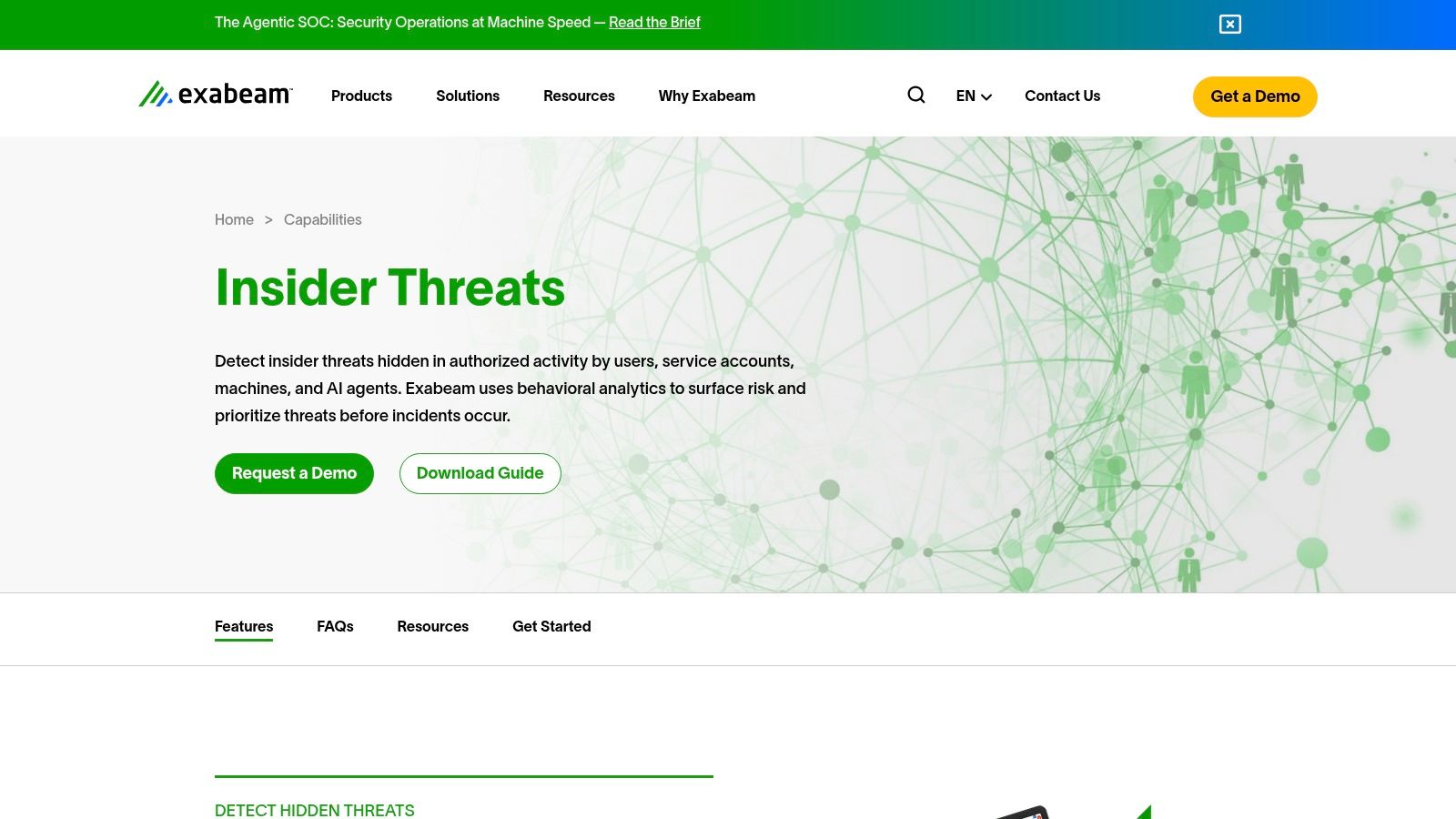
An employee can perform individually permitted actions that become concerning when combined. Exabeam's behavioral approach is relevant to that gap. Exabeam Insider Threat Detection builds behavioral baselines and correlates events over time, supporting investigations involving credential misuse, data leakage, privileged access, and suspicious deletion.
It can complement an existing security information and event management system, or SIEM, when analysts need behavioral context rather than another rule-based alert feed. Its identity coverage also extends beyond employees to service accounts, machines, and supported agent activity.
Baselines need usable history
The operational constraint is telemetry quality. If identity attribution is inconsistent or important applications aren't connected, an apparently complete timeline may omit the action that changes the interpretation. Buyers should validate supported sources and inspect how the platform handles missing events.
For Solana, behavioral baselines transfer imperfectly. An established wallet may provide history against which to compare a new purchase, transfer, or sale. A newly created wallet offers little baseline, and an older wallet can change strategy without becoming malicious.
A deviation tells you behavior changed. It doesn't tell you why.
Compare wallet activity with the token's lifecycle as well as the wallet's history. Launch participation, liquidity provision, and later position management are different activities and shouldn't share an undifferentiated suspiciousness threshold.
Exabeam is a candidate for organizations with enough connected telemetry to support meaningful baselines. It's the wrong purchase for a trader who only needs token-level checks. Borrow its emphasis on contextual deviation, not an assumption that every unusual wallet action indicates insider knowledge.
4. DTEX Platform
DTEX focuses on insider-risk investigations rather than treating them as a peripheral SIEM use case. The DTEX platform analyzes endpoint metadata and behavioral patterns, with investigation and threat-intelligence services available through DTEX i³. That combination may suit organizations developing an insider-risk program alongside their technical deployment.
The practical distinction is between collecting activity and knowing how to investigate it. A security team needs escalation criteria, evidence handling, access restrictions, and a process for consulting the people who understand legitimate work. Specialist support can matter when those processes aren't established.
Metadata still needs governance
DTEX's metadata-led approach offers behavioral context, but metadata isn't automatically harmless. File names, destinations, timestamps, and activity sequences can reveal sensitive organizational or personal information. Define collection scope and investigator access before expanding monitoring.
During evaluation, focus on:
- Endpoint coverage: Confirm supported operating systems and the behavior visible on each.
- Investigation depth: Check whether an analyst can explain an alert from preserved evidence.
- Operational fit: Establish how cases connect with existing SIEM, DLP, and HR processes.
The Solana parallel is transaction metadata. Funding paths, timing, counterparties, and repeated interaction patterns can support a hypothesis without exposing a wallet owner's identity. They can also invite overinterpretation.
A shared intermediary, for example, isn't necessarily evidence of shared control. Trace the surrounding transactions and identify alternative explanations before treating a cluster as creator-linked. DTEX's specialist investigation focus transfers well as a discipline. Its endpoint visibility and organizational context don't transfer to public-chain analysis.
5. Teramind
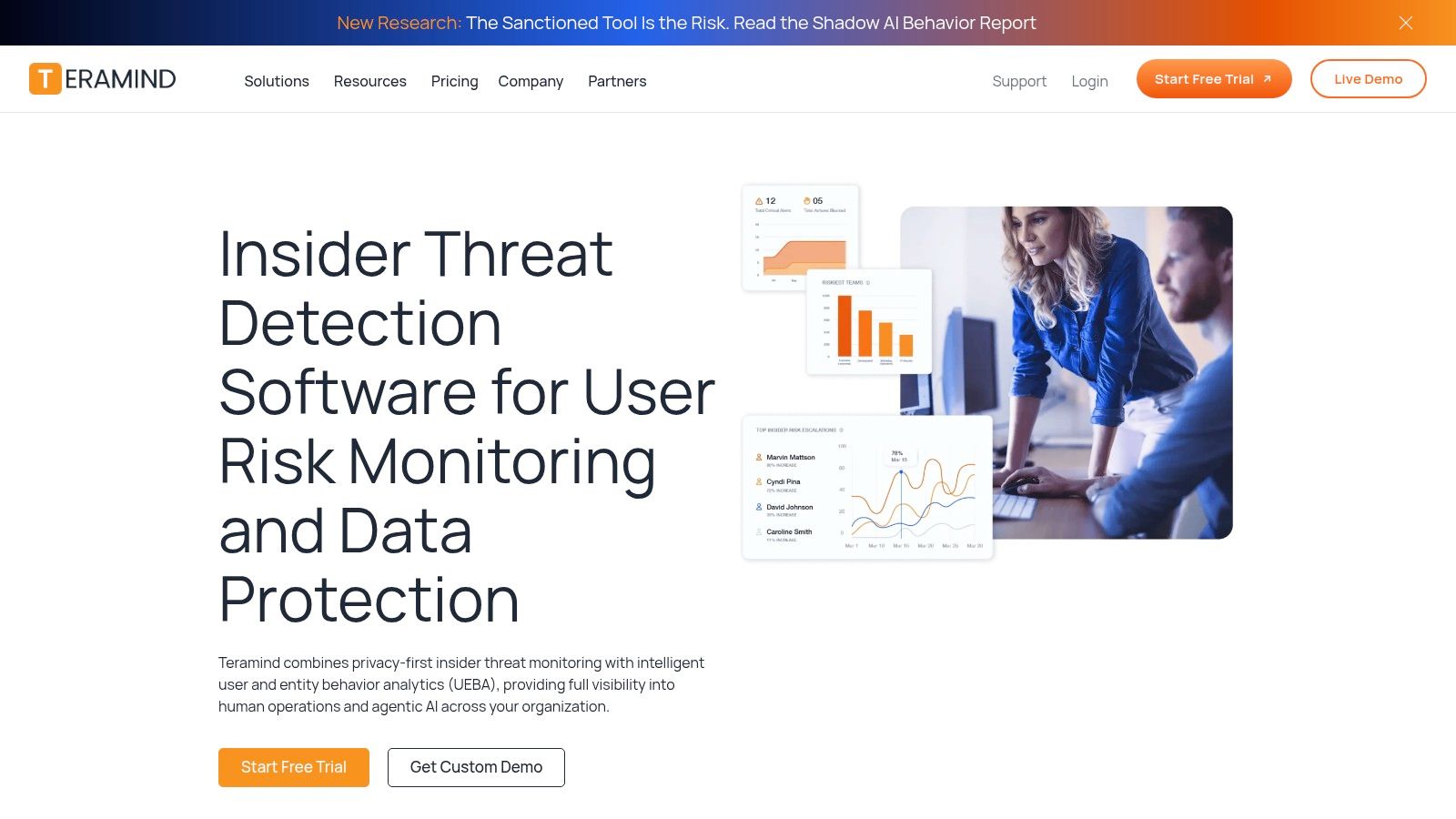
Sometimes the requirement is detailed endpoint evidence and the ability to stop risky data movement. Teramind combines user activity monitoring, behavioral rules, forensic capabilities, and data-loss-prevention controls. Recording or playback capabilities depend on the plan and configuration, as do more advanced analytics and prevention features.
That visibility carries a substantial governance burden. Before enabling visual capture, decide which applications and users are in scope, which content must be excluded, who can review recordings, and when evidence should be deleted. Buying detailed monitoring without answering those questions is poor implementation, not stronger security.
Prevention is the important distinction
Teramind is worth evaluating when an organization needs both investigation detail and endpoint enforcement. It's less suitable when the requirement is only permission mapping or broad correlation across security logs. Use the trial or demonstration to test the particular monitoring and blocking behavior you need.
- What works: Inspecting a concrete endpoint action and connecting it to a policy response.
- What needs scrutiny: Plan-dependent capabilities, capture exclusions, investigator permissions, and deployment architecture.
The on-chain boundary is especially clear here. A retail trader cannot deploy an endpoint agent onto a creator's device or block another wallet's transaction. Public-chain analysis provides observable transaction evidence, not screen playback or access to private deliberations.
What transfers is predefined response policy. Decide how an unresolved creator-linked cluster or a deterioration in liquidity affects your own trading permissions. You can pause entry, reduce exposure, or require additional review. Those are controls over your decisions, not controls over the wallets you're investigating.
6. Varonis Data Security Platform
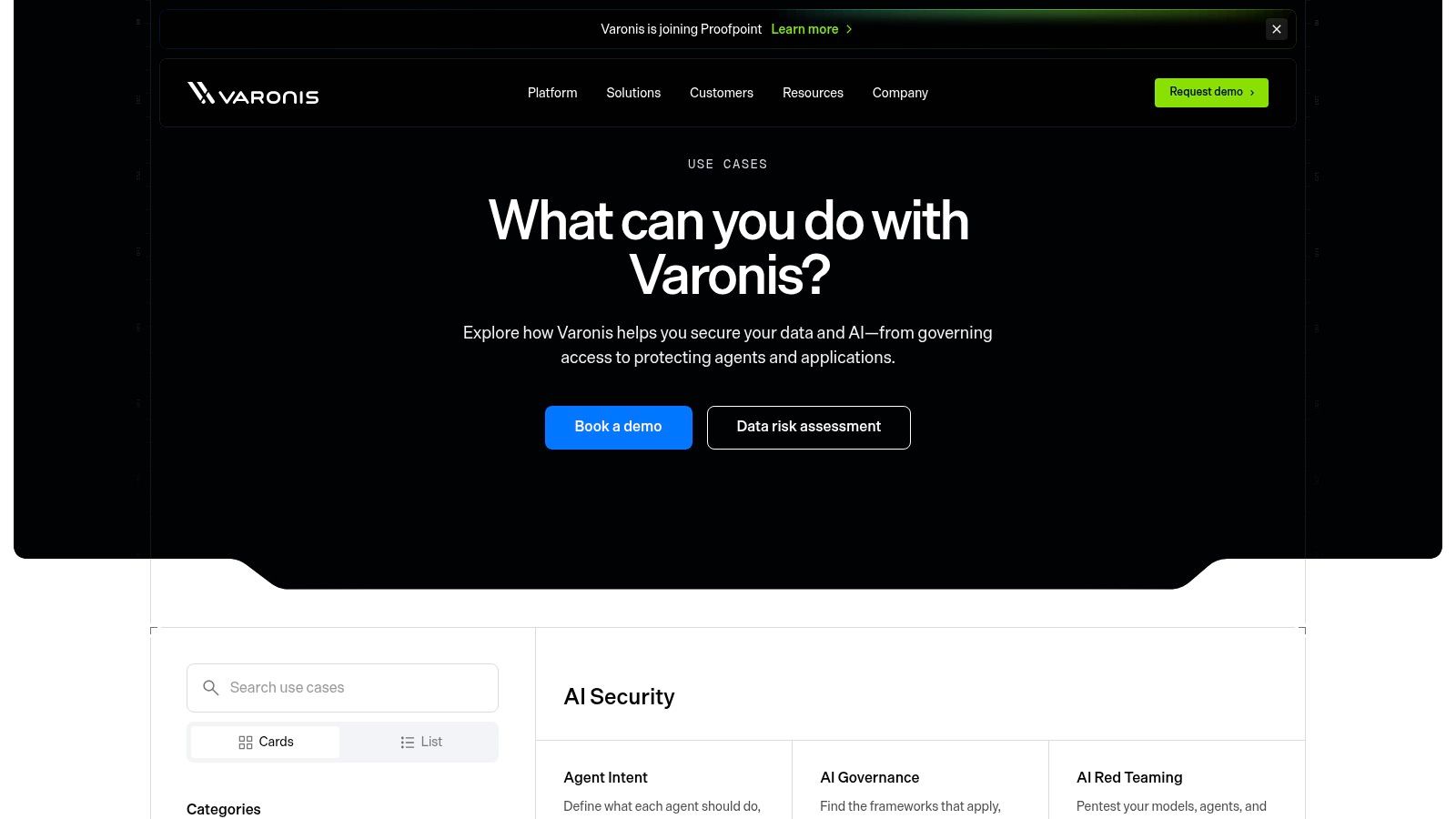
Start with the asset, not the user. That's the useful distinction in the Varonis Data Security Platform, which combines sensitive-data discovery, permissions analysis, activity monitoring, and abnormal-behavior detection. It fits organizations asking who can reach sensitive data and whether their access is appropriate.
Permission exposure matters even before a suspicious action occurs. An employee may have unnecessary access without ever misusing it. Mapping and remediating that exposure addresses a different problem from investigating a completed download.
Translate permissions into control exposure
Varonis can be broader than necessary for teams seeking only endpoint activity monitoring. Confirm the relevant data stores, included modules, remediation capabilities, and investigation workflow. A successful demonstration should connect a finding to the data, permissions, identity, and action involved.
For Solana tokens, the closest equivalent is mapping privileged capabilities and concentrated exposure:
- Authority checks: Establish whether minting or freezing capabilities remain available.
- Holder distribution: Examine whether a small group could exert substantial selling pressure.
- Creator activity: Review supported links between the creator and wallets holding or moving tokens.
These aren't equivalent to corporate file permissions. Mint authority is a technical capability, while a concentrated holding is an economic position. Keep them separate so a report doesn't blur different kinds of risk.
Varonis supplies a useful analytical order: identify the valuable asset, establish who can affect it, and then interpret behavior. For token review, that means checking control and distribution before treating trading volume or a reassuring chart as sufficient evidence of safety.
7. Securonix UEBA and AEBA
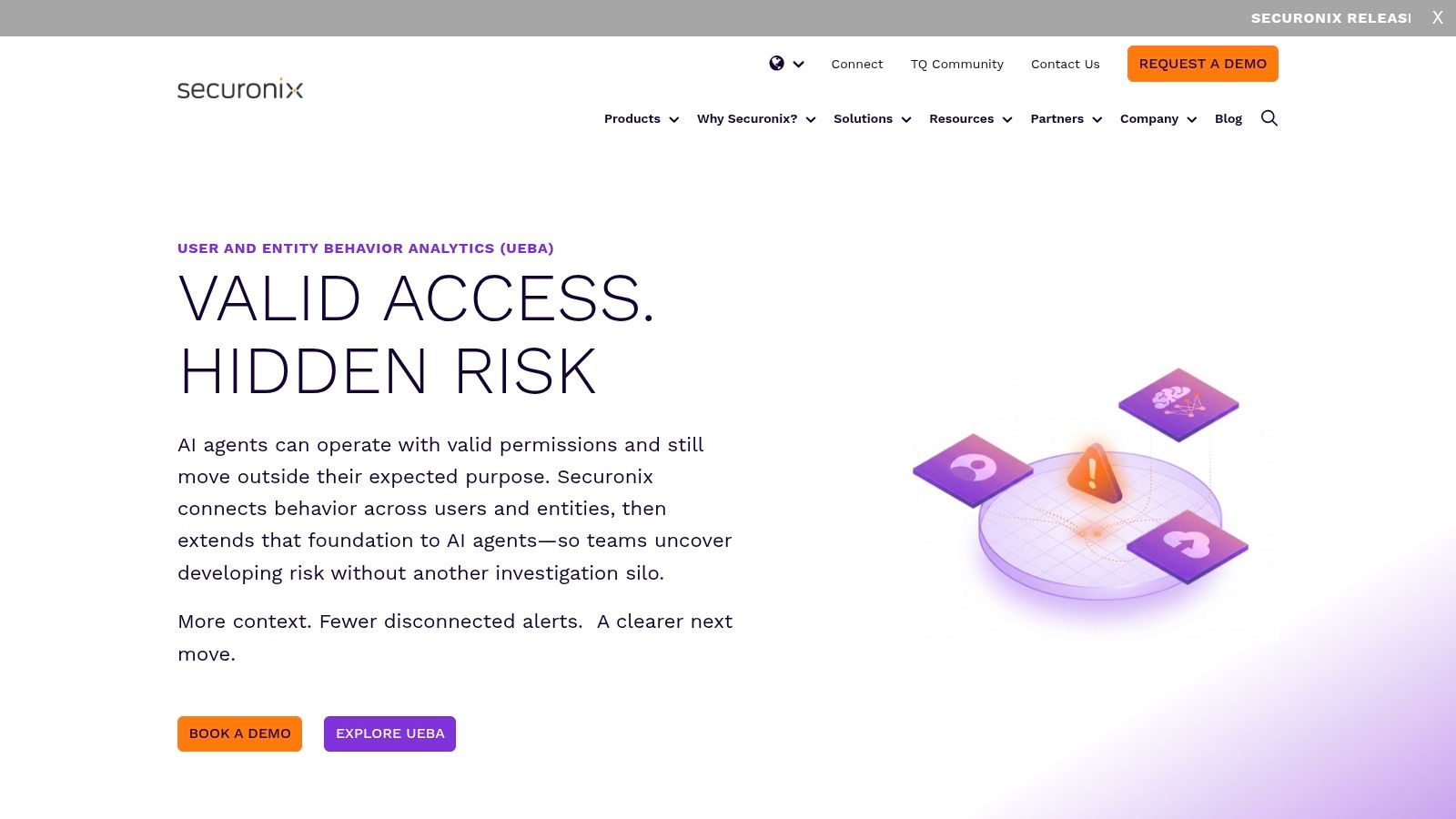
Scattered indicators are hard to evaluate when each arrives in a different dashboard. Securonix UEBA and AEBA applies user, entity, and agent behavior analytics across connected security data, correlating unusual access, privilege use, data movement, and communication activity. It's relevant when insider-risk detection belongs inside a wider security analytics program.
The integration problem is material. In the Fortinet 2025 Insider Risk Report, 52% of surveyed organizations identified monitoring SaaS and hybrid environments as their biggest barrier. Adding another dashboard won't resolve missing context unless the underlying events can be connected.
Test the chain, not the alert
Securonix is a candidate for teams investigating gradual or multistage activity across systems. It may be excessive for a smaller team seeking narrowly scoped file-transfer monitoring. Validate supported integrations, agent scenarios, and the steps required to challenge a risk score.
For token analysis, correlated activity might involve wallets receiving funds, acquiring tokens around launch, transferring holdings, and later selling in related sequences. Each relationship should retain its supporting evidence.
Attribution boundary: Coordinated-looking activity supports a coordination hypothesis. It doesn't establish common ownership or misconduct.
Bundled execution, shared funding, and synchronized trades are distinct observations. Treating them as interchangeable weakens the analysis, particularly when automation or shared infrastructure provides another explanation.
The useful transfer is multistage correlation. Require a tool to explain which actions connect and why. Neither a corporate behavior score nor an on-chain cluster label should conceal the evidence needed to assess competing explanations.
8. Forcepoint Risk-Adaptive Protection
Detection and enforcement are different jobs. Forcepoint Risk-Adaptive Protection connects user-risk signals with data-loss-prevention controls, adjusting enforcement as risk changes. It's relevant when an organization wants concerning behavior to influence whether a sensitive action is allowed.
A uniform DLP rule can create unnecessary friction for legitimate work. Risk-adaptive protection instead supports graduated restrictions based on behavior and context. The practical question is whether the organization can define those restrictions clearly enough to avoid disruptive or inconsistent enforcement.
Specify the response before deployment
Evaluate the required Forcepoint components, deployment architecture, and relationship with existing DLP policies. Don't assume a compelling risk dashboard automatically provides the blocking behavior you need.
A useful evaluation should address:
- Trigger evidence: Which observable events raise the user's risk?
- Enforcement scope: Which actions become restricted, and where?
- Recovery process: How are mistaken restrictions reviewed and removed?
- Auditability: Can an investigator explain both the risk change and the resulting control?
For Solana traders, risk-adaptive position management is the transferable concept. A change in holder concentration, creator behavior, or available liquidity can trigger a review of your own exposure. It shouldn't automatically become an accusation against the creator.
The enforcement analogy stops there. Forcepoint can apply controls inside a managed data-security environment. A token scanner can inform your decision, but it cannot generally prevent unrelated wallets from selling or guarantee your exit.
Forcepoint is wrong for direct token screening. Its useful lesson is to connect defined evidence to proportionate, reversible responses rather than merely accumulating warning labels.
9. Mimecast Incydr
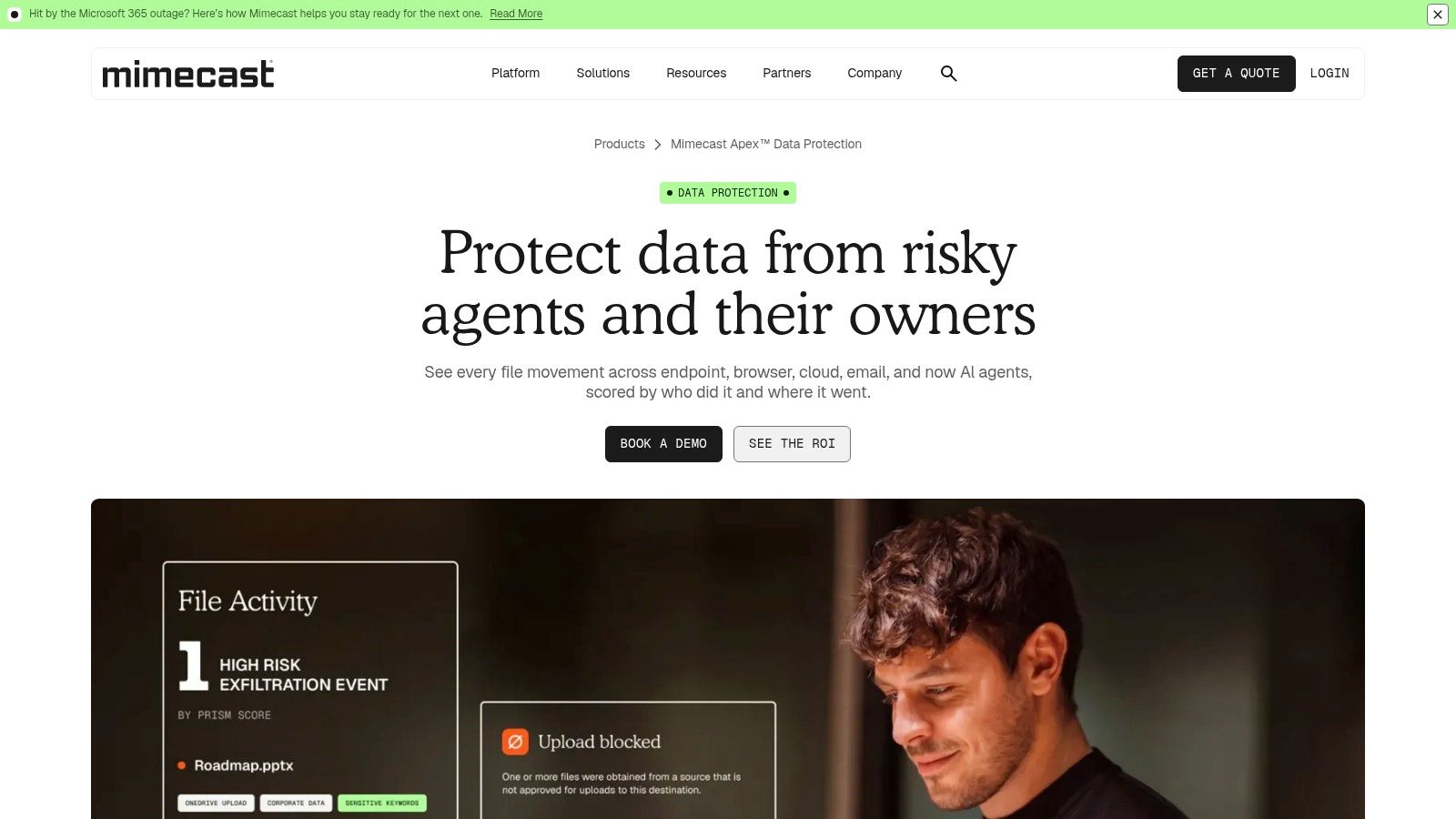
If the central question is where files went, Mimecast Incydr is a more focused candidate than a general behavior analytics platform. Mimecast Incydr monitors file movement and uses data, user, and destination context to prioritize potential exposure and exfiltration. Its workflows include watchlists, forensic search, and cases.
That specialization is useful for investigating departing-user activity or transfers to destinations outside organizational control. Mimecast describes an approach centered on file events and metadata rather than keystrokes or screen recording, which distinguishes it from detailed session-monitoring products.
Follow movement without inventing intent
The trade-off is scope. File movement analysis doesn't replace every form of identity, endpoint, or security analytics. Confirm supported endpoints and cloud services, and establish whether content inspection, retention, or workflow capabilities require additional components.
For Solana analysis, follow token movement and destination context with similar discipline. A transfer from a creator-associated wallet may deserve review, but the destination and subsequent actions matter. Moving tokens isn't the same as selling them.
- Transfer: Establish the sending address, receiving address, asset, and transaction sequence.
- Subsequent behavior: Check whether recipients hold, redistribute, provide liquidity, or sell.
- Attribution confidence: Separate an observed transaction from an inferred relationship.
A destination associated with trading infrastructure may have a different interpretation from a newly funded wallet that immediately sells. Neither interpretation should rest on a label alone.
Incydr's useful lesson is specificity: describe what moved and where it went before explaining why it might matter. It's not a wallet investigator, but its movement-focused logic translates cleanly into transaction review.
10. Splunk Enterprise Security UEBA
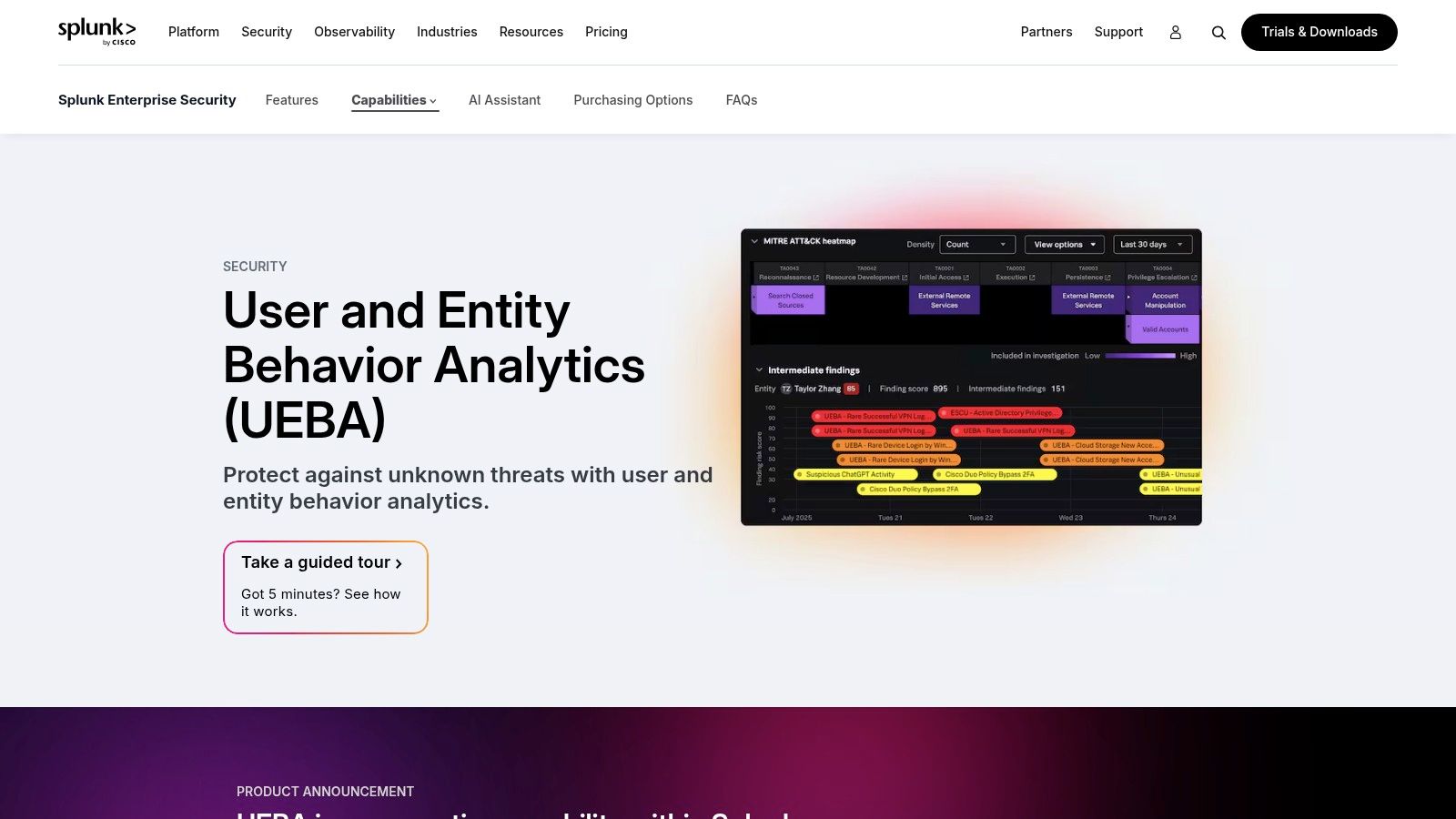
Splunk makes the most sense when behavioral analysis belongs inside an existing security operations workflow. Splunk Enterprise Security UEBA establishes behavioral baselines, identifies anomalies, and supports risk-based investigation across users, devices, applications, and connected security data. Splunk places this capability within Enterprise Security Premier rather than positioning it as a standalone point solution.
That packaging matters. A team already centralizing telemetry in Splunk has a different buying decision from a team seeking only an insider-risk detector. Data onboarding, identity normalization, integration work, and tuning remain part of the implementation.
Measure investigation value
Evaluate whether analysts can move from a prioritized risk finding to the original events without rebuilding the case manually. Test account misuse, unusual access, and potential exfiltration using representative activity. Include legitimate exceptions so the demonstration doesn't measure detection alone.
A synthetic insider-threat benchmark contained 2,904 telemetry records, including 2,798 noise records and 106 true-positive records. That isn't a production performance measure for Splunk or any platform here, but it illustrates why alert burden belongs in an evaluation.
- Precision and recall: Measure useful detections alongside missed cases.
- Triage effort: Record how much analyst work each finding requires.
- Evidence quality: Check whether a reviewer can reproduce the conclusion.
Quantitative token screens need the same discipline. Preserve the original signal and compare it with later observable outcomes. A subsequent price decline doesn't by itself prove insider misconduct, and a profitable trade doesn't establish that the original risk assessment was wrong.
How the 10 insider threat detection tools differ by pricing signal, primary focus and best-fit buyer
Pricing in insider threat detection rarely appears on a rate card. Quote-only vendors signal a longer procurement cycle; published pricing signals self-service evaluation. Detection focus matters just as much. Endpoint recording answers what a person did. Data-access monitoring answers what a person could reach. Buyers who need one will overpay for the other.
| Item | Pricing Signal | Primary Focus | Best For |
|---|---|---|---|
| Proofpoint Insider Threat Management | Quote-based; contact sales | Cross-channel user behavior monitoring and investigation | Organizations needing broad activity context and response options |
| Microsoft Purview Insider Risk Management | Subscription pricing varies by plan and user count; confirm licensing terms with vendor | Insider-risk detection across Microsoft 365 and configured signals | Microsoft-centric organizations |
| Exabeam Insider Threat Detection | Public pricing unavailable | Behavioral analytics and event correlation across identities | Teams extending SIEM workflows with behavioral context |
| DTEX Platform | Public pricing unavailable | Endpoint metadata analytics and insider-risk investigations | Organizations building a specialist insider-risk program |
| Teramind | Tiered pricing; varies by seat count and billing | User activity monitoring, forensics, and DLP controls | Organizations seeking endpoint visibility and activity prevention |
| Varonis Data Security Platform | Quote-based; free risk assessment available | Sensitive-data discovery, access monitoring, and remediation | Teams focused on data access and permissions |
| Securonix UEBA and AEBA | Public pricing unavailable | Behavior analytics across users, entities, and systems | Teams correlating insider-risk signals in a wider SIEM program |
| Forcepoint Risk-Adaptive Protection | Public pricing unavailable | Risk-adaptive DLP and data-movement controls | Organizations connecting user risk with data protection enforcement |
| Mimecast Incydr | Public pricing unavailable; trial availability varies, confirm with vendor | File movement and data-exfiltration risk | Teams prioritizing insider-related data exposure |
| Splunk Enterprise Security UEBA | Included in Enterprise Security Premier; no standalone price | Behavioral analytics within SIEM workflows | Organizations already using or planning Splunk Enterprise Security |
The same split appears in token analysis. Holder concentration and linked-wallet behavior are visibility signals, not proof of insider conduct. No score replaces an evidence chain. Use the table to see what each vendor optimizes, then confirm current terms with the vendor.
Choosing the Right Signals Before Choosing the Tool
Enterprise platforms and Solana token analyzers solve different visibility problems. An organization can manage identities, deploy endpoint monitoring, classify sensitive files, and enforce access policies. A retail trader usually observes public transactions and market conditions without knowing who controls each address or why they acted.
Choose enterprise insider threat detection tools according to the investigation you need to perform. Proofpoint and Teramind emphasize detailed activity evidence; Purview fits Microsoft-centered workflows; Varonis starts with sensitive data and access. Exabeam, Securonix, and Splunk support broader behavioral correlation, while DTEX, Forcepoint, and Incydr bring different combinations of specialist investigation, enforcement, and movement analysis.
Keep the concepts and reject false equivalence
For Solana, the transferable ideas are behavioral comparison, control mapping, transaction sequencing, and corroboration. Employee identity attribution, endpoint recording, HR context, and corporate enforcement don't transfer because a scanner uses the word insider. A wallet cluster is an analytical hypothesis unless stronger evidence establishes the relationship.
Research on AI-based insider-threat detection identifies noisy behavior, concept drift, scarce labeled data, and interpretability as recurring limitations. Those concerns support a practical requirement: preserve the evidence and make the explanation challengeable. An opaque score is a weak basis for either an employment decision or a trade.
For token review, MemeAssist's reports provide a first-pass interpretation of live on-chain and market evidence. Our analyses examine liquidity, holder distribution, creator behaviour, wallet activity, trading patterns, and historical risk indicators. Each report presents an Overall Health Score, Rug Risk Rating, AI Verdict, and Detailed Risk Breakdown.
- Treat flags as questions: Suspicious activity and possibly connected wallets are starting points for further checks, not evidence of misconduct.
- Treat gaps as uncertainty: Missing creator history or incomplete wallet attribution isn't proof of safety.
- Choose your workflow: Our free scanners remain available for users who prefer to gather and interpret the underlying data themselves.
Start by listing what your situation can observe. For an enterprise, that might include authentication, file access, endpoint events, and approved destinations; for a token, it might include authorities, liquidity, holder concentration, funding paths, and trading sequences. Test each candidate against those signals, include benign explanations, and verify consequential findings before acting.
Our Solana token reports connect holder concentration, creator behaviour, wallet activity, and trading patterns with supporting evidence and plain-English explanations. Visit MemeAssist to run a first-pass token review or use the free scanners, then verify the flagged relationships before making a trading decision.
Topics: insider threat detection, UEBA tools, Solana token security, on-chain insider signals, rug pull detection
Informational only, not financial advice. Meme coins are extremely high-risk.
All articles