Insider Trading Website Picks: 10 Tools for 2026

The usual advice to find the best insider trading website gets the workflow backward. Most roundups rank platforms as if they compete head-to-head. They don't. Screening a fresh launch, mapping holder clusters, profiling a suspicious wallet, and monitoring known addresses are different jobs.
For Solana meme coins, the distinction matters because an insider label is an analytical lead, not a verified identity or legal finding. Traditional corporate disclosures concern identifiable reporting insiders, while pseudonymous token wallets require a different investigative approach, as the SEC's guide to ownership reports helps establish. Don't assume a crypto dashboard's terminology carries the same meaning as a securities filing.
Choose the tool for the question you need answered, not the most alarming label on its dashboard.
A useful investigation starts with the token address and ends with evidence you can inspect: funding transactions, ownership changes, trading sequences, and available liquidity. A profitable early buyer might be connected to the creator, but they might also be running automation against publicly visible launches.
These picks are organized around those research jobs. Their strengths differ, and none replaces transaction-level verification.
Table of Contents
- 1. Insider Tracker
- 2. GateKept
- 3. Birdeye
- 4. GMGN
- 5. Bubblemaps
- 6. Nansen
- 7. Arkham
- 8. Cielo
- 9. RugCheck
- 10. Pingr
- 10 Insider Trading Websites Compared
- Building a Stack Instead of Picking a Winner
1. Insider Tracker
Insider Tracker fits the initial investigation of newly launched tokens. It connects launches with wallets and prior token activity, letting you examine whether the same addresses or related patterns recur across launches.
Its core research interface is described as free and available without an account. Holder concentration, wallet histories, repeated launch patterns, and a sellability test make it more useful for launch screening than a dashboard focused only on price.
Start With Behavior, Then Verify Connections
Say a fresh token has several early buyers whose histories include the same previous launches. That's a reason to inspect funding and transaction timing, not immediately conclude that the creator controls every address.
Use insider concentration as an ownership-risk question: how much supply could connected participants potentially sell, and what evidence supports treating them as connected?
- Best fit: Investigating fresh launches and recurring wallet behavior before committing to deeper research.
- Useful distinction: The sellability test adds a practical check beyond interpreting wallet associations.
- Main limitation: Historical overlap doesn't establish common ownership, coordination, or wrongdoing.
Pair the results with a block explorer when a connection affects your decision. Inspect the actual transfer, its direction, and its timing. A sellability result also shouldn't be confused with a guarantee that your intended position can exit at an acceptable price.
2. GateKept
Early buyers matter most when you can understand what they still hold and whether they're selling. GateKept brings Solana insider-wallet research, launch bundles, holdings, and selling activity into token-level research pages.
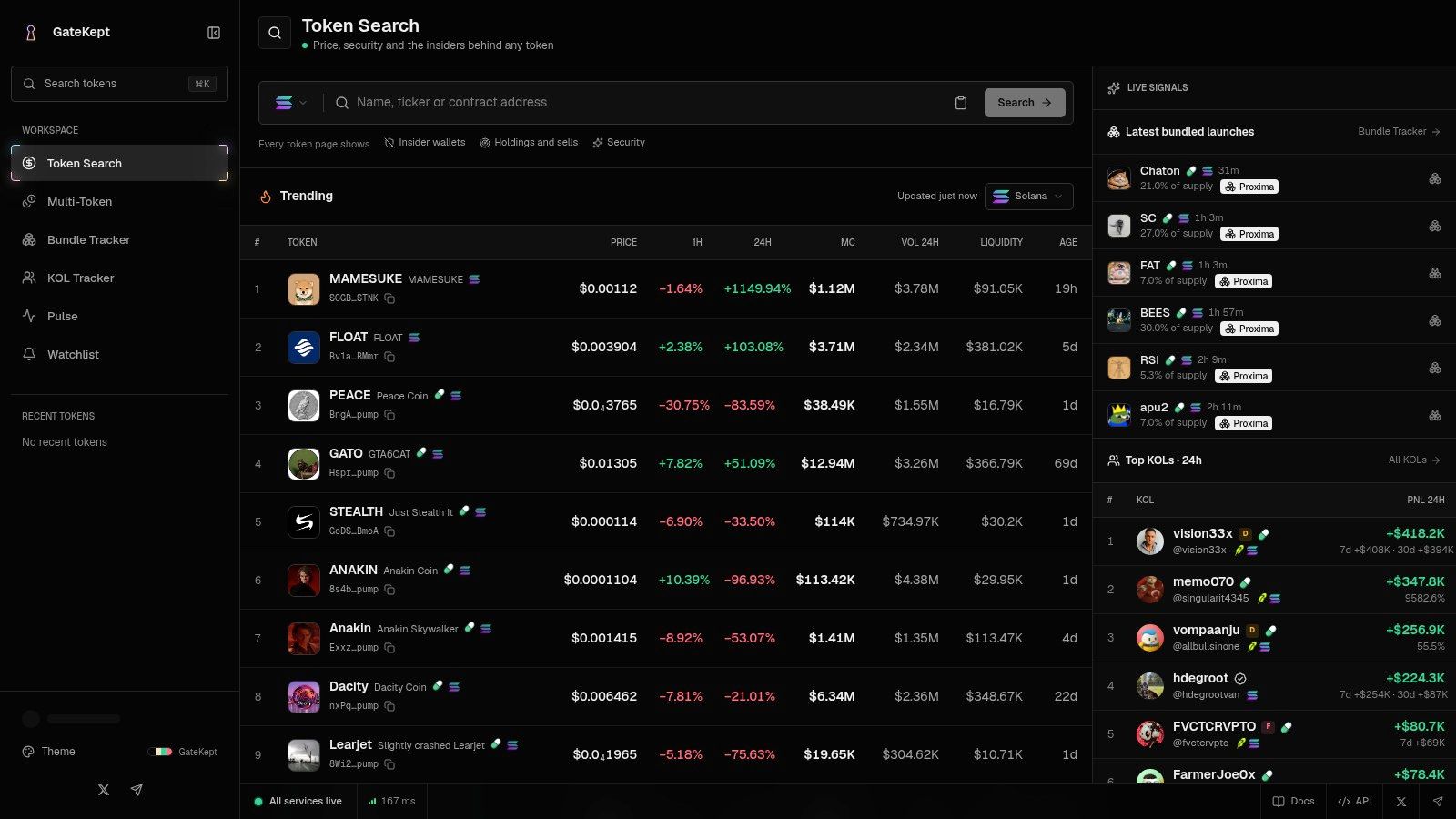
That combination suits traders investigating possible launch coordination. Security information alongside wallet signals helps keep the investigation tied to the token rather than turning into an isolated hunt for suspicious addresses.
Separate Launch Structure From Intent
A bundle label can help identify activity worth examining together. It doesn't tell you who ultimately controls the wallets or why the transactions occurred.
I'd use GateKept to ask whether flagged early participants retained a meaningful position, distributed tokens elsewhere, or sold into later demand. Those are more actionable questions than whether a dashboard calls someone an insider.
Practical rule: Treat a bundle classification as a starting point for reconstructing the launch, not a verdict about the participants.
Its strength is consolidating launch-related checks around a token. Its limitation is that classification still requires interpretation, and the amount of detail available without an account should be confirmed before you build a workflow around it.
When a finding looks significant, preserve the addresses and transaction references. A screenshot of a label is less useful than an evidence trail another researcher can reproduce.
3. Birdeye
Birdeye is a better fit when the question is how tagged holders relate to the broader market. Its market-data and holder-intelligence products combine token snapshots with wallet positions, trading volume, average entry, and profit-and-loss information.
Tagged categories include insider, developer, sniper, and bundler. That gives traders a way to investigate groups rather than manually opening every address in a holder list.
- Market context: Compare holder behavior with the token's trading activity instead of reading ownership in isolation.
- Wallet detail: Examine positions and trading records behind a category.
- Developer workflow: API offerings can support repeatable token and wallet research, subject to access and plan restrictions.
Check What the Interface Actually Exposes
Birdeye's data offering isn't identical to what every visitor can access through its public interface. Confirm that the holder fields, historical coverage, and export or API access you need are available before designing a quantitative screen.
For discretionary research, the useful question is whether a tagged group is accumulating, distributing, or transferring its position. Don't turn an average-entry figure into a prediction about where holders must sell.
The trade-off is breadth versus verification. Birdeye can bring market and holder information together, but its classifications remain leads. If a tag drives your thesis, examine the underlying wallet activity rather than relying on the category name.
4. GMGN
Finding a wallet worth following is a different job from assessing a single token. GMGN addresses that discovery problem through Wallet Radar, which can scan selected tokens for shared holders and active high-profit wallets.
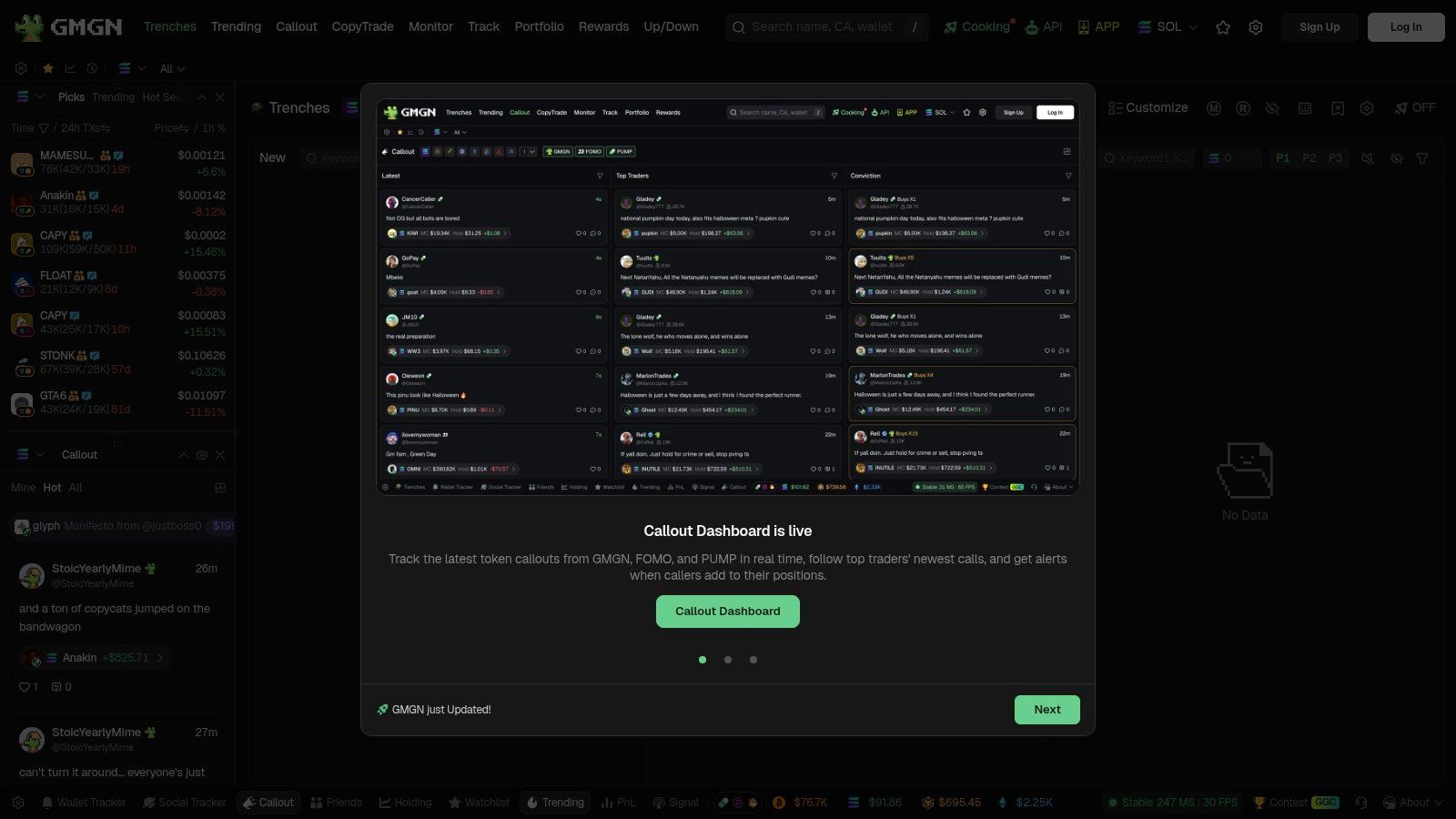
You can sort results by earliest buys, highest profits, and shared holdings, then add addresses to a tracking list. This is useful when you've identified several launches and want to find participants who recur across them.
Discovery Is Not a Copy-Trading Thesis
Start with the wallets' trading sequences, not the profit ranking. Check whether an address repeatedly enters early, whether it exits gradually or abruptly, and whether transfers complicate the apparent result.
A profitable history doesn't establish advance knowledge. It also doesn't tell you whether you could have entered and exited under comparable conditions.
- Works well for: Narrowing overlapping holder lists into a manageable research queue.
- Needs restraint: Moving directly from an attractive wallet result into execution.
- Confirm first: Current feature access, account requirements, and the tracking functions available to you.
GMGN connects research with trading features, which can reduce friction but also shorten the pause between finding a signal and acting on it. I'd keep wallet discovery separate from trade approval: investigate the address first, then assess the current token and its liquidity independently.
5. Bubblemaps
A flat holder list can hide relationships that are easier to examine visually. Bubblemaps maps token holders and wallet connections, making it useful for investigating concentrated supply and clusters across Solana and other supported chains.
Its maps and historical distribution analysis can help you ask whether apparently separate holders deserve closer examination. That's a valuable second opinion when a token's holder list looks dispersed but transfers suggest relationships.
Read the Connections, Not Just the Shapes
A visible cluster isn't conclusive evidence of common ownership. You still need to understand which transfers created the connections and whether an intermediary explains them.
The practical skill is knowing how to read a crypto bubble map without treating every connected group as a coordinated trading operation. Inspect the participating addresses, then reconstruct relevant fund flows and timing.
A cluster is a reason to investigate shared exposure. It isn't permission to assign every wallet to the same person.
Bubblemaps is strongest at making relationships inspectable. It's weaker as a standalone explanation of intent, and available chains or app features can differ.
Use it after an initial token screen and before choosing wallets for deeper profiling. If a cluster could materially affect exit liquidity, follow its transfers at transaction level rather than relying on the visual summary.
6. Nansen
Nansen suits wallet profiling and behavioral research more than a quick token-safety verdict. Its Solana tools include wallet labels, holder research, profit-and-loss analysis, Smart Money tracking, and profitable-address leaderboards.
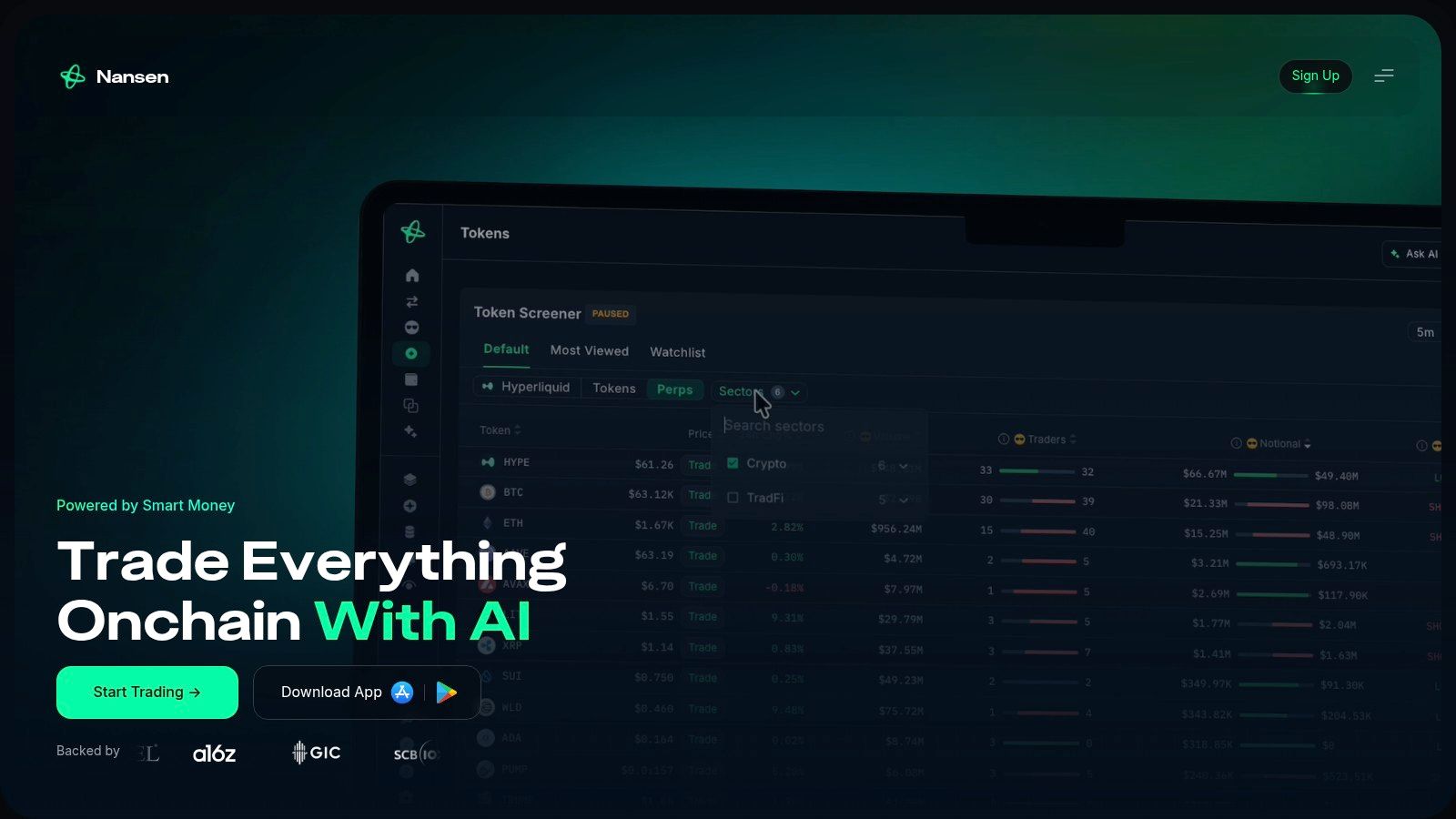
Its documentation describes Solana analytics as available to registered free users. Broader multichain workflows, API access, and expanded alert capabilities may require paid access, so match the plan to the research job rather than assuming every feature is included.
Investigate How the Wallet Makes Money
A Smart Money label is useful for prioritizing research, not endorsing a trade. Examine whether the wallet's relevant behavior resembles the strategy you could realistically follow.
For example, a wallet that succeeds through launch-speed execution may offer little practical guidance to a manual swing trader. A more useful candidate might show a repeatable holding pattern you can evaluate without competing on transaction speed.
- Strong fit: Profiling unfamiliar addresses and comparing their activity across tokens.
- Access trade-off: Registration is required, and expanded workflows may need a paid plan.
- Interpretation limit: Historical profitability doesn't guarantee future results.
Learning how to track Smart Money wallets on Solana means examining losses, transfers, and exits as carefully as winning entries. Nansen helps organize that research, but the label alone shouldn't determine which wallet earns a place on your watchlist.
7. Arkham
Follow the money when an address label doesn't answer the question. Arkham provides wallet and entity research, visual fund tracing, trader profiling, and Solana activity alerts.
That makes it useful after you've found an address and need to understand where funds came from or where proceeds went. It's a broad intelligence platform, not a dedicated, one-screen meme-coin safety report.
Use Attribution Carefully
A named entity can make an investigation easier to follow, but attribution deserves scrutiny. Distinguish a visible transfer relationship from a claim that an entity controls the receiving wallet.
For a suspicious launch, trace relevant funding before the first purchase and transfers after selling. Keep the chronology intact, and avoid treating every address along the path as a participant in the same strategy.
- Visual tracing: Explore fund movements that are difficult to follow through disconnected transaction pages.
- Ongoing observation: Use alerts for addresses whose subsequent activity matters to your research.
- Access constraint: Free accounts have limited alert and dashboard access.
Arkham's main advantage is continuity between investigation and monitoring. You can investigate a flow, identify the addresses that matter, and watch for subsequent activity.
Its limitation is scope: tracing funds doesn't replace checking token authorities, liquidity, or holder distribution. Use Arkham to explain wallet activity, then return to token-level evidence before making a risk judgment.
8. Cielo
Once you know which addresses matter, repeated manual checking becomes inefficient. Cielo focuses on wallet activity feeds, custom alerts, token flows, and monitoring through web, Telegram, and Discord tools.
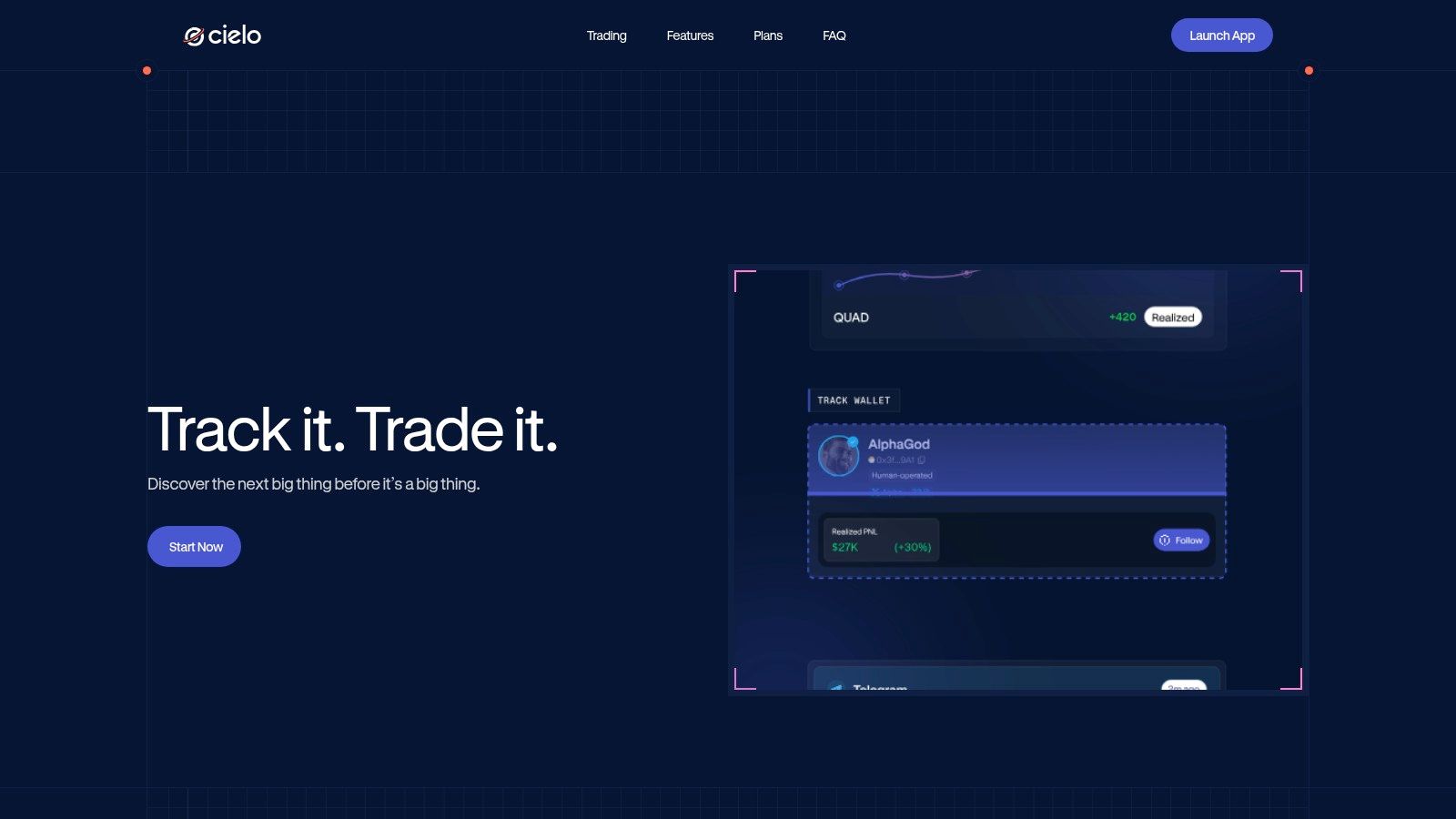
Public wallet lists and discovery features can help expand a watchlist, but its clearest job is ongoing observation. A free tier is available, while paid plans expand capacity and features; confirm current limits in the app.
Build Alerts Around a Reason to Act
Don't follow an address merely because it appeared in a profitable-wallet list. Record why it matters: creator funding, repeated launch participation, a concentrated position, or a trading pattern you're testing.
Then configure alerts around that question. If your concern is distribution, watching sales and outgoing transfers is more useful than receiving every minor interaction.
Monitoring discipline: An alert tells you that something changed. It doesn't tell you to copy the transaction.
Cielo can reduce repetitive checks, but it won't determine whether the underlying token is safe. A buy alert also doesn't explain whether the address received tokens elsewhere or holds related exposure through other wallets.
Keep the watchlist selective. If you can't explain what you're waiting to learn from an address, more notifications are unlikely to improve the decision.
9. RugCheck
Before profiling a clever trader, check whether the token itself has obvious structural risks. RugCheck is a Solana token-risk checker covering on-chain characteristics such as mint and freeze authorities, liquidity, and holder distribution.
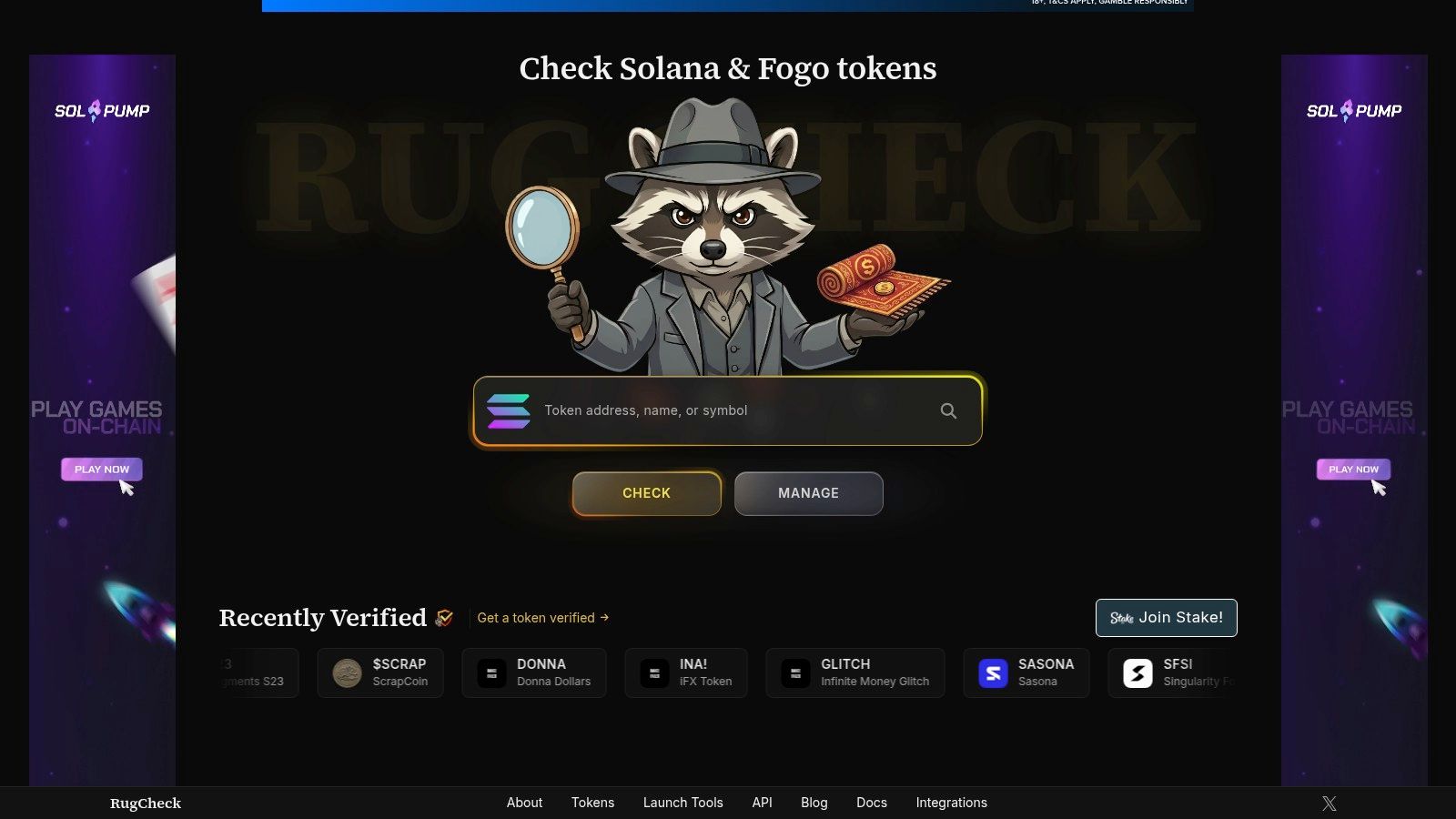
It belongs near the beginning of the workflow. A rapid token-level screen can identify reasons to pause before spending time on wallet attribution or historical profitability.
Read the Findings Behind the Rating
A risk score summarizes selected checks. It doesn't fully assess wallet relationships, explain trading intent, or guarantee that conditions won't change.
Inspect the specific findings rather than treating the overall result as permission to buy. Authority-related concerns, concentrated ownership, and liquidity questions require different follow-up work.
- Good use: Identifying token-mechanics questions that wallet trackers may not summarize.
- Poor use: Treating a favorable scan as a guarantee against a rug pull.
- Necessary follow-up: Investigating flagged holders and checking conditions again when your decision depends on them.
RugCheck and a wallet profiler aren't substitutes. A token can require further investigation even when you recognize its holders, and an interesting wallet doesn't resolve token-level risks.
I'd use RugCheck as an early filter, then spend investigative effort on unresolved findings. That keeps a familiar mistake in check: researching who bought while neglecting what you're buying.
10. Pingr
Pingr describes a Solana wallet-intelligence approach based on scoring, rankings, potential insider and sniper signals, and cluster research. Its stated filters aim to reduce the influence of wash trading and inflated wallet groups.
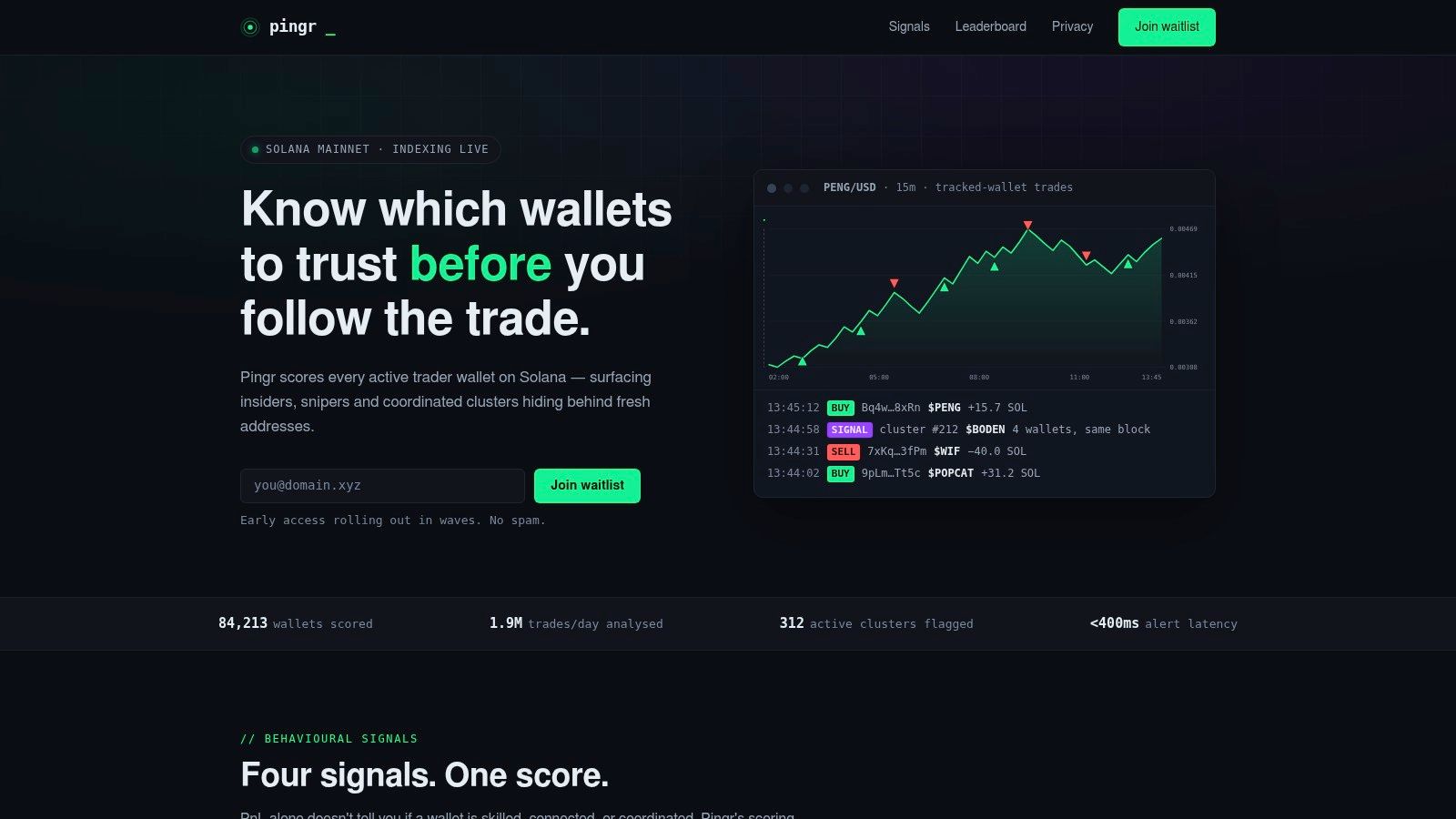
That focus fits traders trying to prioritize unusually early or potentially coordinated activity. The important qualifier is that these remain product classifications rather than established findings about a wallet's identity or intent.
Treat Scoring as Research Triage
A ranking helps decide which address to inspect next. It shouldn't decide which address you trust.
Check whether the flagged behavior survives a manual review of funding, entry timing, transfers, and exits. If a score appears driven by a connected wallet group, look for a transaction-level explanation you can verify yourself: shared funding sources, coordinated entries, or mirrored exits.
- Potential strength: Prioritizing addresses that warrant closer examination.
- Validation gap: Before relying on its rankings, look for a published methodology or documented examples of scores matching later market outcomes, and test a few flagged wallets yourself.
- Best pairing: A token-risk checker and raw transaction review.
Pingr's appeal is its specific focus on suspicious or unusually early trader behavior. Its limitation is the same one that affects any scoring model: without understanding the inputs and inspecting examples, you can mistake a useful sorting mechanism for proof.
I'd treat a top-ranked wallet here as a lead that earns a closer look, with the transaction history doing the essential work. Use its results to form a testable question, such as whether recurring early buyers share funding, and let the on-chain evidence settle it rather than the insider label.
10 Insider Trading Websites Compared
No single site covers the full research job, so this table groups each tool by what it does: screening launches, mapping holders, profiling wallets, or monitoring activity. Read every label column the same way. Each one is a starting point for transaction-level review, not a verdict.
| Item | Primary research job | Solana focus | Free access | Key limitation |
|---|---|---|---|---|
| Insider Tracker | Investigate token launches, wallet histories, holder concentration, and sellability | Solana-focused | Core tool is free; no account required | Wallet links are clues, not proof of shared ownership or wrongdoing |
| GateKept | Research insider wallets, holdings, and launch bundles | Solana-focused | Access without an account is unclear | Labels do not establish identity or intent |
| Birdeye | Analyze token markets, holders, and wallet activity | Includes Solana analytics | Free public dashboards; API and some holder data are paid | Some holder data and API features may require paid access |
| GMGN | Find and track recurring or high-performing wallets across tokens | Solana-oriented | Account and feature requirements should be confirmed | Past wallet performance does not predict future results |
| Bubblemaps | Visualize holder relationships, clusters, and token distribution | Supports Solana and other chains | Free public map viewing; some features require sign-up | Clusters do not prove common ownership |
| Nansen | Profile wallets, research token holders, and track Smart Money | Solana analytics available | Free for registered users; expanded features may be paid | Requires an account; labels do not guarantee performance |
| Arkham | Trace fund movements, profile wallets, and set activity alerts | Supports Solana wallet research | Free accounts have limited access | Broad intelligence platform, not a dedicated token-safety report |
| Cielo | Monitor wallet activity and receive alerts across integrations | Multi-chain wallet tracking, Solana included | Free tier available; paid plans expand capacity | Monitoring wallets does not assess whether a token is safe |
| RugCheck | Screen token mechanics, liquidity, authorities, and distribution | Solana-focused | Free token risk scans | A scan cannot guarantee a token will not rug |
| Pingr | Score and rank wallets for potential insider, sniper, or cluster activity | Solana-focused | Public wallet rankings; full pricing not published | Scores and labels are leads, not proof |
Read the limitation column first. If a tool's output cannot be checked against raw transactions, its label stays a hypothesis no matter how confident the dashboard looks.
Building a Stack Instead of Picking a Winner
The practical answer isn't a universal winner. It's a workflow with distinct jobs: screen the token, map its holders, investigate relevant wallets, and monitor what remains unresolved.
Start with RugCheck or a launch-focused tool such as Insider Tracker. Use Bubblemaps when ownership relationships need visual inspection, then investigate selected addresses through Nansen or Arkham. GMGN and Pingr can help discover candidates, while Cielo fits ongoing monitoring.
Keep Evidence Separate From Interpretation
Save the token address, wallet addresses, transaction references, and analysis time. Write down what you observed separately from what you inferred: a transfer is observable; shared ownership may remain uncertain.
For automated workflows, preserve the underlying fields instead of storing only a risk label. Otherwise, you can't reliably explain why your system flagged a token or evaluate whether the classification was useful later.
Traditional disclosures require similar care. The SEC's Form 4 distinguishes transaction reporting from a determination of unlawful conduct, and crypto researchers should maintain that separation between observed activity and allegations.
- Screening result: A reason to investigate token mechanics.
- Holder cluster: A reason to examine relationships and concentrated exposure.
- Wallet label: A hypothesis to test against transaction history.
- Alert: A prompt to reassess, not an instruction to trade.
At MemeAssist, we consolidate liquidity, holder distribution, creator behavior, wallet activity, trading patterns, and historical risk indicators into a Solana token report with a health score, rug risk rating, detailed breakdown, and plain-English AI verdict. A public dated report rejected UNTIE for bundled insider holdings at a $3.7M market cap on 1 August 2026, followed by a 98.5% price decline over the next 24 hours; that's a specific outcome, not a guarantee of future detection. A full analysis costs $0.20, uses pay-as-you-go pricing, requires no wallet connection, and includes a conditional Trade Setup when the data allows.
Whatever insider trading website you choose, demand evidence you can inspect. Treat every insider label as a lead to verify, never as proof on its own. Informational analytics can support research, but meme coins remain extremely risky and you can lose all invested capital.
Bring a Solana token address to MemeAssist for a report connecting holder concentration, creator behavior, liquidity, and potential insider or bundle patterns. Use the detailed findings and plain-English explanation to identify what needs verification before you trade, without connecting your wallet.
Topics: insider trading website, solana meme coins, on-chain analysis, wallet tracking, rug pull detection
Informational only, not financial advice. Meme coins are extremely high-risk.
All articles