Micro Cap Altcoins: A Complete Risk Guide for Traders
Learn what micro cap altcoins are, why traders chase them, and how to spot rug pulls before you buy. A practical risk guide with a due diligence checklist.
Published
Updated
A study of newly issued tokens on Orca, Raydium, and Meteora flagged 76,469 suspected rug pulls among 100,063 tokens examined, with liquidity withdrawal among the most common patterns (2025 study of newly issued tokens).
That number reframes the risk question for micro cap altcoins. Screening for scams is the easy part. The harder test is survivability: if the trade moves against you, can you get out? A token can pass every rug-pull check and still trap your capital. Technically sellable is not the same as profitably sellable.
Before I size into any micro cap, I look at three things: how much liquidity sits in the pool or order book, whether volume comes from independent wallets or a handful of linked addresses, and what a realistic sell order does to the price. These checks do not remove risk. They show you where demand is thin, and where a position will be harder to leave than it was to enter.
Table of Contents
- What Are Micro Cap Altcoins
- Why Traders Chase Micro Cap Returns
- The Hidden Risks of Micro Cap Trading
- A Due Diligence Checklist for Micro Cap Tokens
- Risk Management Strategies for Micro Cap Positions
- Case Studies When Micro Cap Trades Go Wrong
- Building a Safe Research Workflow
What Are Micro Cap Altcoins
Academic research groups cryptocurrencies by market-capitalization rank: the bottom 30% classed as small, the middle 40% as medium, and the top 30% as large (systematic review of crypto market microstructure). "Micro-cap" is the informal name for the low end of that spectrum, and no universal cutoff separates it from the rest of the small group. The ranking gives you relative size alone. Whether a token is safe to trade is a separate question entirely.
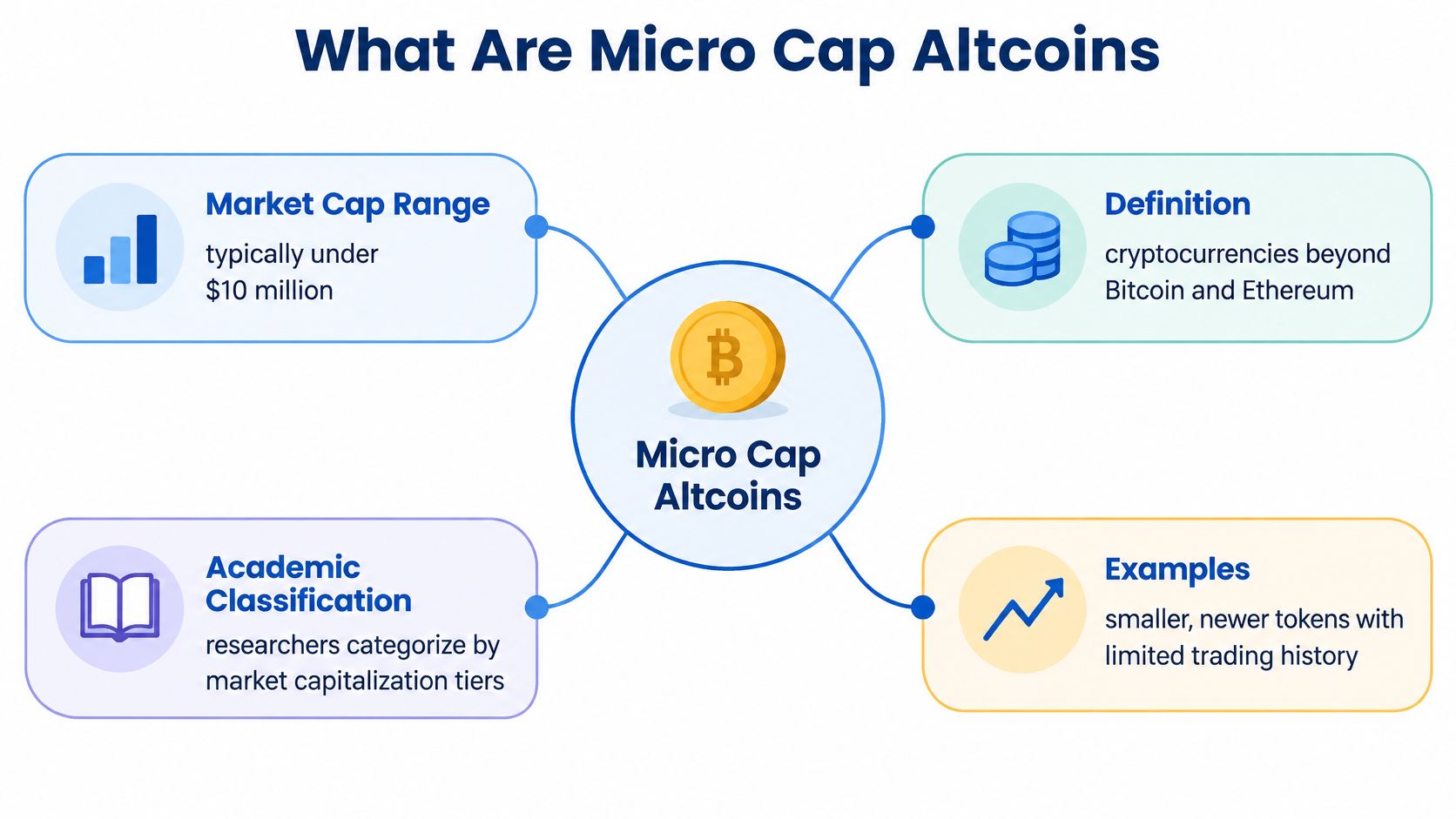
Market capitalization is not exit liquidity. Market cap comes from price multiplied by circulating supply. It gives a broad sense of a project's relative scale, yet it cannot tell you how many tokens you can sell at or near the quoted price. Only the order book or automated market maker pool answers that question: how much selling it absorbs before the price moves materially.
That distinction decides real trades.
Why depth matters more than a headline figure
A token with a small market cap and deep, credible liquidity can be easier to trade than a larger token on a thin book. In a shallow market, even a modest order shifts the price. The same limited depth that lifts a token quickly when buyers arrive turns an exit painful when sellers follow.
Trading behavior also depends on investor flows, market participation, concentration, and transaction conditions. A market with few independent participants can look active while staying exposed to one large holder, or to a handful of wallets trading among themselves. The quoted price may also differ from what you receive after fees, slippage, and execution limits.
The review cited above describes stronger price-reversal effects in lower-liquidity, smaller-cap cryptocurrencies, and identifies heavy-tailed returns, leverage effects, long memory, and stochastic volatility as recurring features of crypto markets, with conditions shifting between stable and volatile states. Treat market cap as an orientation tool, not an exit plan. Before buying, ask what the market can absorb and what your own position will do to it.
Why Traders Chase Micro Cap Returns
The attraction isn't imaginary. The systematic review cited earlier reports larger-than-average mean returns for smaller-market-value cryptocurrencies, with small-cap portfolios showing statistically significant gains and stronger one-week performance where risk-adjusted momentum was present. Those are historical, portfolio-level patterns. They say little about any individual micro-cap token.
That distinction matters. A portfolio finding can't tell you whether a particular token has real demand, sound market structure, or enough depth to exit. Thin trading, transaction costs, survivorship bias, and manipulation can all distort the results. A token that appears to be moving with momentum may be difficult to trade once the activity slows.
A risk premium, not a quality signal
Micro-cap prices react sharply to shifts in attention because smaller markets often have less depth and fewer participants. That creates the possibility of fast gains, and the same conditions can magnify losses. Momentum can also reverse: buying pressure may briefly lift a price without adding lasting demand or broader ownership.
The U.S. Securities and Exchange Commission (SEC) warns that crypto-asset markets can involve exceptional volatility and illiquidity, alongside risks of fraud, theft, manipulation, and operational failures. It also cautions that speculative demand can artificially inflate or deflate prices, adding to volatility (SEC investor guidance on crypto-asset securities).
The honest reading of those historical returns: higher average gains often reflect higher risk, not better fundamentals. Survivability is the question worth asking before entry. A portfolio study assumes you can hold and rebalance across many positions; a single micro-cap trade gives you one shot at an exit. If the thesis depends on the token continuing to attract buyers, ask what evidence supports that demand and what you'd do if it disappeared. A compelling upside story doesn't replace an exit plan.
The Hidden Risks of Micro Cap Trading
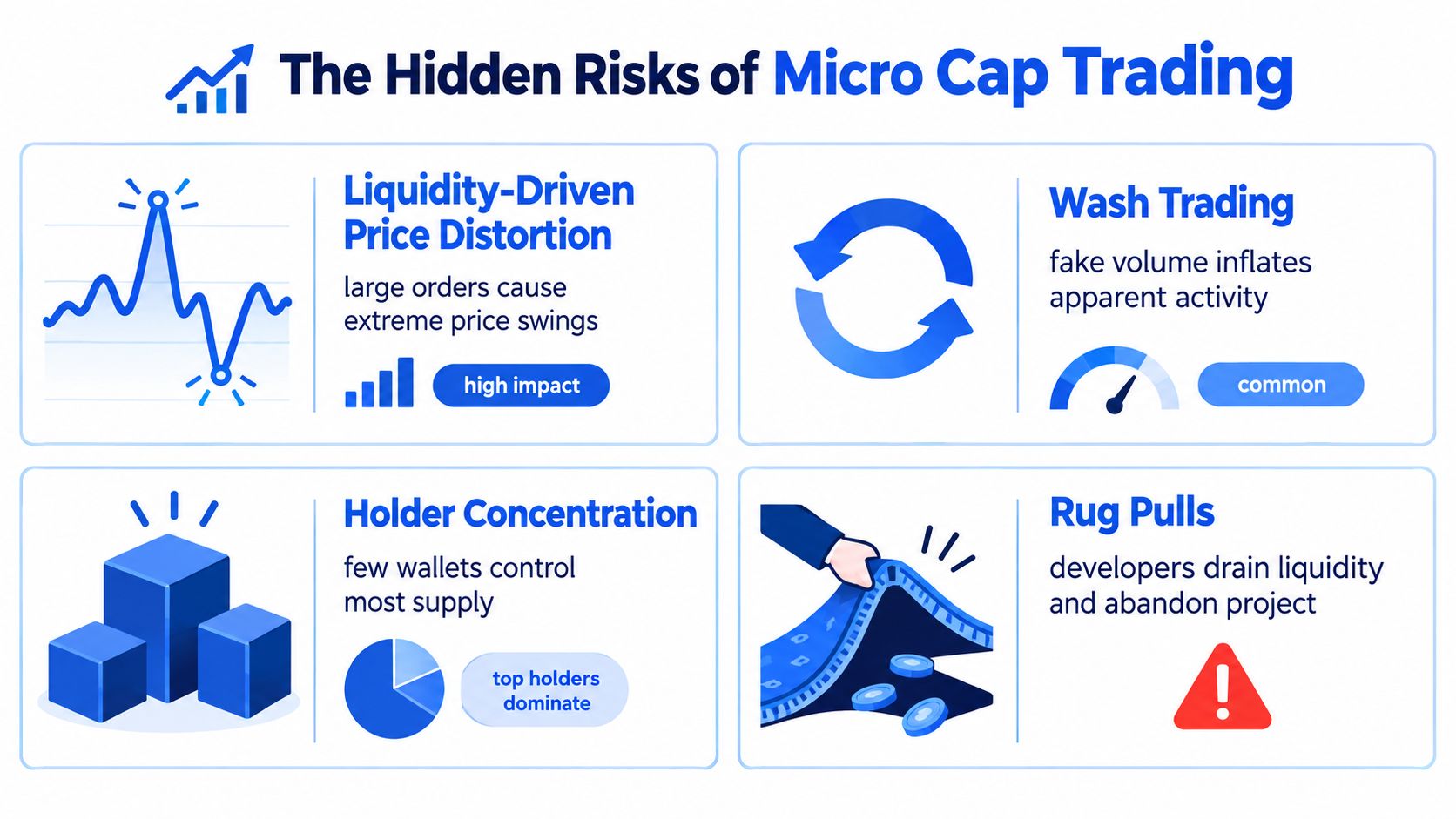
A micro-cap trade can fail without an obvious contract exploit. The market itself may be too thin to support an orderly exit, activity may exaggerate demand, a few wallets may exert outsize influence, or liquidity may be withdrawn. Each risk affects a different part of the decision, so a single safety label won't capture the whole picture.
Thin liquidity can distort both entry and exit
Shallow order books and automated-market-maker pools can't necessarily absorb a large trade without moving the price. A buyer may push the price up while entering, then face substantial slippage when selling into the same limited depth. Promotional activity can make a market look more tradable than it is; stress-test liquidity under the assumption that other holders may sell at the same time.
For a closer look at how thin liquidity changes trade risk, see this analysis of the thin-liquidity death zone.
Volume can be manufactured
Reported trading volume isn't proof of independent demand. In a 2024 enforcement action, the SEC alleged that promoters and purported market makers used self-trading and automated algorithms to create the false appearance of active markets, with some schemes generating billions of dollars of artificial volume per day. Chainalysis defines wash trading as repeated transactions that inflate volume without establishing organic demand, and identified approximately $2.57 billion in suspected wash trading across selected Ethereum, BNB Smart Chain, and Base activity in 2024 (Chainalysis analysis of wash trading and market manipulation).
To judge whether activity is credible, examine unique buyer and seller counts, wallet overlap, trade-size patterns, price impact, and whether activity persists. Repeated wallet pairs or synchronized trades deserve more scrutiny than dispersed transactions that support steadier price discovery.
Concentration and liquidity withdrawal
A small group of holders can have enough supply to affect the market when they sell. Concentration alone doesn't prove wrongdoing, but it changes the consequences of coordinated selling or a single large exit. Separately, a token may lose liquidity, leaving holders unable to execute at a sensible price. Liquidity withdrawal was among the suspected rug-pull behaviors identified in the study of newly issued tokens cited at the start of this article.
Here's a video to keep in mind as you evaluate the difference between an attractive chart and a market that can absorb real orders.
A Due Diligence Checklist for Micro Cap Tokens
A useful check is not just “Is liquidity locked?” It's “Can I sell the position I'm considering, under conditions that could plausibly happen?” Run through the market first, then the token's ownership and activity. A lock label or high holder count can be reassuring at a glance without answering whether demand is independent or an exit is realistic.
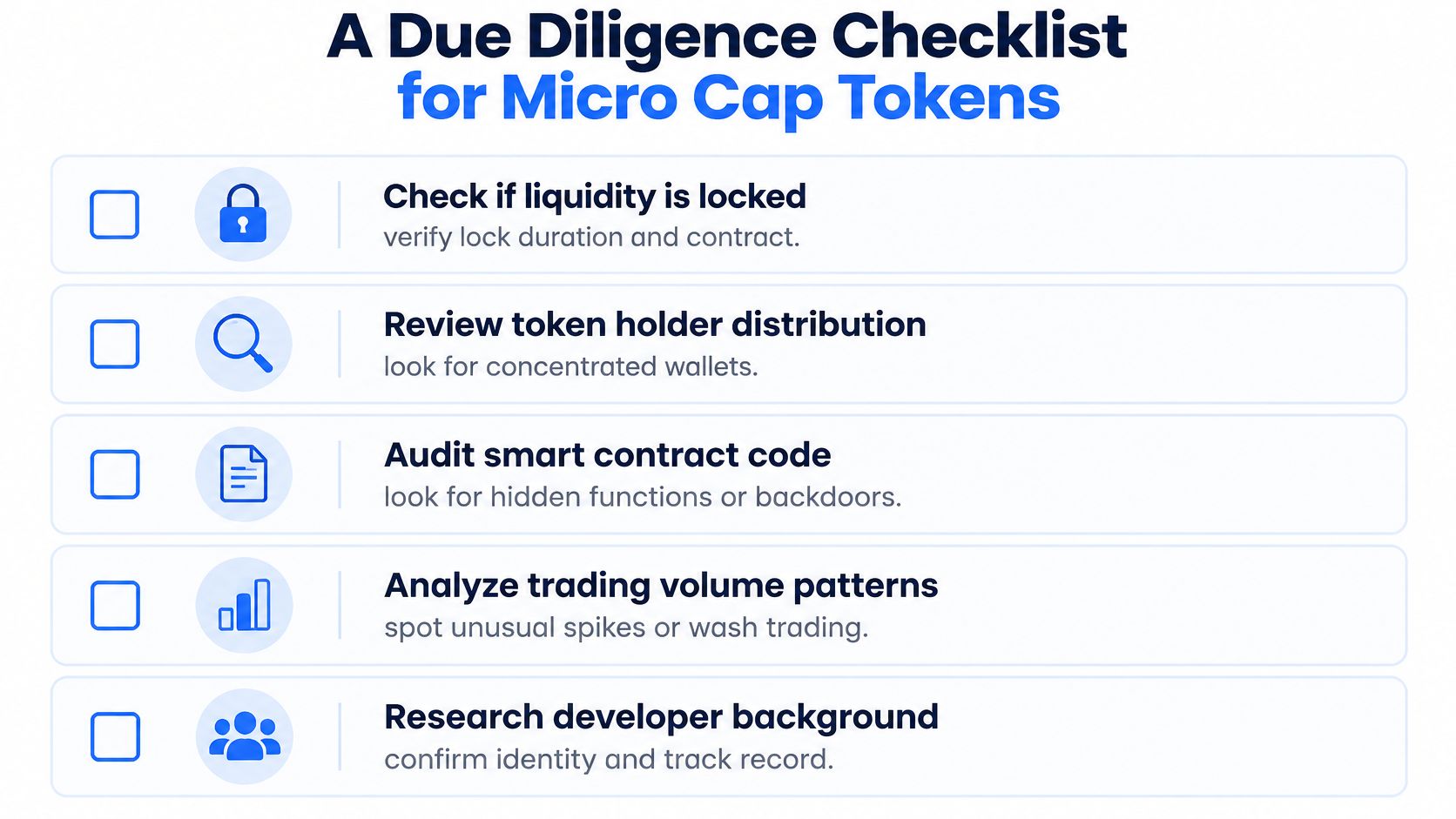
Test liquidity against your position. Check the available pool depth or order-book depth, then estimate the price impact for both entry and exit. Don't assume you can sell at the displayed price just because a small trade went through.
Stress-test an exit. Consider how execution might change after a negative catalyst, when buyers may step back and multiple holders may sell. Ask whether your position could be exited without an unacceptable loss from slippage. A token can be technically sellable yet economically difficult to exit.
Look beyond holder count. Compare wallet funding sources, first-buy timing, transaction sizes, and links to creator wallets. Coordinated wallets can receive similar allocations from a central wallet and trade with pools in ways that create the appearance of broad participation. But concentration on its own isn't proof of coordination; aim for a confidence-weighted view of wallet independence, not a simplistic pass-or-fail verdict.
Check whether volume reflects separate participants. Look for repeated wallet pairs, rapid wallet rotation, synchronized activity, and sharp volume increases without wider ownership or credible liquidity growth. Treat a sudden burst of activity as a reason to investigate, not as proof that demand has strengthened.
Review the supply and trading mechanics. Examine holder distribution, liquidity changes, contract permissions, and whether the project's stated development history is verifiable. These checks help expose risks the price chart can't show.
For Solana-specific checks, use this guide to Solana token safety. The purpose isn't to label every unusual pattern malicious. It's to make the uncertainty visible before committing funds.
Risk Management Strategies for Micro Cap Positions
A stop-loss is not a guarantee of an exit price. In a thin market, the order can execute far below its trigger, or fail to execute as expected if liquidity disappears or trading conditions change. Build the plan around what you can realistically sell, not what you hope the token will be worth.
Practical rule: Size the position so that an exit remains plausible even if selling pressure increases. If a normal sale would move the market sharply, the position is too large for that market.
Before entering, decide how you'd reduce or close the position if the original thesis weakens. Consider staged exits rather than relying on one market sell, which can sweep through limited liquidity. If the market's apparent volume depends on activity you haven't verified as independent, assume that the visible momentum could reverse quickly.
Avoid averaging down because the price has fallen. Adding to an illiquid position increases the amount you may need to sell into a market that already has fewer buyers. Reassess the available liquidity and wallet activity first; if the evidence has worsened, a lower average entry price doesn't solve the exit problem.
Plan for the warning, not just the trade
If a wallet cluster, sudden liquidity change, or suspicious volume pattern appears, pause and monitor whether the signal persists or resolves. MemeAssist's token analysis includes 24-hour post-flag tracking, with outcomes fed back into its screening engine. That kind of follow-up can help assess whether a warning remains relevant, but it doesn't guarantee that a token is safe or that liquidity will hold.
Take-profit and trailing-stop approaches each have trade-offs in fast-moving, shallow markets. A comparison of take-profit and trailing-stop approaches can help clarify the choices, but neither method replaces an exitability check. Set the plan before entry, and be prepared to change it if the market structure deteriorates.
Case Studies When Micro Cap Trades Go Wrong
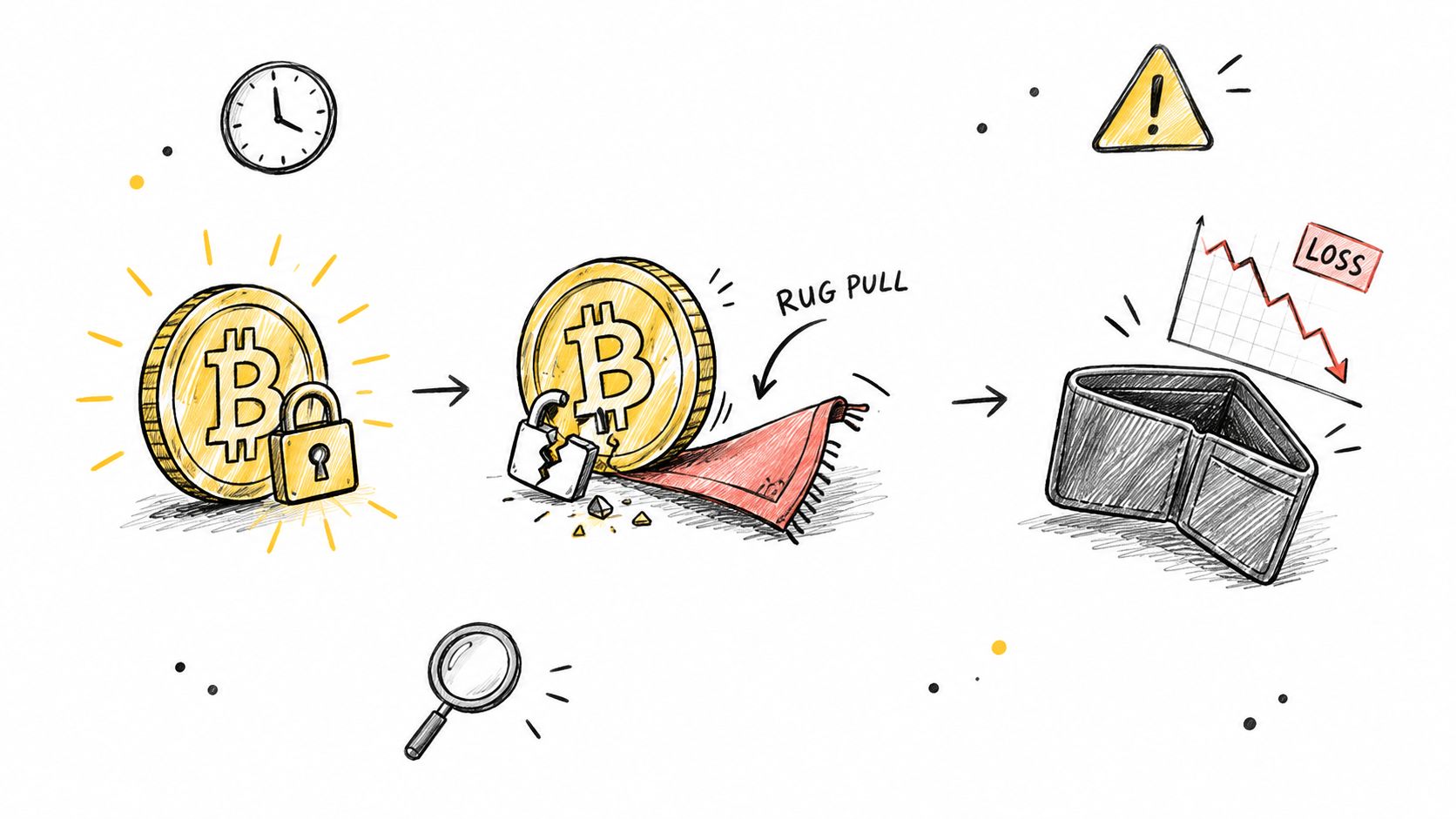
Composite examples are more useful here than token names, because the same failure shows up across launches: the chart looks alive while the exit is already closing. The question is not only whether creators meant harm. It is whether you can leave without becoming the liquidity event.
The busy chart with linked wallets
A new token prints steady green candles and rising volume. Several “new” wallets buy within the same blocks, repeat near-identical sizes, and trace back to the same funding source. On a holder-count screen the base looks distributed. In execution terms, it is one actor wearing several accounts.
If that cluster pauses, demand can vanish faster than it appeared. If it sells together, thin depth turns a routine exit into a cascade. I would treat funding links, synchronized first buys, and repeated trade patterns as reason to distrust the volume until independent flow shows up. Then run the exitability test: who buys from me if the coordinated bid steps away, and how much price impact does a realistic sell order create?
The pool that does not survive selling
Another token trades actively while attention is high, but the pool is shallow underneath. The first wave of selling lifts price impact sharply, and holders discover the displayed last price was not an executable price for their size. The token still trades. It just no longer lets them out near the mark.
The 2025 study of newly issued tokens on Orca, Raydium, and Meteora identified liquidity withdrawal as one of the main suspected rug-pull patterns, as summarized in the opening of this article. For this scenario I would check liquidity-change history, executable depth, pool ownership or lock status, and how slippage behaves at the size I intend to sell. A thin pool does not prove a planned rug pull. A position can still die because the market cannot absorb the exit.
Building a Safe Research Workflow
A dependable workflow turns separate observations into one decision record tied to the token address. Start with a scanner to identify a candidate, then verify the token and its trading conditions before deciding whether it merits a position. Use analysis tools to support judgment, not to replace it.
Screen, verify, then plan
First, check whether the token's liquidity and recent trading activity fit the position you're considering. Next, review holder distribution and wallet relationships before treating unique-holder counts as evidence of broad demand. Then inspect creator behavior, token mechanics, and signs of liquidity changes. Keep the findings together so that a strong signal in one area doesn't distract from a serious weakness in another.
For Solana tokens, MemeAssist provides on-demand reports based on live on-chain and market data, including an Overall Health Score, Rug Risk Rating, plain-English AI Verdict, and Detailed Risk Breakdown. Its checks cover liquidity, holder concentration, creator behavior, wallet activity, and trading patterns, including bundle and insider detection. Treat those outputs as evidence to review, alongside your own exitability assessment, rather than as a guarantee.
Check the tools, too
An analysis tool is more useful when it shows the evidence behind its conclusions and tracks what happens after a token is flagged. Review whether its findings match observable activity, whether the checks are current, and whether the tool records outcomes in a way that can inform future screening. A single report can save time, but no score can tell you exactly how much liquidity will remain when you need to sell.
Before committing funds, return to the core question: what would an exit look like if the market turned against you? If you can't answer that with a realistic view of liquidity, price impact, and wallet independence, wait. A missed trade is usually easier to manage than a position you can't close.
MemeAssist brings Solana token safety checks, live market and on-chain signals, and plain-English risk explanations into a report tied to the token address. Review those signals alongside your own exit plan by visiting MemeAssist before your next micro-cap trade.