8 Signs of Insider Threat in Solana Meme Coins (2026)
8 signs of insider threat in Solana meme coins: bundle wallets, holder clusters, creator history, wash trading, and Token-2022 traps to spot before buying.
Published
Updated
Most insider-related harm isn't deliberate sabotage, since careless or negligent employees accounted for 62% of 4,716 insider-caused incidents in one large study, compared with 23% from criminal or malicious insiders. On Solana, the practical signs of insider threat are usually overlapping on-chain signals, including bundled launches, concentrated holders, funded wallet clusters, and a risky creator history, rather than one isolated red flag.
That distribution matters for how you screen a meme coin. In that same research, negligent insiders generated an average annual cost of $4.58 million per organization, which shows why ordinary control failures can be financially serious even without hostile intent, as detailed in the 2020 Ponemon Institute study sponsored by IBM and ObserveIT. Solana gives you a different advantage. Transactions are cheap, launches are fast, and the ledger is public, so insider mechanics that would stay hidden inside a company often leave wallet, authority, and liquidity traces you can inspect before you buy.
Treat each item below as a testable check, not a verdict. One active authority, one early buyer, or one large holder doesn't prove intent. Risk rises when structural control, concentrated supply, linked funding, and timed selling point in the same direction. The eight checks that follow move from what a creator can do, to what early wallets did, to whether the market you're seeing is real.
Table of Contents
- 1. Active Mint or Freeze Authority
- 2. Sniper and Bundle Wallets at Launch
- 3. Concentrated Holder Distribution
- 4. Linked Wallet Clusters and Common Funding
- 5. Creator Selling, Liquidity Withdrawal, and LP Security
- 6. Serial Deployer or Prior Rug History
- 7. Artificial Volume and Wash Trading
- 8. Hidden Transfer Restrictions and Token Extensions
- Insider Threat: 8-Point Comparison Guide
- Combining the Signals Before You Buy
1. Active Mint or Freeze Authority
Start with control, not price. An SPL token can retain a mint authority, which can create new supply, and a freeze authority, which can freeze individual token accounts so holders can't transfer or sell. Revoking either authority is permanent. If both fields aren't revoked after launch, you're trusting the holder of that authority not to use it.
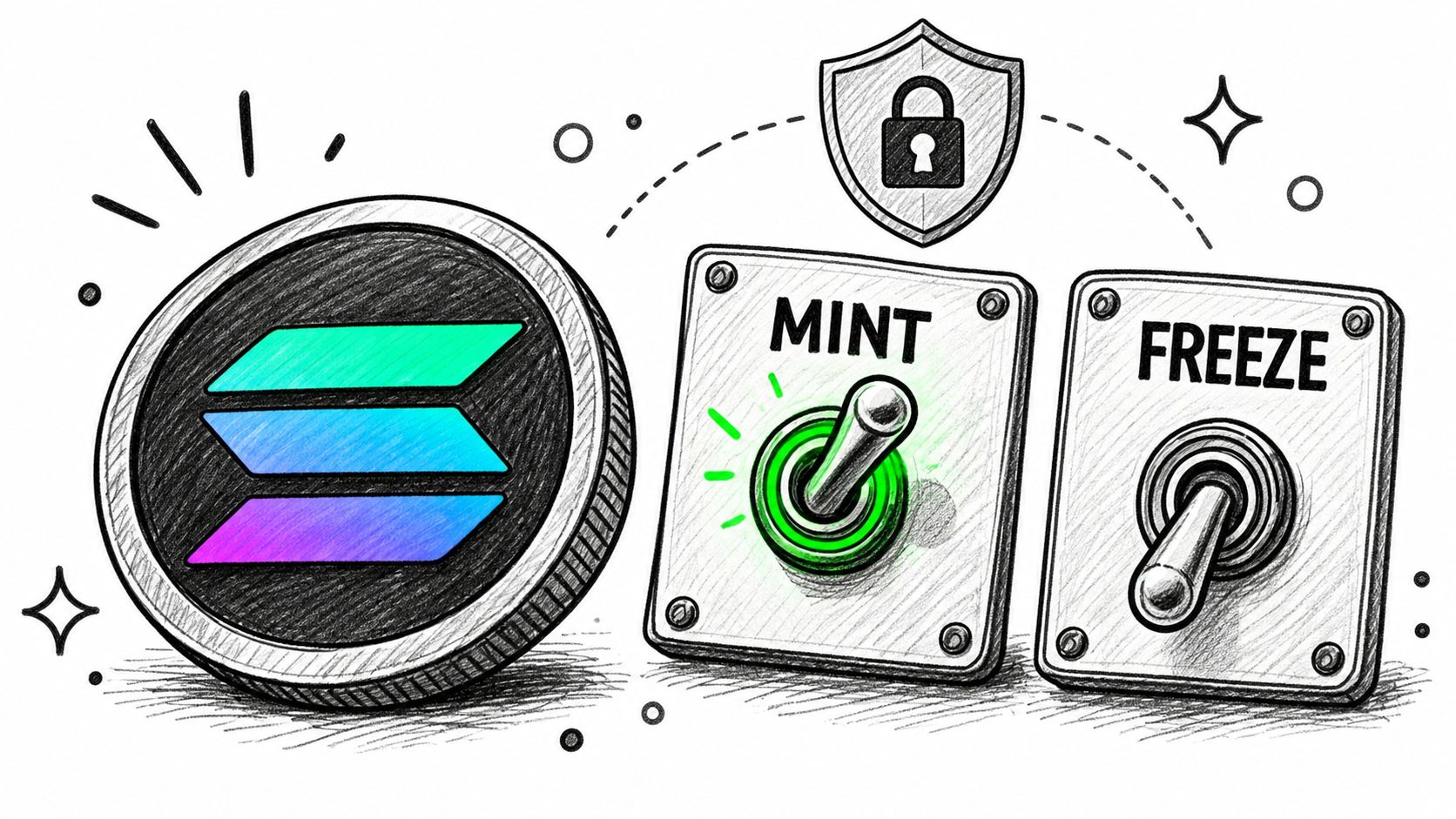
Some Solana rug pulls have kept mint authority live, inflated supply into buyer demand, and sold the newly created tokens before holders understood why price was falling. Freeze authority is more severe in practice. A creator can leave trading open, let buyers build positions, then freeze selected accounts while an unfrozen wallet exits. You don't need to prove motive to act on that asymmetry. The capability itself changes your downside.
How to Run This Check
Check the mint and freeze fields on-chain before you buy, then re-check after launch because a promise to revoke isn't the same as a completed revocation. Our guide to how Solana freeze authority works and why it matters walks through where those fields appear. Pair the result with holder and liquidity analysis, since an active authority held alongside concentrated supply and thin liquidity gives one actor both the tool and the exit path.
Practical rule: Treat an active freeze authority as higher severity than an active mint authority. Dilution hurts price, but a freeze can remove your ability to sell at any price.
An active authority isn't proof of a scam. Some legitimate launches revoke in stages. What you're scoring is unilateral control that remains available, and that should raise the evidence bar for every other signal.
2. Sniper and Bundle Wallets at Launch
The first seconds often tell you more than the current holder list. Bundling happens when one operator uses multiple wallets to buy in the same block or within the first seconds after pool creation, sometimes through a single transaction bundle. Those wallets secure supply before public buyers can react, then sell into the price spike they helped create.
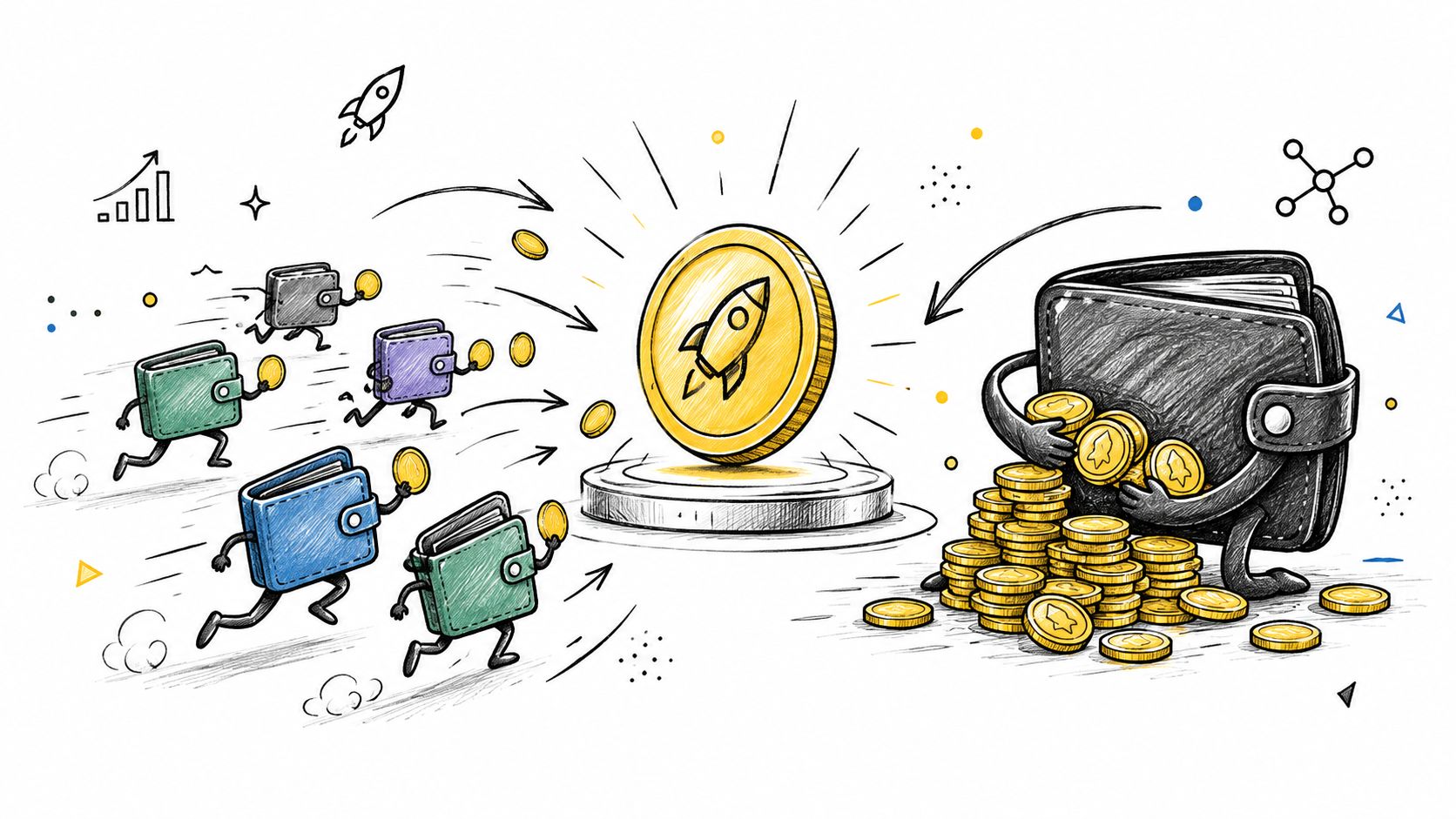
Analytics firms have flagged Solana launches where linked wallets took a large portion of early supply within seconds of pool creation. Pump.fun launches show a familiar version of the pattern. Bundled early buys push the bonding curve or pool price up, social posts amplify the move, and the same early wallets stage sell-offs into incoming retail orders. By the time the holder count looks healthier, the cheapest supply has already changed hands at your expense.
What to Inspect in the First Blocks
- Examine blocks 1 to 20: Reconstruct who bought first, in what size, and whether those buys landed together.
- Compare funding paths: Fresh wallets funded from the same source, with similar buy sizes, deserve more suspicion than unrelated snipers.
- Track retention: Compare each early buyer's initial share with what that wallet still holds now.
- Check organic demand: Heavy sniper concentration beside low organic volume is a high-risk combination.
If you need the mechanics first, read our explainer on what sniper wallets on Solana tokens actually mean. Don't label every fast buyer an insider. Independent snipers chase every launch. The insider signal strengthens when speed, shared funding, and coordinated selling converge, because that combination suggests preparation rather than reaction.
3. Concentrated Holder Distribution
A token can have thousands of holders and still be controlled by a handful of wallets. Concentrated holder distribution means a small number of addresses hold a large share of supply, usually measured through the top 10 or top 20 holders after excluding known pool and program accounts. In a meme coin, that concentration often represents insider allocations that can be sold at will.
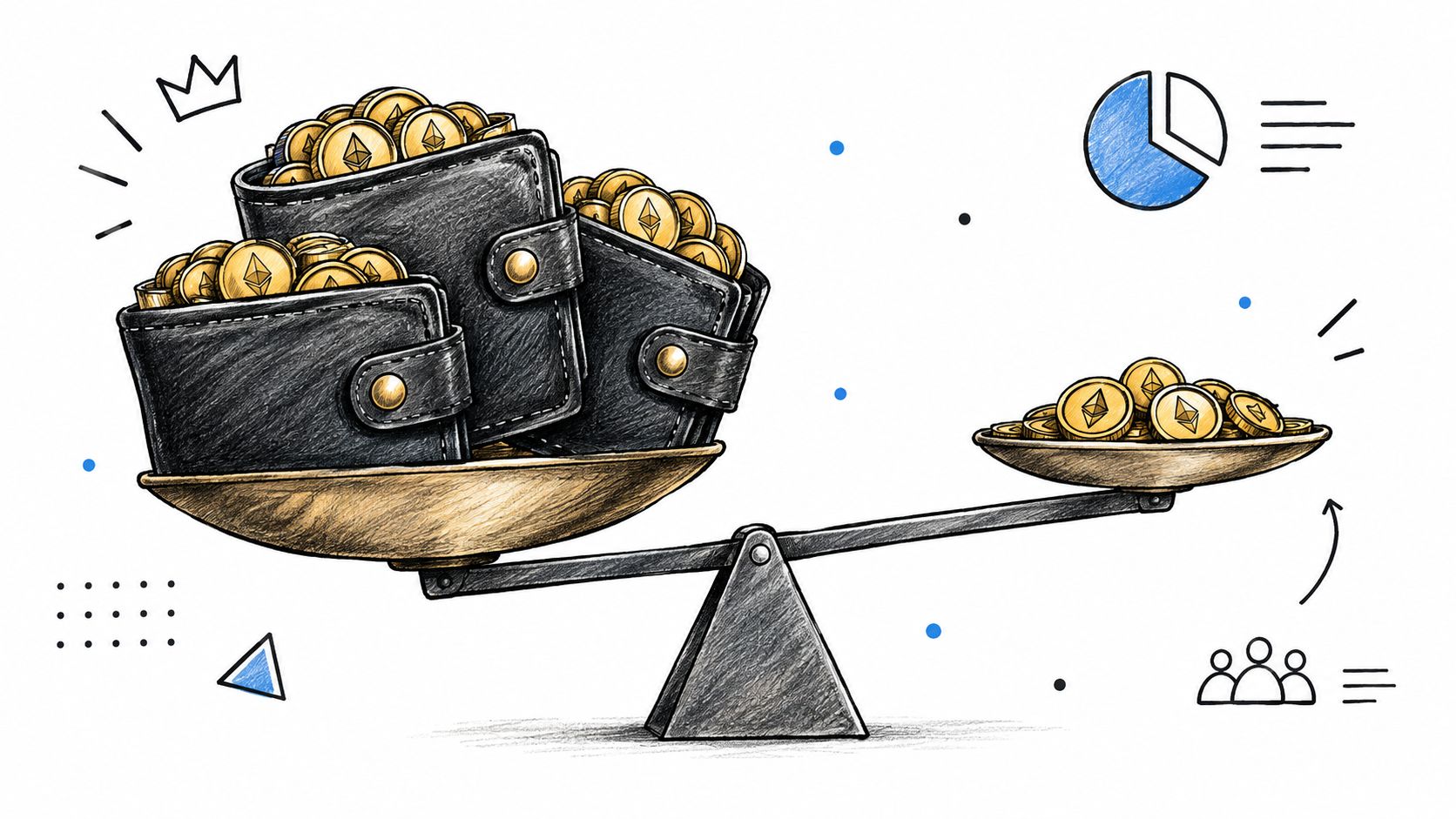
Some failed Solana meme coins showed top holders controlling most of the supply shortly before a large sell-off. The chart didn't fail because sentiment changed. It failed because one or two wallets held more tokens than the pool could absorb. Liquidity-depth analysis exposes that mismatch early. If the largest holder's position is worth more than the pool can pay out without severe slippage, that holder doesn't need a coordinated plan to crash price. One market sell is enough.
Turning Concentration Into a Number You Can Use
Exclude the liquidity pool first, then verify what each large holder is. An exchange wallet, a vesting account, and a fresh anonymous wallet shouldn't receive the same risk weight. Next, compare the largest holder's position with available liquidity to estimate exit impact, and track whether concentration falls over the first hours and days as tokens distribute to unrelated buyers.
Use concentration as a severity multiplier, not a standalone accusation. Modest concentration with deep, locked liquidity and no linked wallets is survivable. High concentration beside bundled buys and unlocked liquidity means insiders hold the supply, control the exit, and face little resistance. That stack is where position size should shrink fast, or disappear.
4. Linked Wallet Clusters and Common Funding
Holder lists lie when one operator spreads tokens across many wallets. Cluster analysis reconnects those wallets through shared funders, token transfers between them, or repeated use of the same intermediaries. When apparently separate holders trace back to one cluster, the token isn't as decentralized as the holder count suggests.
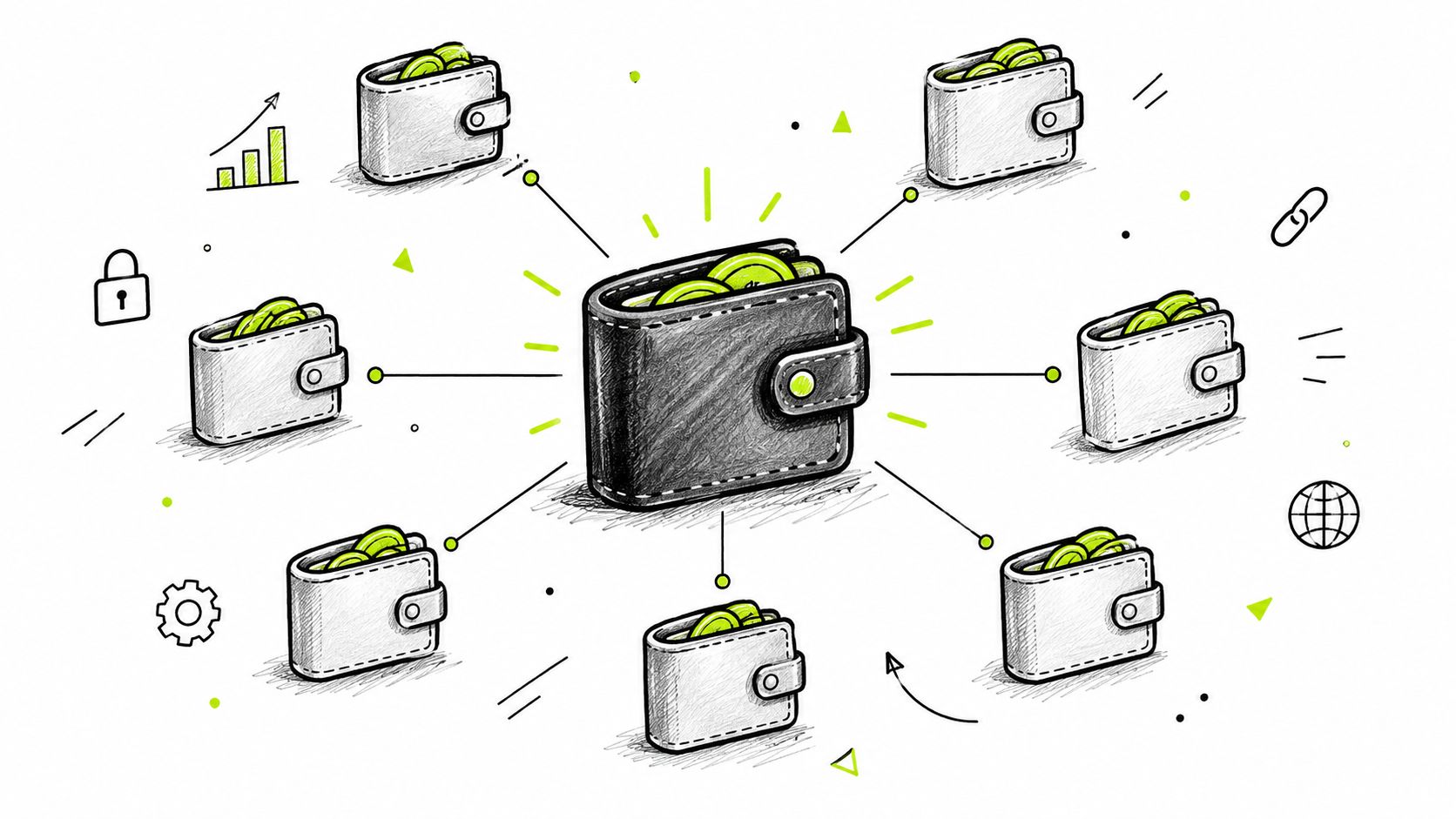
The February 2025 LIBRA collapse is the named example traders still study. After launch, analysts reported concentrated, insider-linked wallets that sold heavily, and cluster mapping traced holders of some high-profile Solana tokens back to a small number of linked wallets. The lesson isn't that every connected wallet is guilty. It's that headline holder distribution understated who could act together when selling started.
Work through the top 20 holders systematically. Trace each wallet's funding source, check whether holders transferred tokens to one another before selling, and note whether several wallets received SOL from the same address shortly before launch. A single shared exchange deposit address is weak evidence. Shared funding plus pre-launch timing plus synchronized sells is much stronger.
Require multiple independent link types before you treat wallets as one cluster. Funding alone, timing alone, or a single transfer alone will produce false clusters.
Record what you find and revisit it. Clusters reveal themselves over time as wallets consolidate profits, fund new addresses, or sell in sequence. Your first map is a hypothesis. Later transfers either confirm it or break it, and your risk score should move with that evidence.
5. Creator Selling, Liquidity Withdrawal, and LP Security
Creator behavior after launch tests whether incentives align with yours. Creator dumping happens when a deployer sells an allocation into a price run while retail buyers provide exit liquidity. Liquidity withdrawal is usually worse. If the creator removes or drains the pool, holders may still own tokens but can't sell them at a reasonable price.
Numerous Solana tokens have shown creator sell-offs after reaching peak market capitalization, and rug pulls across multiple chains have involved developers removing pool liquidity entirely. The setup is often visible beforehand. Liquidity provider tokens sit accessible in a creator wallet, or they're locked for a short period in a contract the creator controls. Burned or verifiably locked liquidity is a positive signal because it removes or delays that specific exit route.
Checks That Separate Locked From Merely Claimed
- Verify LP status yourself: Confirm whether LP tokens are burned, locked, or held by the creator, and don't rely on a social post.
- Read the expiry: Check lock duration and confirm the locking contract is a recognized protocol.
- Size the sale against the pool: Compare creator outflows with total liquidity to estimate price impact before it happens.
- Set alerts: Watch creator and team wallets for outflows, and watch the pool for sudden liquidity changes.
Combine lock status with pool depth relative to market capitalization. Locked but shallow liquidity still produces brutal slippage. Deep but non-locked liquidity can vanish in one transaction. You need both conditions working for you, and creator selling that begins while liquidity is not locked should override almost any bullish chart pattern.
6. Serial Deployer or Prior Rug History
A new token name doesn't erase an old wallet. Solana history is public and persistent, so you can review whether a deployer has launched before, how those tokens ended, and whether the same funding network keeps reappearing. A wallet that repeatedly launches tokens that collapse carries increased risk even if the current launch looks clean.
The November 2021 Squid Game token (SQUID) remains the clearest cross-chain warning. It used a sell-restricted design, price surged, and its developers disappeared with millions of dollars. Similar launch, spike, and abandon patterns have since appeared on Solana launchpads, where low launch costs let one operator repeat the cycle quickly. Analytics firms have traced new launches to deployers linked to earlier collapsed tokens, sometimes through direct wallet reuse and sometimes through funders that financed both deployments.
How to Weight a Track Record
Review the deployer's full token launch history and the outcome of each launch, not just the most recent one. Look for connections to wallets involved in earlier rugs, including shared funders and wallets that received proceeds from prior tokens. Then weigh the pattern carefully. One failed token can reflect a bad market or a weak idea. Repeated launches that end in rapid collapse, abandoned liquidity, or creator exits describe a business model.
Historical insider research supports that cumulative approach. Carnegie Mellon University's Software Engineering Institute reported in 2011 that its CERT Insider Threat Database contained approximately 700 cases, and its warning categories gained meaning in combination rather than in isolation, as summarized in this overview of insider threat statistics and the CERT database. Apply the same logic on-chain. Prior history doesn't convict a new token, but it should change how much benefit of the doubt you give ambiguous signals today.
7. Artificial Volume and Wash Trading
Volume is the easiest metric to fake and the one screeners reward most. Wash trading means wallets controlled by the same operator trade with each other, creating apparent activity without a genuine change in ownership. Inflated volume makes a token look liquid and popular, pulls it onto trending lists, and draws in buyers who mistake churn for demand.
Academic and industry studies have documented wash trading on centralized and decentralized exchanges, including meme-style tokens. The on-chain tell is a mismatch. Volume climbs, but unique holders barely move, or the same linked wallets buy and sell in a loop with little net change in distribution. Tokens showing high volume beside few unique holders have frequently been associated with later price collapses, because the supposed demand disappears when the operator stops paying fees to simulate it.
A Practical Volume Audit
Compare volume with unique buyers and sellers over the same period. Look for trades between linked wallets, mechanical regularity in timing and size, and volume spikes that arrive without growth in holders or social reach. Real momentum usually broadens the holder base. Manufactured momentum recycles the same base.
Our walkthrough on how to detect wash trading on Solana shows how to line those series up side by side. Treat wash trading as an intent signal as well as a data problem. Someone is spending money to make you believe a market exists. Ask what that person plans to sell into the belief, and check whether holder clusters from the earlier checks are positioned to do it.
8. Hidden Transfer Restrictions and Token Extensions
The most dangerous restrictions don't appear on a price chart. Solana's Token-2022 program supports optional extensions that can restrict or tax holders. Transfer hooks can run custom logic on each transfer, transfer fees can siphon value from trades, a permanent delegate can move or burn tokens from accounts, and non-transferable settings can lock holders in place.
These features have legitimate uses in regulated or utility tokens, where compliance checks or controlled transfers serve a stated purpose. In a meme coin sold as freely tradable, they can enable a honeypot. You can buy, but selling fails, gets taxed heavily, or depends on logic the creator controls. Honeypot tokens on EVM chains have used sell-blocking contract logic for years, and security reviews have discussed Token-2022 extensions as potential vectors for hidden fees and delegate control. The chain differs. The trap doesn't.
Inspecting the Configuration Before You Buy
- Identify the token program: Confirm whether the token uses the original SPL program or Token-2022.
- List enabled extensions: Inspect hooks, fees, delegates, and transferability settings directly.
- Weight delegate control heavily: Treat a permanent delegate or transfer hook in a meme coin as a high-severity flag.
- Test cautiously: Where practical, a very small buy and sell can test feasibility, but it isn't a guarantee because restrictions can activate later.
Detection research outside crypto underlines why single-signal certainty fails. One 2025 critical-infrastructure study reported a 92% true-positive rate alongside a 10% false-positive rate, with improved methods reducing detection time by 30%, as described in this 2025 study on insider threat detection methods. An extension might have an innocent explanation. An unexplained extension beside active authorities and concentrated holders shouldn't get one.
Insider Threat: 8-Point Comparison Guide
| Risk Signal | 🔄 Implementation Complexity & Resources | 📊 Expected Outcome | ⭐ Key Advantage | 💡 Ideal Use Case |
|---|---|---|---|---|
| Active Mint or Freeze Authority | Low; check on-chain mint data or a token scanner | Identifies authority-related dilution or transfer risks; not proof of a scam | ⚡ Quick, objective, and verifiable | Initial screening and re-checking authority status after launch |
| Sniper and Bundle Wallets at Launch | Moderate; review early block-level trades and wallet funding | Reveals concentrated early buying and possible coordinated selling | Helps distinguish organic demand from engineered launch activity | Assessing tokens shortly after launch, especially when early volume is high |
| Concentrated Holder Distribution | Low to moderate; review top-holder shares and exclude pool or burn accounts | Estimates how much a few wallets could affect price and liquidity | Simple, trackable measure of potential sell pressure | Screening holder risk and comparing large positions with pool depth |
| Linked Wallet Clusters and Common Funding | High; trace funding, transfers, and synchronized activity | May uncover hidden common control behind apparently separate holders | Reveals relationships standard holder counts can miss | Investigating suspected insider concentration; seek multiple independent links |
| Creator Selling, Liquidity Withdrawal, and LP Security | Moderate to high; monitor creator wallets, pool depth, and LP-token status | Detects insider selling or liquidity-withdrawal risk; verified locks can reduce some withdrawal risk | Direct monitoring can provide timely, actionable signals | Ongoing risk monitoring, particularly when creator holdings or LP tokens remain controlled |
| Serial Deployer or Prior Rug History | Moderate; review launch history and linked wallets | Adds historical context and may identify repeat operators | Uses persistent, publicly verifiable on-chain history | Evaluating deployers with previous launches or links to failed projects |
| Artificial Volume and Wash Trading | Moderate to high; compare volume, unique traders, and wallet links | Helps distinguish genuine activity from potentially manufactured volume | Tests whether headline trading activity reflects broad participation | Investigating volume spikes without corresponding growth in buyers or holders |
| Hidden Transfer Restrictions and Token Extensions | Moderate; inspect token program and enabled extensions | Identifies configured fees, transfer controls, or delegate powers that may restrict holders | Reveals risks that charts and trading volume cannot show | Reviewing Token-2022 tokens before purchase, especially meme coins with unusual controls |
Combining the Signals Before You Buy
No single check on this list proves an insider threat, and treating one flag as proof will cost you in both directions. You'll panic out of legitimate tokens with explainable quirks, and you'll wave through dangerous tokens that pass whichever one check you favor. The stronger method is convergence. CISA identifies user-activity monitoring as the most frequently used application for detecting technical insider-threat indicators, while emphasizing that observable concerning behavior still requires human assessment alongside technological controls, as set out in the CISA Insider Threat Mitigation Guide. Your on-chain version works the same way. Tools surface events, but you judge whether role, timing, and corroborating evidence make those events threatening.
Sort the eight checks by what they imply. Active mint or freeze authority, Token-2022 extensions, and liquid LP tokens are structural risks. They describe what an insider can do to you, regardless of current behavior. Bundled buys, linked clusters, creator selling, wash trading, and serial deployer history are behavioral risks. They describe what insiders have done or are doing. Structural risk without behavioral evidence calls for caution and smaller size. Behavioral evidence without structural control still matters, because coordinated holders can dump supply they legitimately own. When both categories overlap, when a creator retains freeze authority, funded clusters hold most early supply, and volume looks manufactured, you're no longer weighing isolated anomalies. You're looking at capability, positioning, and motive in one token.
That distinction also protects you from misclassifying accidents and compromises as betrayal. The 2025 Fortinet Insider Risk Report says 62% of incidents were caused by negligent or compromised users, compared with 16% involving confirmed malicious insiders, and notes that only 21% of organizations extensively incorporate deeper behavioral indicators, according to the 2025 Fortinet Insider Risk Report. On Solana, a strange creator wallet transaction could reflect deliberate selling, a compromised key, or automated activity. You don't need to settle intent before protecting capital. You need to grade confidence, verify what you can, and avoid categorical accusations that the chain hasn't earned yet.
Build a simple combination rule and follow it before emotion gets a vote. One moderate flag means investigate further. Two independent flags from different categories mean reduce size or wait for distribution to improve. Three or more converging flags, especially any mix that includes freeze capability, hidden transfer restrictions, or available liquidity, means pass. That threshold won't catch every rug, and it will turn away some tokens that later run. Accept that trade. In meme coins, missed upside is recoverable, while capital trapped by a freeze, a drained pool, or a cluster dump usually isn't.
Running all eight checks manually across explorers, holder lists, and wallet histories takes time that fast launches don't give you. MemeAssist consolidates those checks into a single Solana token report computed from live data at the moment of analysis, producing an Overall Health Score, Rug Risk Rating, AI Verdict, and Detailed Risk Breakdown across liquidity, holder distribution, creator behavior, wallet activity, trading patterns, and historical risk indicators. Use the score as a starting point, then read the underlying evidence yourself. Public evidence you can re-inspect is worth more than a rating you have to take on faith, and the final decision should always survive your own look at the wallets involved.
Paste any Solana token address into MemeAssist to get a live report with an Overall Health Score, Rug Risk Rating, AI Verdict, and Detailed Risk Breakdown covering the authority, bundle, holder, cluster, liquidity, and wash trading checks covered here. Your first full analysis is free, no wallet connection is required, and the underlying evidence stays visible so you can verify the verdict before you risk a cent.