Wallet Checker Crypto: 10 Tools Worth Using
Compare 10 wallet checker crypto tools for Solana and beyond: features, pros, cons and how to choose safely.
Published
Updated
You've got a Solana address in front of you and a decision to make: send funds, buy a token, or follow a wallet that seems to trade well. A wallet checker can help, but “checked” doesn't mean “safe.” Some tools show primary transaction records; others estimate performance, map possible wallet relationships, or warn about risky addresses you encounter while browsing. Those are different jobs, and their signals don't all prove the same thing.
The need for careful checks is real. Chainalysis estimated that cryptocurrency scams received at least $9.9 billion on-chain during 2024, and reported that crypto drainer revenue grew by nearly 170% year over year. The estimate could rise as more illicit addresses are identified, so treat it as a floor, not a final total. (Chainalysis' 2024 scam analysis)
This guide compares ten tools by what they're useful for: explorer verification, holder-cluster investigation, PnL tracking, wallet discovery, and browsing protection. A good wallet checker crypto workflow starts with public-address lookups, treats labels and scores as leads, and verifies important claims against on-chain records. You shouldn't need to connect a wallet just to inspect an address or token.
Table of Contents
- 1. Solscan
- 2. Bubblemaps
- 3. GMGN
- 4. Birdeye Wallet Tracker
- 5. Nansen Solana Wallet Analyzer
- 6. Arkham
- 7. SolScope
- 8. Solana Tracker
- 9. WalletHound
- 10. NordVPN Crypto Wallet Address Checker
- Top 10 Crypto Wallet Checkers: Feature Comparison
- How to Pick Your Wallet Checker Stack
1. Solscan
When you already have an address, start with the ledger. Solscan is a Solana block explorer for reviewing account balances, token holdings, transfers, DeFi activity, and transaction history. It can also display address labels and first-funder information where available, which may help you understand how an account entered a token's orbit.
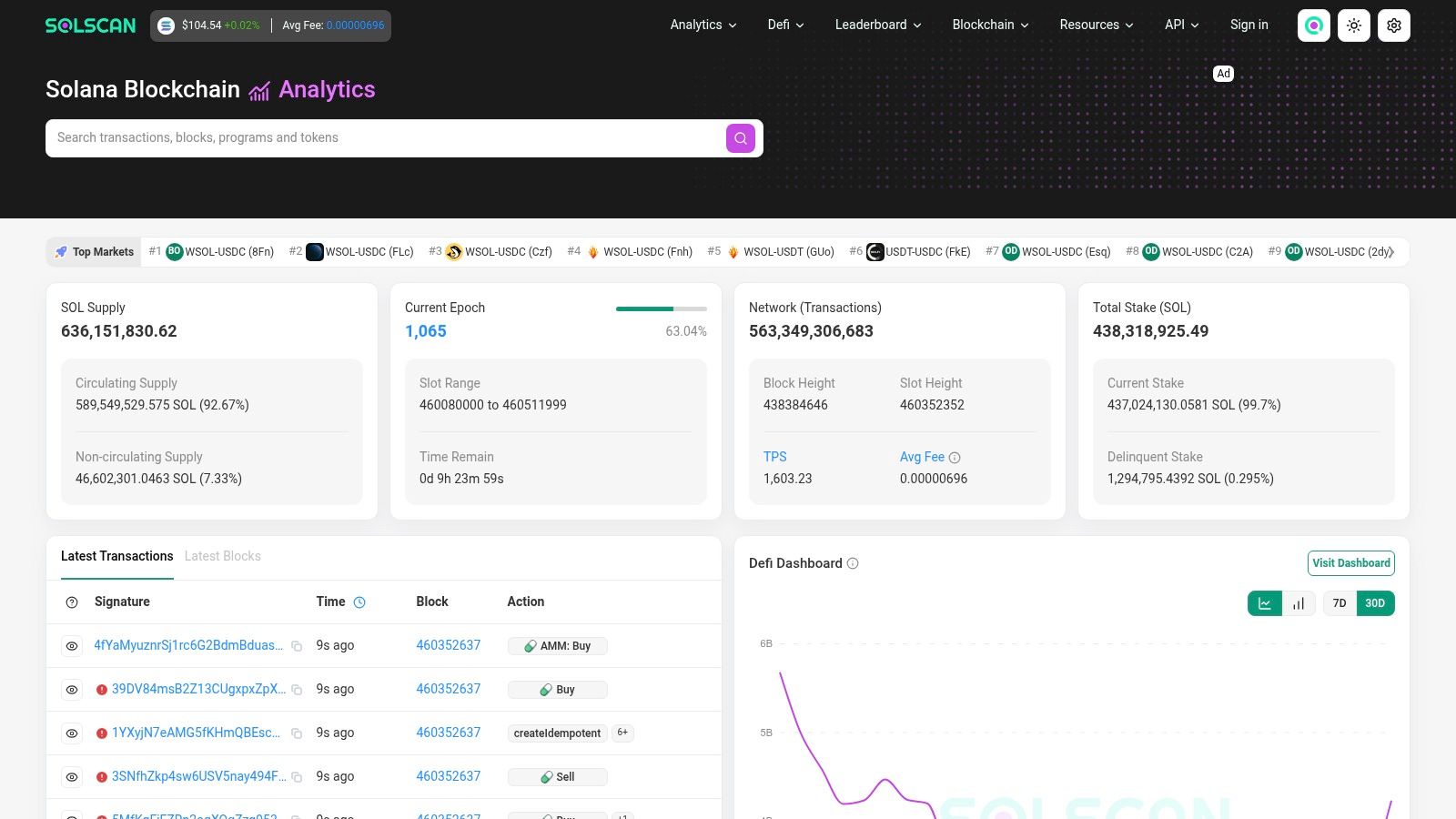
What the records can and can't establish
Solscan is most useful as a read-only verification layer. You can inspect public on-chain activity without handing the site control of your wallet. For a suspicious token, look at the wallet's transfers and interactions, then follow relevant transactions to see whether the apparent pattern is supported by the record.
The limitation is interpretation. An explorer doesn't hand you a dependable “safe” or “unsafe” verdict, and a clean-looking account history doesn't establish that its next action is harmless. Following links between accounts and interpreting program activity can take manual work.
Solscan also offers APIs separately for developers and data workflows. That makes it useful beyond one-off checks, but the API doesn't replace deciding which evidence matters.
Use it for proof of activity, not proof of intent. Address labels and transaction records can guide an investigation, but they don't automatically tell you who controls an account or why they acted.
2. Bubblemaps
A ranked holder list can hide patterns that become obvious when wallets are shown together. Bubblemaps visualizes token holders as bubbles, with relative holdings and connections that can help you spot clusters worth investigating. It supports Solana and other networks, and offers historical exploration and wallet-investigation features.
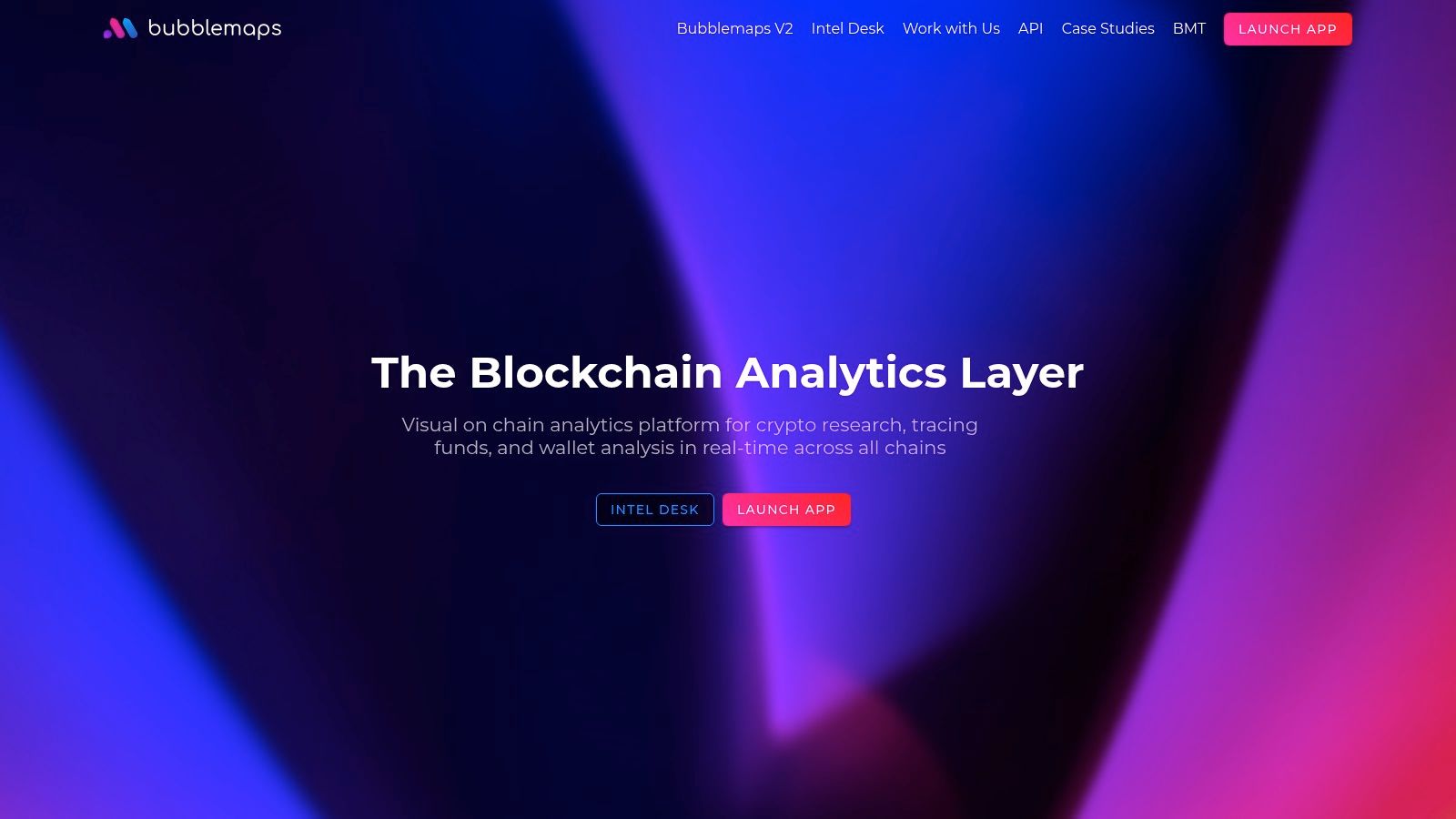
Read the map as a lead
The practical advantage is visual. A map can make concentrated holdings or connected groups easier to notice than a long list of addresses. That's useful when you're checking whether a token's ownership appears distributed or whether several sizeable holders merit closer review.
But a connection on a map doesn't prove common ownership. Wallets may interact for many reasons, and a cluster is a prompt to inspect transaction records, not a verdict about insider control. Maps may also show only a subset of holders, so don't assume the display represents every token account.
For a step-by-step interpretation, see how to read a crypto bubble map. Pair the visual with an explorer: check what the connected wallets did, and whether the timing and transfers support your concern.
Bubblemaps focuses on holder relationships rather than a complete reputation profile for every wallet. It's best used to find questions to investigate, not to answer every risk question by itself.
3. GMGN
If your question is “Who bought this token, and how did their trades play out?”, GMGN puts wallet analytics alongside meme-coin trading tools. Wallet pages can show PnL, win rate, holdings, and recent activity. Its Wallet Radar can compare addresses active in selected tokens by purchase activity, timing, profits, or shared holdings.
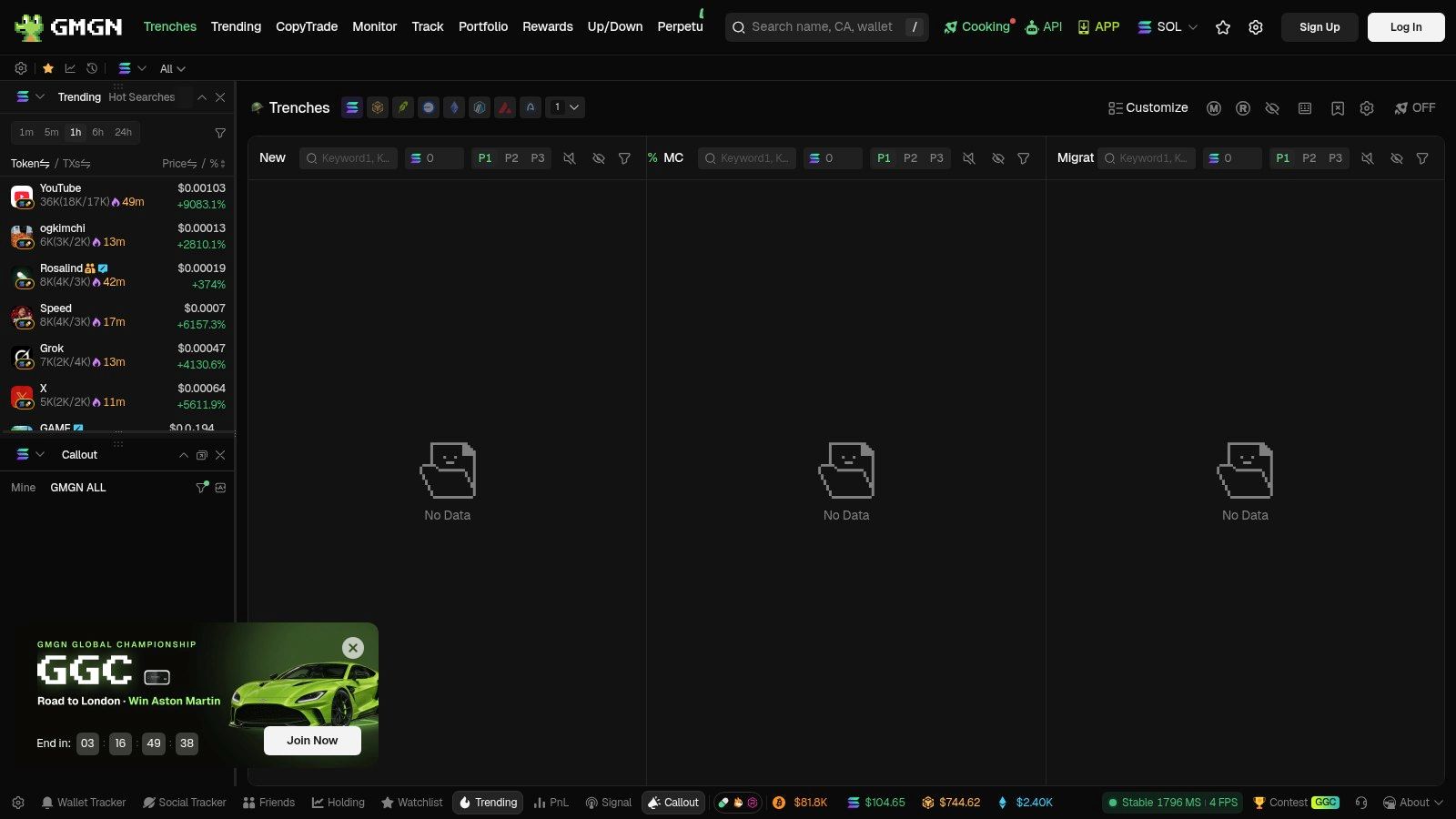
Performance is backward-looking
GMGN's appeal is workflow: you can discover wallets around a launch, compare their activity, and follow selected addresses with watchlists or alerts. That can help you monitor a trading pattern without manually assembling every transaction.
The trade-off is that a performance profile isn't a forecast or endorsement. Past PnL doesn't tell you whether a wallet's next entry will be profitable, whether the displayed activity captures the full picture, or whether you can copy a trade at comparable conditions. A wallet that bought early may look impressive after a price move, while a late follower faces a different trade.
Trading and copy-trading features can also encourage rushed decisions. Keep wallet discovery separate from your own entry criteria, and verify any address or trade that matters in an explorer.
Some GMGN features may require an account or wallet interaction. For a basic address check, don't connect just because a platform offers that option. Use read-only views where possible, and review exactly what any requested interaction authorizes before proceeding.
4. Birdeye Wallet Tracker
Birdeye combines market data with wallet analytics. Its Wallet Tracker lets you look up a Solana address, review performance indicators such as PnL and win rate, and inspect portfolio and trading activity. You can also explore active wallets and their histories as part of broader token and market research.
A trading lens, not a scam label
Birdeye is handy when you're researching a known address and want a quick performance overview without tallying trades yourself. It also supports wallet discovery, so you can move from a token or market question toward addresses to investigate.
That doesn't make it a dedicated scam-address checker. PnL describes observed performance, not trustworthiness. A wallet can trade profitably and still be linked to risky activity, while an apparently strong track record doesn't guarantee future results.
Birdeye's wider market-data context can be useful when you're comparing a wallet's activity with token conditions. Still, check key transactions in an explorer and treat analytics as a summary rather than primary evidence.
Be especially deliberate if you're analyzing your own wallet. Full analysis may involve connecting it, but a public address is enough for many read-only checks. Don't grant access unless you understand why the tool needs it and what the connection permits.
5. Nansen Solana Wallet Analyzer
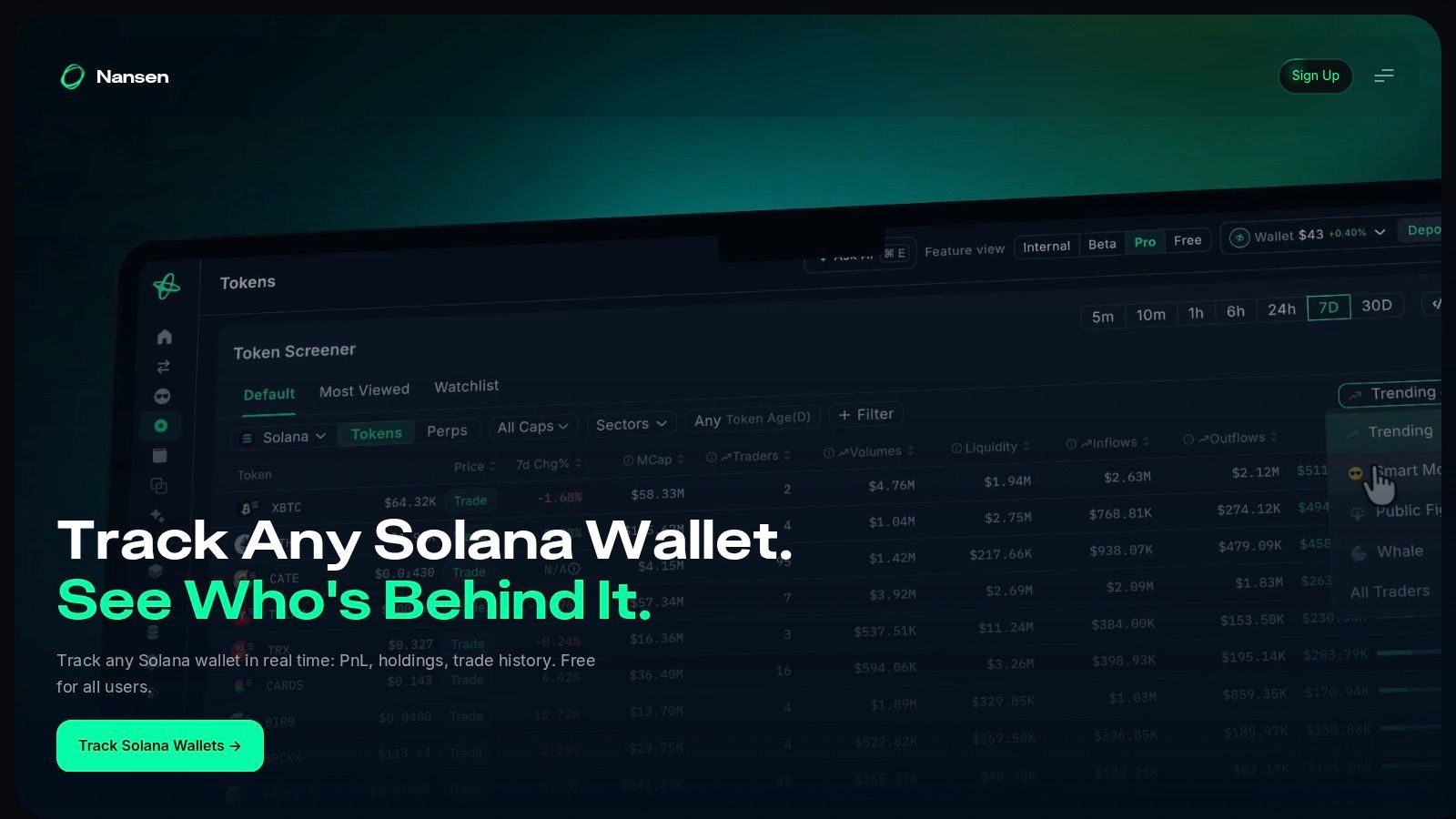
Nansen's Solana analytics combines wallet statistics with labeled-address context. Users can inspect holdings, PnL, trade history, and token-holder behavior, and follow selected wallets. Nansen advertises free Solana wallet tracking, though you should confirm current access and plan details on its site.
Labels need context
The practical value is breadth. A label can give you a starting point for understanding an address, while wallet statistics and activity help you investigate what it holds and how it trades. That's more useful than judging an account from one transaction alone.
But a label doesn't prove identity or reliability. Treat it as context to verify against underlying activity, not as a guarantee that a wallet is “smart money” or safe to follow. PnL has the same limitation: it summarizes past activity, not the quality of a future trade.
For a focused workflow on following addresses, see how to track smart money wallets on Solana. The key is to check what a wallet did, rather than copying a label or ranking.
Nansen is less specialized than a visual holder map when your main question is whether several token holders appear connected. Advanced features or broader platform capabilities may also have access requirements. Use it for contextual wallet research, then confirm consequential findings in the transaction record.
6. Arkham
Arkham is built for on-chain address and entity investigation, not just quick wallet lookups. Its Solana support includes transaction tracing, visualizations, and alerts that can help you follow activity and fund movements between addresses. The broader platform covers investigative work across supported networks.
Follow the movement, verify the link
Arkham becomes useful when a single address raises a bigger question: where did funds come from, where did they go, and which other accounts should you inspect? Tracing and visualization can make those paths easier to follow, while alerts can reduce repeated manual searches when you're monitoring activity.
The main caution is attribution. An inferred entity link isn't proof of ownership. Check the underlying transfers and timing before treating an address relationship as established. For Solana meme-coin research, a link can help you form a hypothesis about wallet clusters, but it can't by itself establish that a group coordinated or shares a controller.
The platform may be more than a casual trader needs for a one-time lookup. If your question is whether an address received or sent a particular token, an explorer may be quicker. Choose Arkham when tracing between accounts is central to the investigation.
For context on interpreting groupings, see what Solana wallet clusters mean. Treat the tool as an investigative aid, not an authority that settles identity.
7. SolScope
SolScope is a Solana-focused wallet analyzer that describes itself as read-only. It's designed for inspecting an address and its portfolio activity without using the service as a wallet or trading platform.
A focused lookup with limited public detail
That narrower purpose can suit traders who want wallet analytics without stepping into a trading interface. Read-only analysis also fits a cautious workflow: enter a public address, inspect the available information, and keep signing authority out of the process.
The limitation is the amount of public information about methodology and pricing. When the tool surfaces a finding that could change a trade, cross-check it against a block explorer. A portfolio view can summarize activity, but the underlying transactions are the place to validate the details.
SolScope isn't a complete token rug-risk assessment. It can help you examine a wallet, but token safety also depends on market structure, including holder concentration, liquidity, creator behavior, and trading patterns. A wallet profile alone won't answer who controls the exit or whether a trade can be executed under acceptable conditions.
Use SolScope as a focused wallet-inspection option, then widen the investigation when the decision concerns a token rather than one account.
8. Solana Tracker
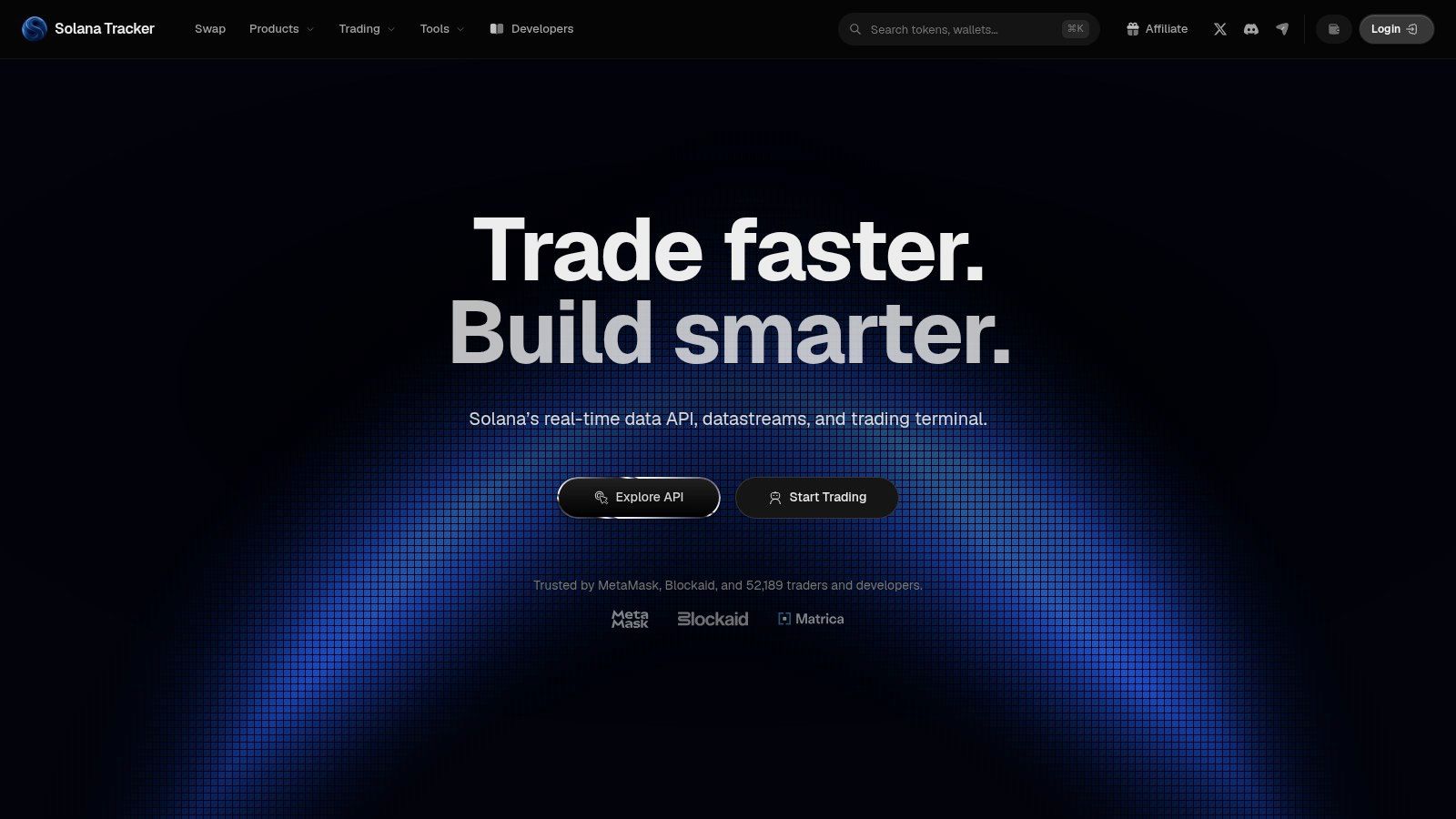
Solana Tracker combines market data, wallet activity, live feeds, and developer-facing infrastructure. Its wallet and token data includes risk-related indicators such as detected bundlers and wallet activity, alongside information about tokens, prices, launches, and market events.
Useful in a fast-moving workflow
For traders watching new launches, the attraction is having wallet-related information near market monitoring rather than in a separate research step. Developers may also find its RPC and data services relevant to their workflows.
The breadth has a cost: Solana Tracker is less narrowly focused than a dedicated wallet profiler. Risk indicators such as bundler detection are signals to investigate, not a safety guarantee. Check what the indicator means, inspect the supporting activity, and don't treat the presence or absence of a flag as a final verdict.
Access and pricing can vary by product or feature, so confirm the details that apply to your use. For a casual lookup, a block explorer may be simpler. For a trader who wants wallet activity alongside token and market data, the combined workflow may be more practical.
Remember that a token's liquidity, holders, and transaction flow can change. A result is tied to the data available when you check it, so refresh the evidence before acting if conditions have shifted.
9. WalletHound
WalletHound is a wallet discovery and research tool for Solana and other networks. Its Wallet Finder lets users search and filter addresses using selected fields, which makes it useful when you don't already have a wallet to inspect.
Discovery isn't a recommendation
A finder can help narrow a broad search toward addresses with activity or characteristics you want to examine. That's a different job from entering a known address into an explorer. WalletHound also provides documentation describing its finder fields, which can help clarify what a filter is selecting.
The danger is reading a ranking or filter as an investment signal. Finding an active wallet doesn't mean you should follow it. Before acting on a result, inspect its transactions and consider the context: timing, token conditions, and whether the wallet's behavior fits your own strategy.
WalletHound supports multiple chains, which may be helpful if your research spans ecosystems. But current feature availability and pricing should be confirmed directly, and important claims should be validated against transaction records.
Use the finder to generate candidates for research. Use an explorer and other appropriate tools to test whether those candidates have a history worth following.
10. NordVPN Crypto Wallet Address Checker
NordVPN's Threat Protection feature includes a crypto wallet address checker intended to flag potentially suspicious addresses encountered while browsing. It detects address strings and checks them against a verification service, helping users avoid sending funds to addresses that may have been flagged.
Browsing protection has a narrower job
This tool addresses a different moment from an on-chain wallet profiler. You may encounter a payment address on a site or while browsing, and a warning can add a layer of caution before you send. Its place in the workflow is address screening during browsing, not portfolio research.
It doesn't analyze a wallet's holdings or transaction history, and it can't replace checking the destination and transaction yourself. A flagged result is a reason to pause and investigate; no warning shouldn't be treated as proof that an address is safe.
Availability may depend on the NordVPN plan and supported apps. If you already use Threat Protection, the checker may fit into that browsing-safety workflow. If you need to understand a wallet's activity or assess token-holder concentration, use a tool built for those questions instead.
Top 10 Crypto Wallet Checkers: Feature Comparison
| Tool | Core Focus | Key Signals / Features | Coverage | Access & Value | Best For |
|---|---|---|---|---|---|
| MemeAssist | Solana meme-coin risk reports | ★ Live checks across liquidity, holders, creators, trading and history; AI verdict, risk breakdown and trade setup | Solana tokens | 💰 1 free full analysis, then prepaid credits; no wallet connection | 👥 Quick, contextual token safety screening |
| Solscan | Solana block explorer | Balances, transfers, transaction history, labels and first-funder data | Solana accounts and programs | 💰 Read-only explorer; API plans separate | 👥 Verifying primary on-chain records |
| Bubblemaps | Holder-cluster visualization | ✨ Bubble maps reveal concentration and possible wallet links | Solana and other networks | Pricing not specified; maps are investigative leads | 👥 Visual research into holder distribution |
| GMGN | Meme-coin trading and wallet analytics | Wallet PnL, activity, Wallet Radar, watchlists and alerts | Meme-coin activity across selected tokens | Some features may require an account or wallet interaction | 👥 Tracking active traders and launch activity |
| Birdeye Wallet Tracker | Wallet performance analytics | PnL, win rate, portfolio, trading activity and wallet discovery | Solana, within broader market-data platform | Pricing/access may vary; some wallet analysis may involve connection | 👥 Reviewing wallet performance alongside market data |
| Nansen Solana Wallet Analyzer | Wallet and labeled-address research | Holdings, PnL, trade history, wallet labels and token-holder flows | Solana | 💰 Free wallet tracking advertised; confirm current plan details | 👥 Researching wallets with label and flow context |
| Arkham | On-chain investigation and tracing | Transaction tracing, fund-flow visualization and alerts | Solana plus other supported networks | Pricing/access may vary | 👥 Following fund movements across addresses |
| SolScope | Solana wallet analysis | Read-only portfolio and activity inspection | Solana | Pricing and methodology details are limited | 👥 Basic wallet research without trading tools |
| Solana Tracker | Market, wallet and developer data | Live feeds, wallet activity, risk indicators, RPC and data services | Solana | 💰 Access and pricing vary by product | 👥 Traders and developers monitoring fast-moving activity |
| WalletHound | Wallet discovery | Filters and tools to find and compare wallets | Solana and other networks | Confirm current features and pricing | 👥 Finding addresses to investigate |
| NordVPN Crypto Wallet Address Checker | Browsing-time address warnings | Flags potentially suspicious wallet addresses encountered online | Address checks through its browsing-protection service | 💰 Requires eligible Threat Protection Pro access | 👥 Extra precaution when encountering payment addresses |
How to Pick Your Wallet Checker Stack
Choose tools by the decision you need to make, not by whichever platform offers the most labels or the cleanest score. If you need to confirm a transfer or inspect an account's history, use a block explorer such as Solscan. If the concern is whether token holders may be connected, use a visual map such as Bubblemaps, then verify the relevant activity in transaction records. For performance tracking and wallet discovery, GMGN, Birdeye, Nansen, or WalletHound can help surface addresses and summarize behavior. Arkham is better suited to tracing relationships, while NordVPN's checker focuses on suspicious addresses encountered while browsing.
Keep the evidence categories separate. A wallet's history is not the same as the risk of a transaction you're about to sign, and a token-holder cluster is not proof of shared ownership. PnL is backward-looking, labels need verification, and browsing warnings don't replace checking the destination. Treat each result as a lead, then confirm the claim using the tool best suited to the underlying evidence.
Prefer read-only lookups that need only a public address. A basic address inspection shouldn't require you to connect a wallet, approve token access, sign an unfamiliar message, or share a recovery phrase. Wallet-drainer phishing remains a distinct operational risk: Scam Sniffer data cited in industry reporting recorded about $83.85 million stolen from 106,106 victims during 2025. Those figures are not a reason to assume every site is malicious, but they reinforce a practical rule: don't grant authority just to get an analysis. (Industry reporting on wallet-drainer phishing)
For Solana meme coins, wallet checks need to sit alongside token-level analysis. A creator address that looks ordinary doesn't settle whether holders are concentrated, liquidity is shallow, trading looks coordinated, or insider-linked wallets may affect the exit. MemeAssist offers on-demand Solana token reports based on live on-chain and market data, with liquidity, holder distribution, creator behavior, wallet activity, trading patterns, and historical risk indicators included in its evidence categories. The report combines quantitative checks with a plain-English verdict and detailed breakdown, and it doesn't require a wallet connection.
That kind of report can organize scattered signals, but it still can't guarantee an asset is safe or protect you from a malicious signing prompt. Use it to understand token risk at the moment of analysis, verify important evidence independently, and make the final decision with the trade's execution conditions in mind.
Use MemeAssist to review Solana meme-coin liquidity, holder concentration, creator activity, and trading-pattern risks in a report that explains its findings in plain English. Run a token check before you buy, and do it without connecting your wallet or signing a transaction.